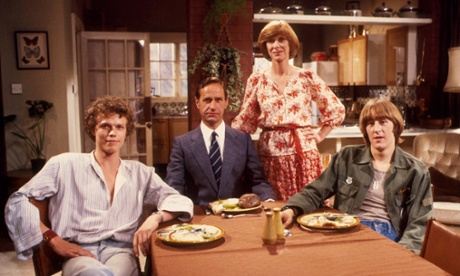
Channel 4 has run a series of nostalgia shows over recent years – It Was Alright in the... (1960s/1970s/1980s). The shows’ collection of old television clips are marked, for me, by so many jaw-dropping moments. I think of lovely Ria (played by Wendy Craig) from the Carla Lane sitcom Butterflies, which ran from 1978-83, saying: “I want to be raped.”
TV has always reflected our world and how we see ourselves. At the moment, it seems to be doing it rather well, to judge from the widespread warmth for The Great British Bake Off and its winner, Nadiya Hussain. My childhood memories of Britain according to the telly was that it was a world where weird or camp or weird and camp men ordered ladies to twirl about. Doctor Who was weird, but he didn’t require twirling.
As for ethnic minorities... well. I grew up in an area of Scotland that was white, even for Scotland. So my only exposure to black, Asian and minority-ethnic (BAME) people was through the foreign students in late 70s sitcom Mind Your Language. Which, I’m ashamed to relate, we thought was utterly hysterical. And probably true.
That was a long time ago. But if you look at television now, it hasn’t actually changed that much – in some aspects. For newsreading, we still like a grey-haired man with gravitas, please, along with a woman who can be terribly clever, just as long as she is unbelievably gorgeous and thin.
Oh, and only men really can anchor successful chat shows and only women can advertise washing-up liquid. (Fewer than 5% of all actors in commercials are BAME, by the way, against a nationwide proportion of 13%). And, according to the (brilliant) recent mega-hit drama Doctor Foster, woman are hormonal nutjobs who need leaving for younger models. And let’s not get started on the quota issues on panel shows.
So a lot of television hasn’t moved on anything like as much as we’d like to think. But the real world has. In it, as you’ll know if you have any kind of extended family, things have been kind of hopping along rather better. Not perfectly, but it’s hardly rivers of blood out there.
For years, television suffered from a gap: life as it was being lived day to day versus issue dramas, tokenism, plus the ever-escalating snuff movie that is rolling TV news, now shouting at you 24/7 about every terrible thing that ever happens anywhere, ever.
Then the most unlikely thing came along to narrow it: Peter Bazalgette, chief architect of reality TV, and his legion of offspring.
Being cheap, cheerful and enduringly fascinating, reality television has taken over the world, much to the distress of writers and actors. I always think particularly of the poor writers of TV Burp, who bled from the eyes and nearly went mad watching millions of hours of terrible television. Then a reality show came along and got ordinary people to do it – for free! – called Gogglebox.
But from the moment reality shows started, we could see instinctively that it was our Britain. Remember Danny from Hear’Say? You probably couldn’t hum their second single. But I bet you remember when he found out he was in the band, surrounded by his ecstatic mother and aunties, black and white.
Big Brother showed us who we – particularly young Britons – really were, voting clearly and without any problem for a gay man, a black man (the Brians, Dowling and Belo respectively) and a transgender Brazilian. Put more plainly, they voted for the kindest, most genuine person in the show, as they do every year.
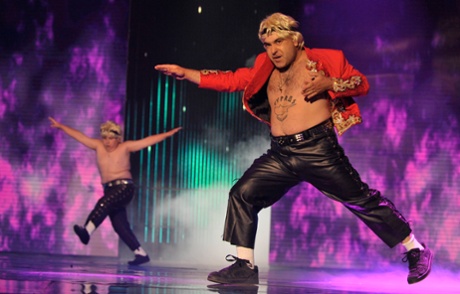
And has there ever been a more British – and arguably a more beloved – act on Britain’s Got Talent than Stavros Flatley? Two Greek men doing Irish dancing quite badly. The winners of the show that year were even called Diversity (although they did let their essential Britishness down by being, disappointingly, really talented). I would also pay real cash money to anyone who would object to living next door to Ashley Banjo, the leader of Diversity.
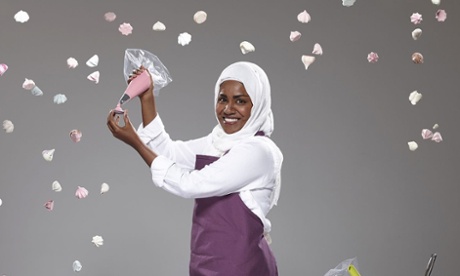
Nadiya, winner of Great British Bake Off – did you cry? – is only the latest example of something we know to be true. My six-year-old, watching over my shoulder, announced: “Her family is exactly like ours”, by which she meant there were two older boys and a younger girl. (In case you think this is me being revoltingly smug about my parenting skills, let me balance it by telling you that she has just got into trouble for eating a wasp by the school bins).
A newspaper columnist made a vicious remark about “chocolate mosques”, a line so disgraceful I can hardly bear to type it. But it wasn’t the mood of the nation, nowhere near.
Ask anyone who’s lived in another country. I lived in France for seven years and while I adored it, and still do, people will quite happily say things in casual conversation that would get you fired in the UK. Discrimination is loud, overt and absolutely everywhere. Television lineups are routinely 100% white; they don’t even nod to tokenism.
Is Britain perfect? No. Should we immediately adopt the “blind” approach where contestants or applicants are judged and hired just on their work? (Nadiya won the “blind” part of Great British Bake Off). Absolutely. There are loads of problems to address. The fact that we know we have problems puts us ahead of the game.
Reality TV, apart from teaching that setting your children up in Chelsea with a massive trust fund is unlikely to produce decent, well-rounded individuals, has given us so much more of the Britain we recognise.
Not the Britain under siege from migrant “swarms”, according to David Cameron, but the world we live in day to day; when your teenage girl wouldn’t have the slightest qualm about running off with someone from a different cultural background – in my daughter’s case, with Zayn, lately of One Direction. Where there is a chatter of different languages on the way to school and the NHS would fall apart in five minutes without everyone muddling along.
And it’s taught us this: the British public is quite a lot nicer than the British media and television. Good for them, though, that they’re finally catching us up.
Jenny Colgan is a novelist. Her most recent book is Resistance Is Futile