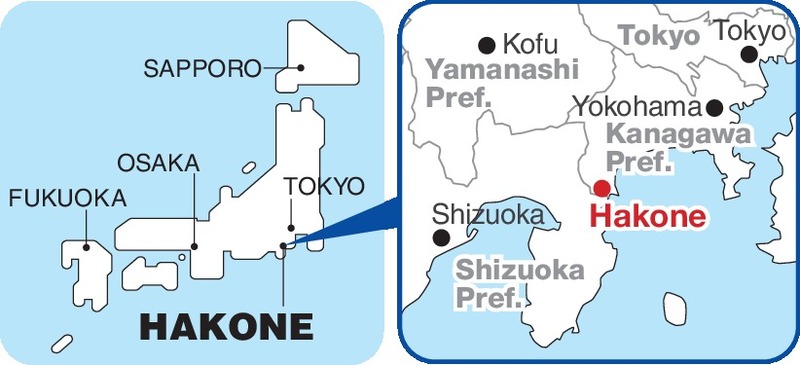
HAKONE, Kanagawa -- Tourism activities in Owakudani -- one of the mountainous Hakone area's main sightseeing spots, which was affected by intensified volcanic activity in 2015 -- seem to have returned to normal since a restriction on the Hakone Ropeway's operations was eased in February.
No human casualties from volcanic gas were reported.
When the restriction was harsher, the ropeway's operations were frequently suspended -- whenever volcanic gas exceeded the alert level. This caused passengers great inconvenience.
On Aug. 15, half a year after the restriction was eased, Owakudani was full of foreign tourists who had taken a ride on the ropeway.
"Easing the restriction was an appropriate decision," said a person related to a souvenir shop in the area, adding that the shop had previously had very few customers.
The Owakudani area had been off-limits for a period after volcanic activity intensified in May 2015. It wasn't until July 2016 that the ropeway service resumed operations.
A local council of experts on volcanic disaster prevention initially stipulated that people should evacuate indoors when sulfur dioxide reached 5 parts per million or higher. However, the ropeway service was suspended whenever the density reached 0.2 ppm, on the basis that passengers could not evacuate while in cable cars.
Despite the standard being set, there were many mistakes made in measuring sulfur dioxide levels. Consequently, the service was suspended for as many as 91 days -- six of which saw it suspended for the whole day -- over a period of about 18 months until Feb. 15, when the standard was eased.
Due to intermittent suspension over the year-end and New Year peak season, the profits of local tourism businesses suffered greatly.
On Feb. 15, the council eased the restriction, setting the threshold for suspension at 5 ppm or higher, the same as for evacuating indoors. The council explained that the density of sulfur dioxide in the ropeway carriages was lower than outside, and that safety measures were being taken.
The ropeway operator arranged these measures with the utmost care for passengers, such as providing wet tissues when necessary and giving explanations to people with asthma, who are not allowed to ride the ropeway. Thanks to these efforts, no passengers have suffered negative effects.
Read more from The Japan News at https://japannews.yomiuri.co.jp/