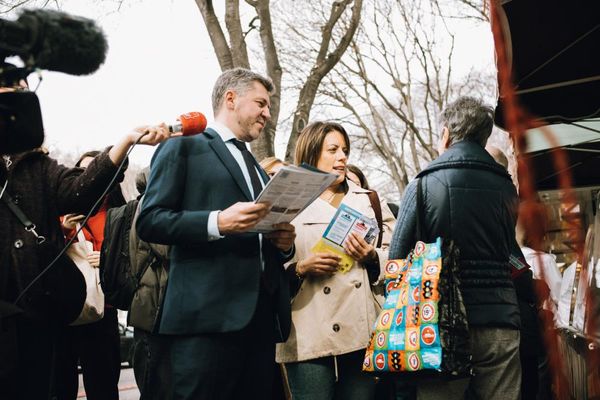
Last year Dame Vivien Duffield was one of the estimated five million people who visited Blood Swept Lands and Seas of Red, the Tower of London poppies installation created by artist Paul Cummins and designer Tom Piper. Like so many others, she was moved and impressed by the display. “It was such a clever idea, and when I heard that you could buy the poppies for charity I wanted to give one to my grandchildren and godchildren for Christmas. Some time later I was told that the project needed a little more help, and so I agreed to do that, too.” “A little more help” entailed Duffield, through her Clore Duffield Foundation, purchasing Wave, the arc of poppies that curled over the entrance to the Tower, for the nation so that it and Weeping Window – purchased by the Backstage Trust on the same terms for a joint price of £375,000 – could tour the country before taking up permanent residence as a memorial at the Imperial War Museum in 2018. The tour opens on 5 September when Wave goes on display at the Yorkshire Sculpture Park in Wakefield, the latest manifestation of half a century of philanthropy.
Duffield’s foundation, which celebrated its 50th anniversary last year, was originally set up by her father, Sir Charles Clore, who, through his company Sears Holdings, controlled huge swaths of the British retail economy, including Selfridges, and is reputed to have invented the hostile takeover. The foundation, mostly through Duffield’s initiatives since she took over after her father’s death in 1979, has given more than £300m in grants to the arts, education, heritage and Jewish cultural life. In addition, Duffield has led appeals that have raised funds of more than £100m each for the Royal Opera House and Southbank Centre, as well as raising more than £1bn for Oxford University.
Her largesse has made her a high-profile and contentious figure in the arts world. As chair of the Royal Opera in the late 1990s, she found herself having to make a personal donation of £5.5m to keep the place financially afloat at a time when the company was in dire financial and administrative trouble. She was also obliged to explain the situation to a culture select committee hearing chaired by a very sceptical Gerald Kaufman, who accused the institution’s leadership of being “a self-perpetuating oligarchy”.
Over the years, she says, she has become used to seeing a fluctuation in the respective levels of contribution that come from government, box office, sponsorship and philanthropy. But she is concerned at the drop in public funding resulting from austerity measures in recent years, and in 2011, in the face of Arts Council cuts, she donated £8.2m for new creative learning spaces for children in 11 institutions, including the National Theatre, Tate, RSC, Kettle’s Yard in Cambridge and the Museum of Liverpool.
So is there an ideal level of government subsidy? “It is more about being appropriate funding for the times. Take the Opera House. When I first started working with them government funding was 90%. I don’t think that’s a good thing in the same way I don’t think the system in the European houses is right where there are still 100% subsidies. They get too fat, complacent and self-indulgent, and when there are cutbacks they are in real shtook. But I don’t think what has happened now is a good thing, either. It is now 23% government funded, 25% philanthropy, and we earn the rest. There will come a point when the Arts Council grant diminishes further and we will have to ask, where do we go?”
Duffield acknowledges that “opera is a great luxury, as is ballet, although to a lesser degree as it is much cheaper to put on. But if it is to be something that brings in a lot of money, enhances our reputation and trains people for other places, as the Opera House does wonderfully in every respect, then it must be good, and that costs money. While the money is of course essential, making sure it is used properly is equally important.”
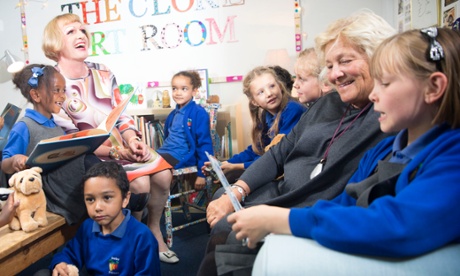
Earlier this year I saw Duffield in action at the opening of a Clore Art Room – a dedicated space for therapeutic intervention for disadvantaged and disabled children. This one – there are now nine art rooms in all – is at a west London primary school where the 343 children speak 43 different languages. It was officially opened by the Duchess of Cambridge, a patron of the scheme, then making one of her first public appearances after the announcement that she was expecting her second child. The event attracted media attention from all over the world, was live-blogged on the Daily Mirror website and became front-page news. It ended with a round-table discussion between project administrators, teachers, children, another patron of the scheme Grayson Perry, the Duchess and Duffield. It was essentially just a photo opportunity, but after a few bland opening remarks Duffield cleared her throat. Was there a way to increase opening hours? Could the space be made available to the wider school, and local neighbourhood communities? Would it be open in the holidays? She turned a ceremonial occasion into a productive working session, conducted in public.
“I am just frightfully curious,” Duffield explains. “I like to know what everything is used for. How much it costs to run. Essentially whether it was a good idea to have done it or not. I have a terror of these buildings being built and nothing happening in them, and so if there is ever a risk of people sitting around saying ‘aren’t we great’, I’m the person who will ask if we can be a bit better. I’m always saying that; I’m sure people dread it when I come round to visit things. It does take a certain confidence, but that comes with age and is one of the rare advantages of growing old.”
Duffield was born in 1946 to Charles and Francine Clore. While her mother’s side of the family is well-documented – she was from a wealthy Parisian family and had a distinguished war record and brother who survived Auschwitz – Duffield knows very little about her father’s background beyond him being born the day his parents arrived in London’s East End from Riga, with a sewing machine as their only possession since her grandfather was a tailor. “My father never talked about the old country, never talked about death, never talked about the past. I don’t even know what our name was.”

But within 25 years of his birth, Clore had made a fortune and by the time she was born he was well on the way to being one of Britain’s richest men. Duffield was at boarding school when her parents’ marriage broke up, and she then attended the Lycée Français before going on to Lady Margaret Hall, Oxford in 1963 to read modern languages. Her Oxford contemporaries included future BBC director general John Birt and George Osborne’s father. After Oxford she won a place at Stanford business school in California.
“San Francisco in 1966? I would have loved it. But there was no way my father’s precious little Jewish virgin was going to be allowed to go there. I’d wanted to go into Sears and work for him but he just wouldn’t have it. Girls didn’t do things like that. And it’s true that there were then hardly any women in business. Even when I started getting on to boards with the foundation I had to get used to usually being both the youngest person and the only woman. These days there are many more women and I’m often the oldest person on the board, which is a nasty shock. But it does give a certain right to grumpiness. My daughter has an MBA and I rather regret not having done one, but by the time I had thought about it, it felt too late.”
Instead of going to business school in her early 20s, Duffield “did some research work for a while and then got married” to the financier John Duffield. They had a son and a daughter but the marriage didn’t last and she later embarked on a far longer relationship with the late Jocelyn Stevens, who had bankrolled Radio Caroline, before running Express Newspapers as well as the Royal College of Art and then English Heritage. Although they never married, they were together for 32 years before splitting up in 2005.
While Duffield had became a newsworthy figure for her work with arts institutions, she and Stevens were also gossip column regulars. She shrugs. “You must remember that Dad was a public figure. When I was a child and my parents wanted to send my brother to Eton it was headlines, because Jews didn’t go to Eton. And he was controversial. The ‘man who invented the takeover’ and all that. The public profile was to some extent always there.”
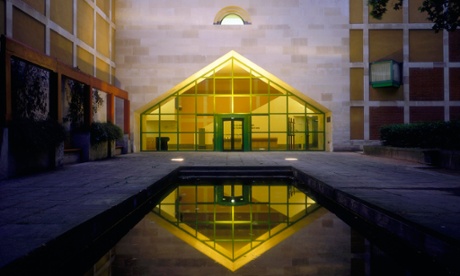
After taking over the Clore Foundations in the UK and in Israel in 1979, she set up her own foundation before merging the two in 2000. Her first major project was the Clore wing of Tate Britain, built to house the Turner Bequest, a huge collection of the painter’s work. She worked closely with the architect James Stirling and remembers having “terrible rows” about the colour scheme. “I can’t believe how much courage it took for me to say anything at all, but now I am much more difficult. I probably had less impact, apart from the colours, on that project than I have gone on to have since, but I loved working on a building project from start to finish. And it was rather wonderful watching Stirling. In a different life I would have very much wanted to have been an architect. I was on a RIBA judging panel last year and it was one of the most fun things I’ve done in years.”
From the beginning, she realised she had been left a “foundation rather than an inheritance”, but how she has used it has to some extent been guided by her own tastes. “When I was 21 I went on the Ballet Benevolent Fund board, as it was then called, supporting all these little old ladies living in garrets who had danced for the tsar. That led to work on the Royal Ballet School which led on to the opera.” She recalls funding the appointment of the first education officer at the Ashmolean Museum in Oxford. “No education officer in Oxford? Can you imagine! That led to the appointment of an education officer at the Dulwich Picture Gallery who invented the idea of an education centre, rooms purely for education, within a museum.”
Her career as a fundraiser started after she visited a children’s museum in Boston and set about raising funds for one in the UK which eventually became Eureka! The National Children’s Museum in Halifax. “I was taught how to fundraise by an uncle. One of my first outings with Jocelyn was to a dinner, where my uncle went round everyone saying things like: ‘Come on now, you’ve only given £1,000; you’ve got a brand-new Rolls-Royce outside; look at the necklace your wife is wearing’. Jocelyn couldn’t believe it. But they raised £1m that night. That is real fundraising and I used to be quite good at it, but can’t quite do it any more.” As for raising £1.25bn for Oxford, she says it was more “organisation and management than getting money out of people. It’s the professors who can get the money, not someone like me.”
She says her last big funding effort is for JW3, the first Jewish Community centre and arts venue of its kind in London. “I saw one in New York 15 years ago and thought it was wonderful. We have 230,000 Jews in London, why don’t we have anything like this sort of inter-community space?”
Looking back over her career she says she has even enjoyed the tough times. “The Royal Opera was very difficult but also great fun. There was one Friday when, had John Sainsbury and I not put our hands in our pockets, it would have gone under. And if the price for doing all that is being interrogated by Gerald Kaufman, then that’s the way it is. And he was actually quite nice in the end.”
The need for better administration was one of the Kaufman committee’s recommendations, and in recent years the Clore Social Leadership Programme, led initially by former culture secretary Chris Smith, has been developing a new generation of talent. “It started because 10 years or so ago, it seemed that it was just directors of one national gallery moving to other national galleries. I was moaning to [Tate director] Nick Serota that there didn’t seem to be new people coming through, and he helped me set it up. Our people are now running most of the bigger regional theatres and more of the art galleries. They are getting good jobs and one of our boys was runner-up for the job at the National Gallery.”
Duffield speaks with eloquent pride about the long tradition of philanthropy within the Jewish community and for a time was critical of London’s new rich for their lack of interest in artistic and charitable giving. But she says in recent years that has changed, and she “thinks people are now beginning to give and some are now hugely generous, and doing things their own way”. Duffield is sticking to her old methods. It was always said of her that she signs every cheque, but that is surely not the case in the age of the electronic transfer? From beneath the desk in her Chelsea office she produces a large ring binder and proceeds to go through the cheques that she is due to sign: “£12,000, £6,000, £2000, £60,000 – that’s not so good. I’ve always taken a personal interest in every donation and am not going to change now.”
Although Duffield is approaching 70 there is no thought of retirement, but she has simplified the way that she does business. “I don’t go to anything just to be seen. If I go to something it’s because I intend to donate. I hate it when people come to a dinner or an auction and then don’t put their hands in their pockets. Most of the donations are to institutions and long-term projects but there is also some scope for one-off things such as the poppies.”
In a sense the poppies project is an example of how things used to be done in that it is a joint enterprise between private and public money. In response to Duffield’s and the Backstage Trust’s purchase, the Department for Culture, Media and Sport and the Heritage Lottery Fund have allocated £550,000 to pay for Wave and Weeping Window to go on tour. “I do understand that the politicians are in a difficult position in respect to arts funding. If you asked the general public they might say they don’t want a penny to go to the opera house or any arty-farty festival. They might prefer it to go into ensuring the price of football tickets weren’t so high. The challenge is to make the case that this money is not being wasted. London, for instance, does pretty well out of the arts. And a good deal of that results from the effects of subsidies in the past. As money is cut so things are made more difficult for the future. Our early philosophy was not to do things that governments might do, but to provide things that they wouldn’t or couldn’t. That’s had to change a lot over recent years. But have we gone too far? We are no longer the icing on the cake in the UK. We’re not even the filling any more, and I worry we’re almost becoming the cake itself. Over the years to come we’ll see how much of a problem that causes to all of us.”
• Wave and Weeping Window will tour locations around the UK until 2018. In 2015 the sculptures will visit Yorkshire Sculpture Park, Woodhorn Museum in Northumberland and St George’s Hall Liverpool. 1418now.org.uk/commissions/poppies/endote about poppies tour •