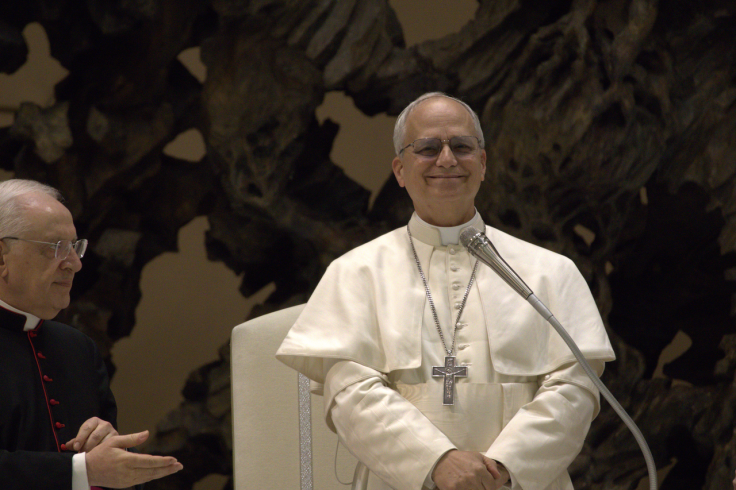
Under the grey, rain-swept skies of Beirut, a historic chapter in religious history unfolded as thousands of Lebanese citizens lined the streets to witness a moment of profound significance. Petals and rice rained down upon the motorcade alongside the drizzle, a traditional gesture of joy welcoming the first American pontiff to the land of the cedars.
For a nation that has long served as a crossroads of civilisations and faiths, the arrival of the head of the Catholic Church marked not just a state visit, but a desperate grasp for hope. On his first full day in the country, the Pontiff's presence served as a rallying cry for unity in a region fractured by conflict.
Pope Leo XIV Champions the 'Divine Gift of Peace' Through Interfaith Unity
The cornerstone of the Pontiff's visit was a powerful interfaith gathering held in Martyr's Square, situated in the heart of Beirut. Under the shelter of a large tent, the event brought together the country's Christian patriarchs alongside Sunni, Shiite and Druze spiritual leaders.
This meeting underscored the unique position Lebanon holds in the Arab world as a bastion of religious diversity. Following solemn readings from the Bible and the Quran, Pope Leo XIV praised the nation's enduring tradition of tolerance, describing it as a beacon for 'the divine gift of peace' in a troubled region.
'In an age when coexistence can seem like a distant dream, the people of Lebanon, while embracing different religions, stand as a powerful reminder that fear, distrust and prejudice do not have the final word, and that unity, reconciliation, and peace are possible,' he said.
His remarks highlighted the Vatican's view of Lebanon not merely as a country but, in the words of St. John Paul II, as a message of freedom. To seal this sentiment, the assembled spiritual leaders planted an olive sapling together, a timeless symbol of reconciliation.
However, the shadow of history looms large; while currently a model of coexistence, the nation is still healing from a civil war that divided it along sectarian lines for fifteen years.
A Visit by Pope Leo XIV at a Critical Moment for the Region
The timing of this papal voyage is precarious. Lebanon is currently navigating a period of intense fragility following years of economic collapse, political gridlock and the devastation of the 2020 Beirut port blast.
Furthermore, the spectre of conflict in Gaza and internal tensions involving Hezbollah have left the population on edge. For many, the arrival of Pope Leo XIV is a vital sign of international solidarity.
'We, as Lebanese, need this visit after all the wars, crises and despair that we have lived through,' said the Rev. Youssef Nasr, the secretary-general of Catholic Schools in Lebanon. 'The pope's visit gives a new push to the Lebanese to rise and cling to their country'.
Political tensions remain high, particularly regarding calls for the disarmament of Hezbollah following the war with Israel. Despite a ceasefire, airstrikes continue to rattle the nerves of the populace.
Addressing these anxieties, the Grand Sunni Muslim Mufti of Lebanon, Abdul-Latif Derian, welcomed the Pope by recalling the fraternity established by his predecessor, Pope Francis. 'Lebanon is the land of this message,' Derian affirmed. Similarly, Ali al-Khatib, a top Shiite cleric, implored the Pontiff to intervene, stating, 'We put Lebanon in your hands so that maybe the world helps us'.
Earlier in the day, the Pontiff paid homage to Lebanon's spiritual heritage by praying at the tomb of St. Charbel Makhlouf in Annaya. The monastery, overlooking the Mediterranean, attracts hundreds of thousands of Christian and Muslim pilgrims annually.
Bells pealed across the hills as the covered popemobile — a notable departure from the open vehicles used by Pope Francis — wound its way to the site. There, Pope Leo XIV offered a lamp as a gift of light.
The day concluded with a jubilant rally at Bkerki, the seat of the Maronite Church. The Pope sought to encourage the youth to remain in their homeland despite the allure of emigration. This plea is critical, as Christians now make up roughly a third of the population, a demographic the Vatican views as essential for the Church's survival in the Middle East.
'This is an unforgettable moment,' said Nawal Ghossein, a Maronite Catholic. 'We are so proud because we are Christians. So proud'!
Bishop Antoine-Charbel Tarabay, who travelled with pilgrims from Australia, echoed the necessity of maintaining this presence. 'Even though we live abroad, we feel that we need to support young people and the families to stay here,' he said. 'We don't like to see more and more people leaving Lebanon, especially Christians'.
As Pope Leo XIV brings his message of reconciliation to the Levant, his presence serves as a critical reminder of the power of unity in the face of deep-seated division. His plea for the 'divine gift of peace' resonates not only with the gathered crowds in Beirut but with a world watching for signs of hope.