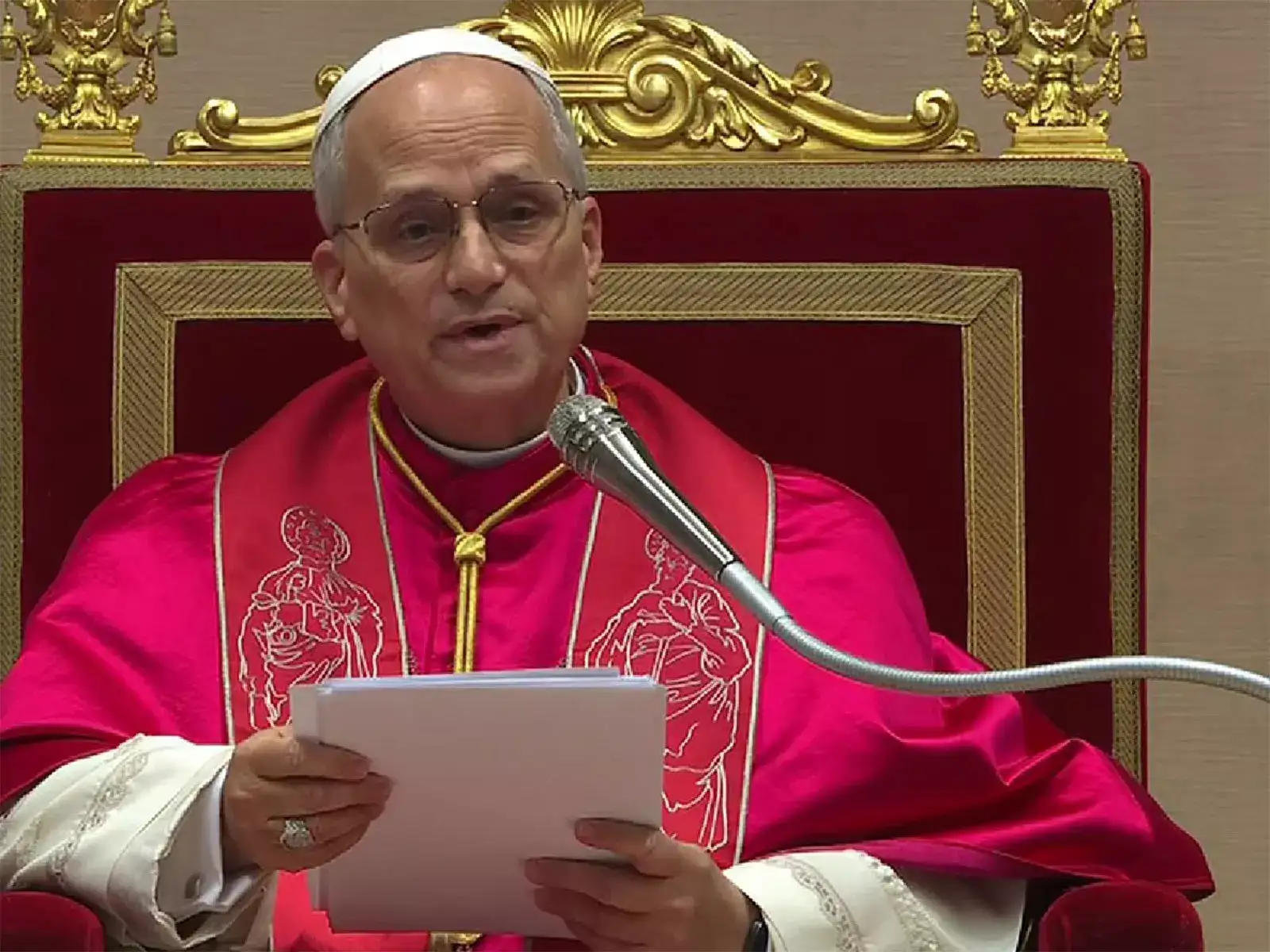
Pope Leo has used his first major papal document to wade directly into one of the world’s biggest modern anxieties - artificial intelligence (AI).
In a sprawling 43,000-word encyclical titled Magnifica Humanitas (“Magnificent Humanity”), released on Monday, the pontiff argued that the rapid rise of AI has concentrated enormous power in the hands of private technology companies that increasingly operate beyond meaningful public oversight.
Also Read: Anthropic AI model finds over 10,000 critical bugs across open-source software projects
“The main drivers of development are private, often transnational, parties that are endowed with resources and the capacity to intervene that surpass those of many Governments,” Pope Leo wrote.
He warned that such concentration of technological power risks creating “new dependencies, exclusions, manipulations and inequalities,” while also making it harder for societies to govern AI in the public interest.
The pope said calls to slow down parts of AI development should not be seen as opposition to innovation, but as an act of “responsible care for the human family.”
“It is not enough to invoke ethics in the abstract,” the document said. “Robust legal frameworks, independent oversight, informed users and a political system that does not abdicate its responsibility are required.”
A major portion of the encyclical focused on the growing use of AI in warfare, cyberattacks and information operations. Pope Leo said the “digital revolution is changing the nature of conflict,” warning that technologies initially developed for defence can quickly be repurposed for offensive use.
“What is created for defense can be rapidly repurposed for offense,” he wrote, adding that AI could lower the threshold for the use of force while reducing human accountability for violence.
“The development and use of AI in warfare must be subject to the most rigorous ethical constraints,” the pope said. “It is not permissible to entrust lethal or otherwise irreversible decisions to artificial systems.”
The document also addressed disinformation and democracy, warning that societies drifting away from facts and truth risk sliding towards authoritarianism.
“Indifference to the truth leads, slowly but surely, to a descent into totalitarianism,” the pope wrote.
Also Read: Why AI could finally make India a product nation
Pope Leo also criticised digital business models that “monetise attention and time,” saying parents alone cannot counter the influence of online platforms on children and young users.
On jobs and automation, the pope cautioned that the convergence of AI, robotics and automation is rapidly reshaping labour markets, but said newer forms of work are “not necessarily better.”
“The pursuit of greater profits cannot justify choices that systematically sacrifice jobs,” the document said.
The encyclical called for greater international cooperation on AI governance, arguing that market forces alone cannot address the social and economic disruptions created by emerging technologies.