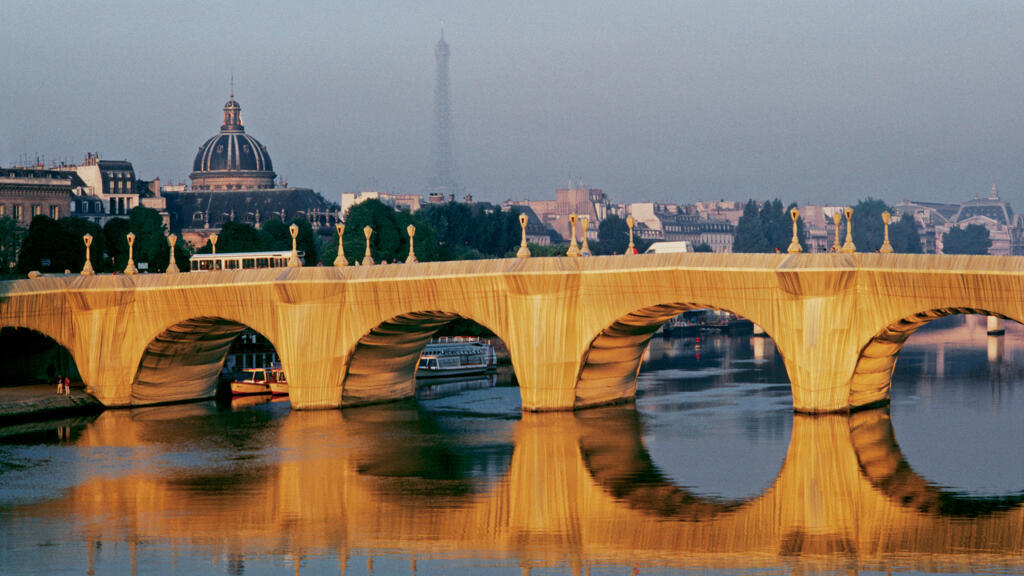
Artist JR will take over Pont Neuf, the French capital’s oldest surviving bridge, for a vast installation next summer, the City of Paris has announced. The project is inspired by another intervention 40 years earlier, which shifted the boundaries of what artists could do with France’s monuments.
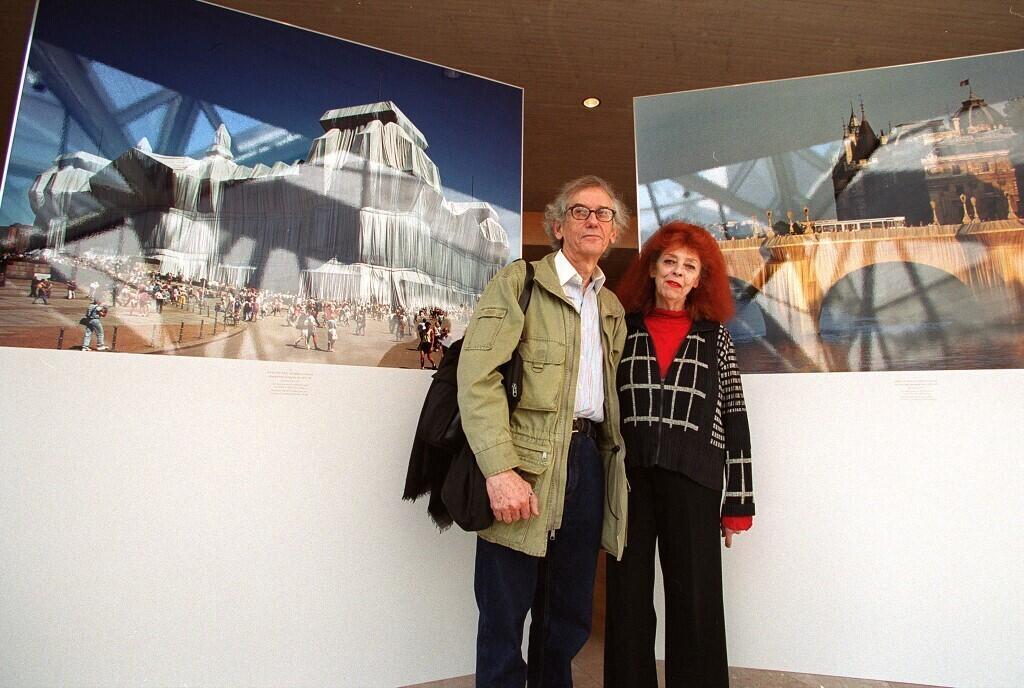
It was September 1985, and creative partners Christo and Jeanne-Claude had been trying to realise their vision of wrapping the bridge for 10 years.
The longtime mayor of Paris, Jacques Chirac, had finally given the green light a year earlier, but public safety concerns threatened to overturn the authorisation. It was three weeks after a crew of 300 had begun wrapping the Pont Neuf in champagne-coloured fabric that the final permit arrived.
Forty years later, Mayor of Paris Anne Hidalgo says she couldn't be happier to revive that "unforgettable moment of poetry and beauty".
She has signed off on another major installation, set for next June, on the Pont Neuf – which, as well as a working road and foot bridge, is a protected historic monument.
It's a measure of how much attitudes to public art have changed since Christo and Jeanne-Claude put years of work and millions of dollars into convincing Paris that its heritage shouldn't be off limit to creators.
The perfect pont
When Bulgarian-born Christo Vladimirov Javacheff and his French partner Jeanne-Claude Denat de Guillebon started work on the Pont Neuf project in 1975, they hadn't yet staged any large-scale installations in France.
Although the couple met in Paris, until then their most ambitious projects – bundling up a portion of the Australian coastline, stringing a curtain across a valley in Colorado, ringing islands off Miami with a squiggle of bright pink fabric – had taken place outside Europe.
While cities in Germany and Italy had allowed them to wrap castles and Roman walls, Paris was less amenable. In 1969 the pair explored the idea of wrapping nearly 400 trees along the Champs-Elysées, but were unable to secure a permit.
Drawn to the bridges that span the River Seine, they first thought of the Pont Alexandre III, a grand steel structure built at the turn of the 20th century. They decided, however, that wrapping its single arch wouldn't have the impact they wanted.
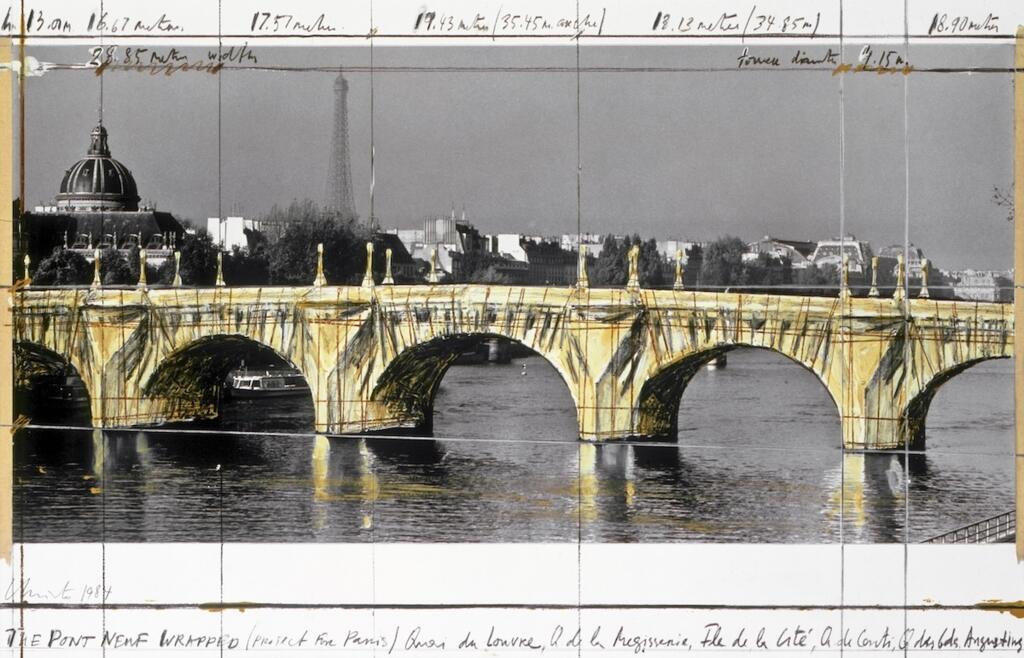
"The first consideration was aesthetic," Jeanne-Claude later told an interviewer, explaining their ultimate choice: "The Pont Neuf has those 12 fingers in the water."
Lobbying campaign
While the bridge's history wasn't foremost in their minds, it made the project more complicated. Completed in the early 1600s, the Pont Neuf crosses the ancient heart of Paris at the Ile de la Cité and has been a listed monument since 1889.
As the artists studied how they might wrap the bridge without drilling into its protected stone, they pitched the project to city officials.
Chirac, elected mayor for the first time in 1977, was reluctant to risk a backlash. As months and then years passed, the artists hired a project director, Johannes Schaub, who encouraged them to get the public on side first.
Schaub approached the challenge like an election campaign, sending envoys door to door in the neighbourhood around the bridge to convince locals. He booked Christo on a lecture tour and media blitz, and had the artist make a huge model of the wrapped Pont Neuf to display in La Samaritaine, the department store that faces the bridge on the Right Bank.

Key to the messaging was the promise that the installation wouldn't cost taxpayers a centime; Christo and Jeanne-Claude would cover the cost from sales of their other work, as they did with all their projects.
Meanwhile, the Socialist government France had elected in 1981 was beginning to champion ambitious cultural events, such as the Fête de la Musique, which shifted art out of museums and opera houses and into public spaces.
As momentum built in the art world and among the wider public – and after Chirac secured re-election – the mayor eventually agreed in August 1984.
France's Fête de la Musique celebrates its 40th anniversary
Technical feat
It took two test runs on a smaller bridge in Grez-sur-Loing, a small town outside Paris, to perfect the technique that would be used to wrap the Pont Neuf.
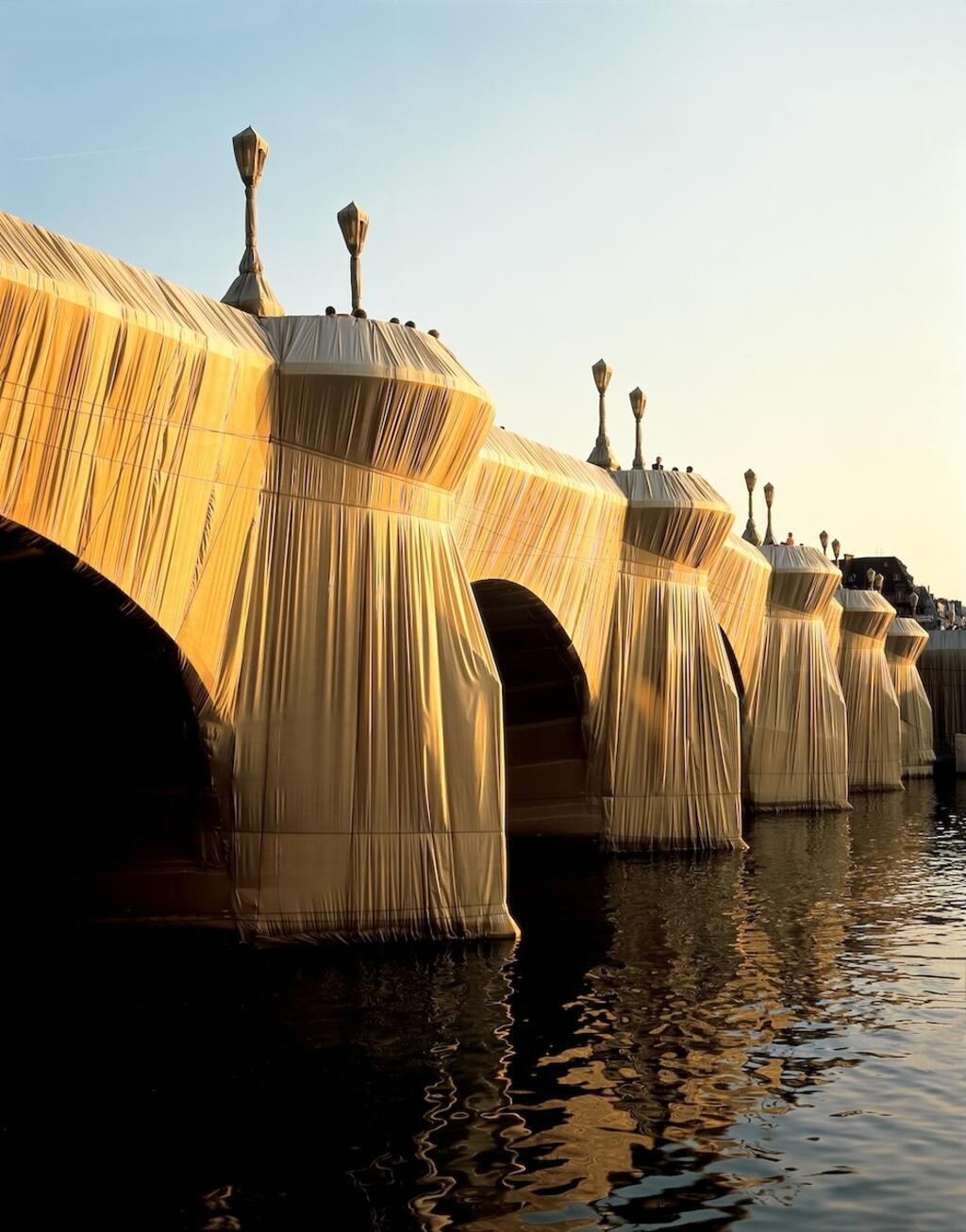
Engineers designed a frame that would sit on top of the bridge, resting on rubber buffers. Thousands of metres of thin fabric, the colour of Parisian sandstone, would then be draped over it, tied by ropes and held taut by steel chains wrapped round the bridge's base, a metre under water.
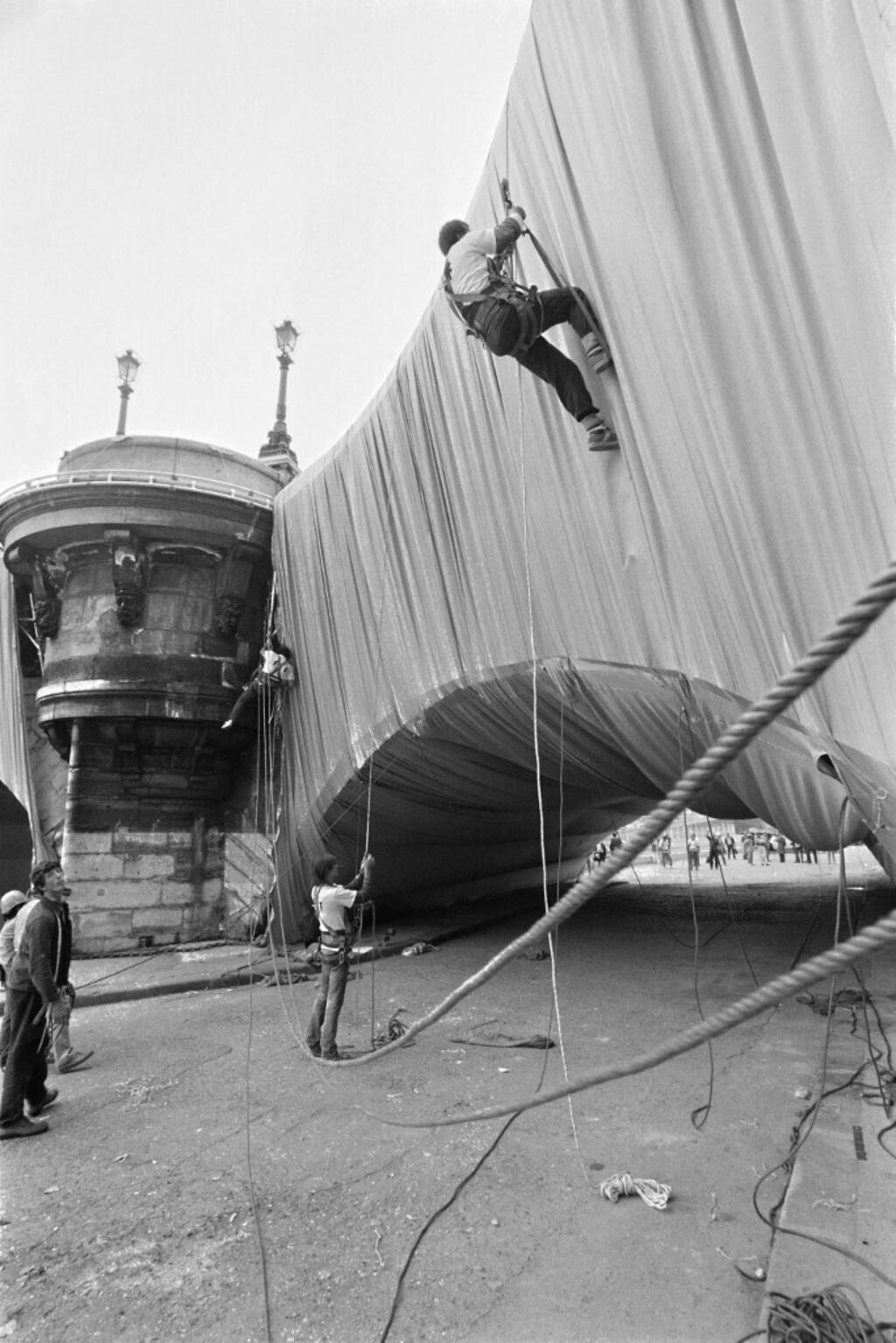
The process of installation – which took several weeks, from August to September 1985 – was a spectacle in itself. French media relayed every step, from the climbers who abseiled down the bridge pleating the fabric, to the divers who fixed the chains beneath the surface of the river.
In a final flourish, Christo personally wrapped the 44 street lamps that line the bridge.
By 22 September, the work was complete and the Pont Neuf reopened to the public.
'The biggest sculpture in the world'
Journalists from around the world covered the event. A beneficent Chirac was filmed strolling across the bridge with Christo and Jeanne-Claude, congratulating the artists on meeting the conditions he claimed to have set: that the project didn't cost Paris a penny, that it didn't disrupt traffic and that it wouldn't damage the Pont Neuf.
"It's no longer a bridge, it's the biggest sculpture in the world. But it's also a bridge, where people pass over, under – they're within the sculpture," enthused one newscaster.
"It's wonderful," Christo told the reporter, "they're all here, everyone."

Transformed by the silky fabric, the bridge's curved stone benches invited spectators to sit.
The artists were especially happy with the way the Paris light played on the material. "We didn't expect that the fabric's colour would take on so many nuances," Jeanne-Claude later said.
"The colours were incredible. In the morning, the fabric looked like straw, and by late afternoon it had turned into a rich golden tone."
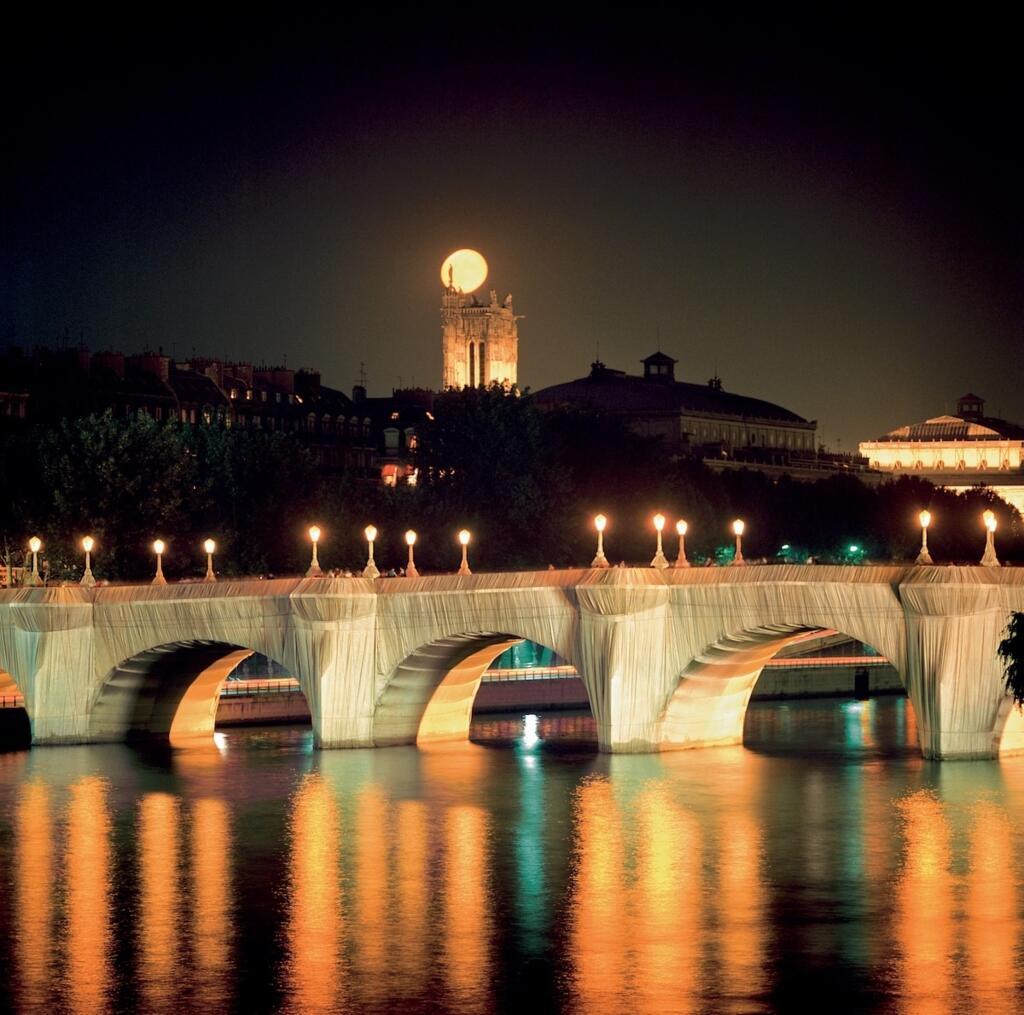
In total, an estimated 3 million people came to see The Pont Neuf Wrapped.
French TV talked about it as a once-in-a-lifetime experience, something Parisians would tell their grandchildren about in years to come.
Fifteen days later, it was over. The installation was dismantled on 5 October, 1985.
But it had shown that modern art could capture a mass audience's imagination – even, or perhaps especially, when it was on a huge scale, challenging to create and in the middle of a busy urban space.
'Rethinking the familiar'
In the decades since, Parisian authorities have welcomed contemporary creations at monuments from the Palais-Royal to the Pantheon and the Grand Palais.
In 2021, the city paid its ultimate tribute to Christo and Jeanne-Claude. After both their deaths, it allowed their representatives to wrap the Arc de Triomphe – a feat they had dreamed of in their early days in the capital but never pursued, assuming it was too much of a long shot.
Paris crowds flock to see Arc de Triomphe, dressed to impress
Next year, they will be remembered again, in a work that artist JR says is inspired by their example. "I share their idea that the mission of art is to make the public think – or rethink about the familiar," he said.
Originally planned to mark the 40th anniversary of the wrapping of the bridge but postponed to allow for more planning time, his installation – entitled The Cave of Pont Neuf – will now be on show from 6 to 28 June, 2026.
It's a chance for the monument to live up to its name once again: Pont Neuf, the 400-year-old "new bridge".