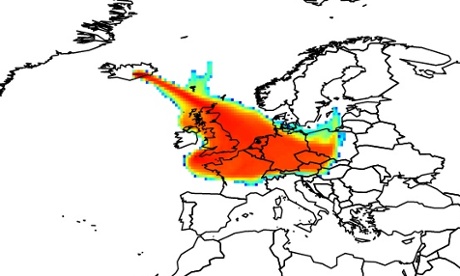
The warm, dry September was great for country walks but haze sometimes spoiled distant views. Morning mists are a wonderful feature of early autumn, but haze on a warm afternoon is normally due to air pollution. The settled weather allowed air pollution to build up over north-west Europe including the UK. Only the Scottish Borders and Highlands enjoyed low air pollution for the whole month. London fared worst with 13 days of air pollution above UK index level three – the threshold when vulnerable people are advised to take precautions.
Particle pollution dominated – mainly tiny nitrate particles that come from gas heating, industry, traffic and agriculture. With little heating on in the warm weather, traffic would have been a large part of the problem. The diesel exhaust gases that cause many UK roads to break EU limits for nitrogen dioxide go on to form nitrate particles which can stay in the air for over a week. From September, new cars had to meet tighter exhaust standards, but it remains to be seen if this will lead to less pollution when the cars are driven in the real world.
On 4 September sulphur dioxide (SO2) from Iceland’s Bárðarbunga volcano caused pollution warnings across Ireland. Pollution from the volcano covered mainland UK from 21 to 23 September, and also reached Paris. Fortunately concentrations remained below World Health Organisation guidelines. Initial estimates suggest that the volcano is emitting an astonishing 200-600kg of SO2 a second – more than all European industry, traffic, coal and oil combustion combined.