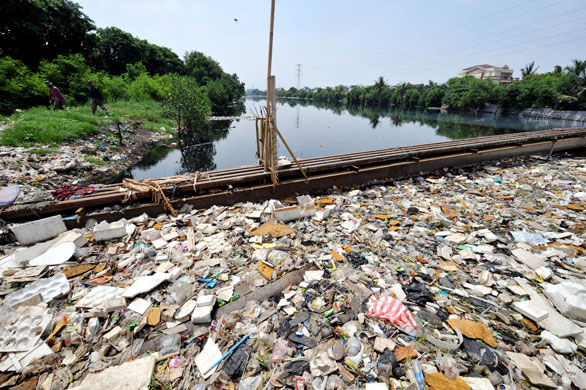
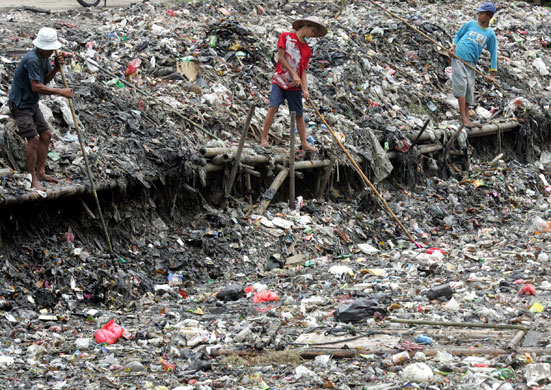
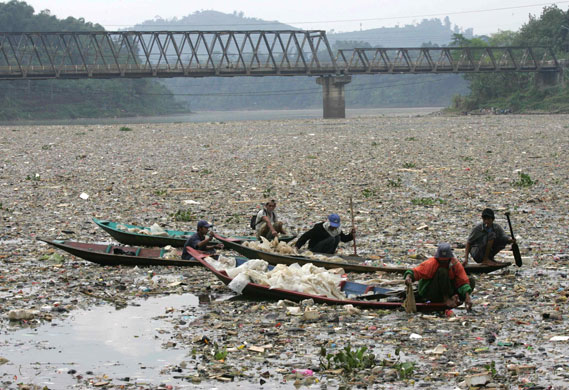
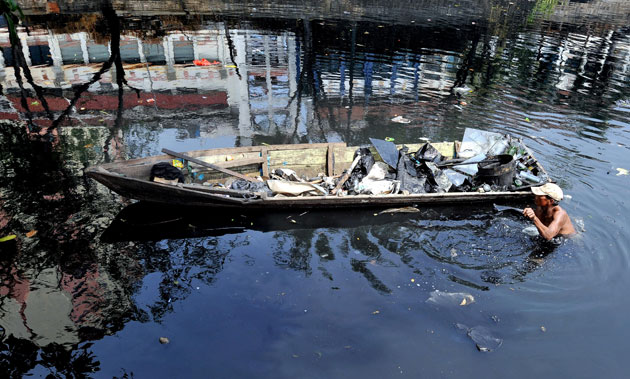
Rapid urbanisation over the last 20 years has seen a rise in untreated household sewage, solid waste and industrial effluents, affecting public health and threatening the livelihood of poor fishing families. A new industry has sprung up - collecting the plastic waste in the river for recyclingPhotograph: Dadang Tri /ReutersThe loan package will be delivered over the next 15 years, and will support sanitation projects and construction of waste treatment plants in the river basin to provide safe water supply to poor families who use the polluted river for fishing, bathing and laundryPhotograph: Adek Berry/AFP/Getty ImagesWorkers in Jakarta clean piles of rubbish along the river twice a week to minimise flooding in the city ahead of the rainy season Photograph: Supri Supri /Reuters
Plastic collectors at work on the river. It is hoped the clean up will allow the cultivation of an additional 61,700 acres (25,000 hectares) of rice paddy, benefiting 25,000 farming familiesPhotograph: Dadang Tri /ReutersCollecting waste in Jakarta. The river management programme also aims to supply water to 200,000 more households in Jakarta. It will ultimately increase Jakarta's water supply by 2.5% yearly, and benefit millions by resolving critical water shortages in Bandung, Indonesia's fourth largest cityPhotograph: Adek Berry/AFP/Getty Images
Sign up to read this article
Read news from 100’s of titles, curated specifically for you.