Martin Kettle (English radicalism needs to recapture the spirit of Blake, 2 January) is so right that progressive politics is these days instrumentalist and lacking in vision – if anyone was in any doubt about the truth of this, they just needed to read the adjacent article by Ed Balls (Osborne is at the margins, Labour is the centre ground, 2 January). Where can we look for such a progressive vision? Kettle suggests that for William Blake politics is a form of religious faith, and it is instructive to hear Justin Welby, in his new year message, talk of sacrifice and self-giving, turning outwards and bringing hope to the poor and suffering of the world, arguably plagiarised from Jesus’s own words in Luke (4:18-19). How might this vision play out in practical politics? Can I suggest raising taxes on the better off and diverting resources to the poor, ill and needy of this country and the wider world? Some of this of course Ed Balls was suggesting as Labour policy, and perhaps all Labour needs to do is to marry policy with the proclamation of a vision – and so engage both the soul and brain of the electorate.
David Wyatt
London
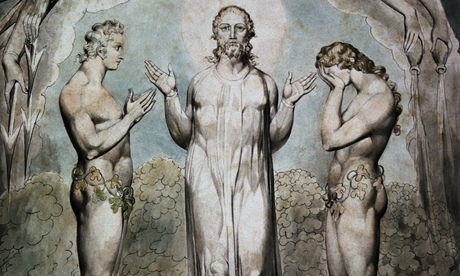
• Martin Kettle’s point that William Blake was not someone you’d want running today’s railways or NHS is sound. Yet from 1976 to 1983, Blake was helping to run British Rail. It was during these years that BR’s chairman, Sir Peter Parker, maintained his long-standing devotion to Blake’s poetry and painting. From 1997 until his death in 2002, Parker was president of the Blake Society. A radio documentary on the life of Blake scholar Kathleen Raine said Parker “won’t go near the negotiating table without a copy [of Blake’s work] close at hand”. Might this add weight to Kettle’s suggestion that, through Blake’s vision, the realms of the practical and the imagination might come together in a “progressive organism”?
Stephen Batty
Poole, Dorset
• How moving for Martin Kettle to remind us of the power and importance of political imagination and vision in these immensely unstable times. Had he chosen a later period to look at the emergence of “politics as a form of religious faith”, he might have alighted on the Independent Labour party. Among the many names who come to mind here are Keir Hardie and Philip Snowden (whatever his later failings at the Treasury), the first a Scot who for many years was MP for a Welsh constituency, the second a Yorkshireman. You could also include the middle-class Katherine Bruce Glasier, whose speeches profoundly moved her audiences. Or the working-class Hannah Mitchell, suffrage campaigner and Manchester councillor, who had only two weeks’ schooling. They all embodied vision and ethics in their politics.
Any progressive politics today would be enriched if, among other sources, it draws from this rich ILP tradition.
Barry Winter
Leeds
• It was as a student, reading Bronowski’s A Man Without a Mask, that I met William Blake, and he has been my companion for the last 60 years. Blake not merely had an imagination and was a dreamer, as Martin Kettle says; he also possessed a blazing anger. And it is that anger, at injustice, at cruelty, at abuse of power, that we in Albion need. As his contemporary Francisco Goya put it: “Divine Justice, do not spare them!” It is the voice of anger that needs to speak for Britain.
Lionel Burman
West Kirby, Wirral
• As EP Thompson noted, William Blake belonged to a “long popular tradition” which was not just visionary but also concerned with opposing the monarchy and organised religion. Martin Kettle may well have a point that reclaiming Blake is one way to forge anew a genuine English radical tradition, but it would be one considerably to the left of what passes for official politics in 2015.
Keith Flett
London
• Imagination and vision are essential, as Martin Kettle says. But to describe the current state of Scottish political thinking as one that broadly reflects the view that Scotland’s problems will be solved by throwing off the English yoke is wrong. I voted for a “progressive” Labour party in UK elections for 50 years, but am unlikely to do so again. This in part because of its stance on the referendum, but mainly because it appears unable or unwilling to articulate an economic vision based on something other than global capitalism as currently practised. People see wages falling in real terms and their conditions of employment being reduced by employers drawing on the larger EU pool of labour. Some misleadingly translate this into a question of immigration or EU membership, rather than face up to the downside of globalisation and ensure that the global market works for the many not the few. In an independent Scotland the case for radical alternatives would be argued against a backdrop free from the needs of London as a global financial centre, from “special relationships” and from an unrealistic view of our place in the world.
Roderick McCallum
Annan, Dumfries and Galloway