And that’s it from us today. Thanks very much for your contributions.
Patrick Butler is another who was keeping a close eye on this week’s work and pensions select committee hearing (see 11:55). Here are the five things we’ve learned.
Politics: live regular AnatolyKasparov has been taking a look at this week’s local council by-elections. He writes:
Two local council by-elections to begin my review of 2015 - though it is worth mentioning there has already been a contest this year which went virtually unnoticed before it had actually taken place - 8 Jan saw a vacancy at Bolsover DC that was a Labour hold in a normally safe ward, though they were given a fright by UKIP on this occasion as they finished less than 5% behind; turnout was as derisory as one might expect for a contest at that time which is being filled again this May, though.
Anyway, on to this week:
Wealden DC - Tory hold of a normally safe two member ward in what is part of their W Sussex heartland (over 70% support in a straight fight with a single Labour candidate in last time, and similarly convincing wins in 2007 and ‘03 when the LibDems took 2nd ahead of Labour) though, in a straight fight with UKIP this time, their winning margin was cut to less than 3 to 2 which (as with the Bolsover result referred to above) may offer them some cheer in the GE run up.
Fife - SNP hold, though that masks an excellent result for them in a division that returned 2 Labour and 1 Nat in both 2012 and 2007 - a double figure swing to them since 3 years ago as they got quite close to winning on first preferences (and a smaller but still significant swing since 2007, Labour did very well on this council last time round) Whilst the SNP have some historical strength here - doing well in the predecessor wards to this area in FPTP days - this still backs up their recent poll “surge” more than some other recent Scottish by-election results. Tories third with little change on 2012, Greens then just edging out UKIP (both with about 4% in an area they had not contested before) followed by the LibDems who slumped to a new low of barely 1% - they had finished third here in 2007 and only narrowly missed getting a councillor elected. Last place was taken by two right wing Independents - one ex-UKIP - both getting derisory totals.
Two contests next week - one a rare Wednesday poll, the other a double vacancy.
Updated
The Conservative party have launched a new poster, Buzzfeed politics reports.
The new Conservative poster featuring Ed Miliband and Alex Salmond is quite something. pic.twitter.com/gZMVeH0wzE
— BuzzFeed UK Politics (@BuzzFeedUKPol) January 23, 2015
The party’s last election poster was very quickly parodied. Will this one fare any better?
It wouldn’t be the politics live blog without him: Andrew Sparrow has been getting to grips with a report by the Institute for Fiscal Studies, which claims that Britain’s poorest families are those hardest hit by the coalition’s welfare cuts and tax rises. His analysis begins:
“The decisions across this parliament mean the rich are making the biggest contribution to deficit reduction,” George Osborne, the chancellor, told MPs in his autumn statement last year.
It’s a claim that coalition ministers have made repeatedly, backed up by a sheaf of distributional analysis graphs published by the Treasury with every budget and autumn statement, and it allows Osborne and his colleagues to argue that they have implemented austerity fairly, with those with the broadest shoulders paying most.
But Friday’s report from the Institute for Fiscal Studies says the opposite. It’s full of useful political ammunition for Labour, but its key finding is that it is those households in the poorest 10% who have lost the most from the coalition’s tax and benefit changes in proportional terms, not the wealthiest.
Weekly politics quiz
With a general election approaching, we thought it would be fun to have a weekly politics quiz. I suspect the regulars on here may all get 10/10.
Some links and discussion points from below the line.
-
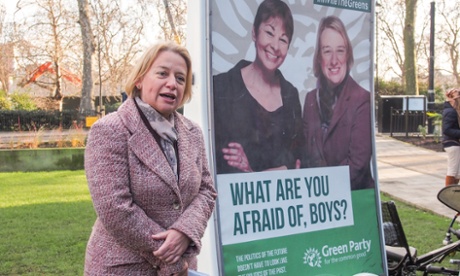
How should Labour tackle the Green surge?
Labour List staff writer Conor Pope has argued that Labour shouldn’t be afraid of criticising the Greens in a piece for the New Statesman. It starts:
There is a popular notion within the Labour party that the Greens are really all just Labour voters. Somewhere along the line, each and every one of them lost their previously unshakeable faith in Labour, and opted for a more acceptable socialist alternative.
It is, of course, not true – and the idea does both parties a disservice. Yet both now seem to argue that Green supporters are simply a part of the broad Labour church who have had enough. These arguments ignore the fact that Labour and the Greens have their own distinct, separate ideological roots.
- Work and pensions select committee hear evidence on the impacts of benefits sanctions
Commenter utopiandreams caught up on Wednesday’s oral evidence session on benefit sanctions policy. He writes:
Witnesses for the first session were Alison Garnham, Chief Executive, Child Poverty Action Group; Lois Race, Service Manager, Welfare Benefits Information and Advice Team and Derbyshire Discretionary Fund, Derbyshire County Council; Dr Kayleigh Garthwaite, Durham University and Fiona Weir, Chief Executive Officer, Gingerbread. They mostly gave accounts of how unreasonable many sanctions were and anecdotal accounts of the hardship caused, particularly to single parents and claimants with mental health issues. Also mentioned were delays for new claimants and ESA claimants failed by the WCA even though unfit for work.
Because of confidentiality no names were given, without which Nigel Mills seemed more willing to dismiss such tales as undeserving individuals who failed to engage with their job search requirements. After all he’d visited an Job Centre in his Amber Valley constituency and had seen what a wonderful job the DWP advisors did. He was quickly shut up by the sanction given for having a heart attack during a WCA.
Witnesses for the second half were Ben Robinson, Head of Policy, Community Links; Steve Hughes, Head of Economic and Social Policy, Policy Exchange[ Mark Serwotka, General Secretary and Helen Flanagan, Vice-President DWP, Public and Commercial Services Union and Professor David Stuckler, University of Oxford.
This session was more concerned with the severity and the manner of applying sanctions and the main point of the hearing, their efficacy in ‘changing behaviour’ as IDS would put it, in other words helping with what most job seekers actually do, i.e. to seek work. David Stuckler gave figures of about 10% of claimants being sanctioned but conceded there may be some double counting because of multiple sanctions applied to some individuals. He also suggested that over 40% (I think) of sanctioned claimants disappear from the records with no knowledge of what they do with at least 20% of them not in work.
Mark Serwotka and Helen Flanagan gave accounts of the PCS Survey on Conditionality and Sanctions. Again Nigel Mills appeared to dismiss such claims as anecdotal and evidence free and demanded concrete evidence, which Mark said he could provide in anonymised form. Nigel wanted names.
On that count should there be a formal inquiry as the PCS have requested, I hope that whistleblowers are protected and therefore able to provide such evidence. I am sick and tired of Tories’ denial and want the perpetrators brought to book. Oh yes, also raised was an 80% target for sanction referrals to be upheld.
Updated
While YouGov has the Labour lead at two points:
Update: Lab lead at 2 - Latest YouGov / The Sun results 22nd Jan - Con 31%, Lab 33%, LD 7%, UKIP 17%, GRN 8%; APP -23 http://t.co/LlkjseCfei
— YouGov (@YouGov) January 23, 2015
Some Friday polling for you. The latest Populus poll shows Labour with a four point lead:
Latest Populus VI: Lab 36 (-), Con 32 (-3), LD 9 (+1), UKIP 13 (-), Others 10 (+1). Tables here: http://t.co/bOPVcX70pD
— Populus (@PopulusPolls) January 23, 2015
Updated
Andrew is not writing his usual Politics Live blog today but, as an alternative, here’s Politics Live: readers’ edition. It’s intended to be a place where you can catch up with the latest news and find links to good politics blogs and articles on the web.
Please feel free to use this as somewhere you can comment on any of the day’s political stories - just as you do during the daily blog. It would be particularly useful for readers to flag up new material in the comments - breaking news or blogposts or tweets that are worth passing on because someone is going to find them interesting.
As we’re now in a general election year, there’s plenty to talk about. With this in mind, we are going to update the readers’ edition throughout the day, with polls, talking points and material flagged up by readers.
All today’s Guardian politics stories are here, and all the politics stories filed yesterday, including some in today’s paper, are here.