Summary
- Labour’s paternity leave proposals – to double the amount of time off to four weeks and increase pay by £100 to £260 per week – have provoked a constant stream of comment throughout the day. John Allan from the Federation of Small Businesses has said that some small businesses will struggle to afford four-week paternity leave.
- Labour party donor and businessman Andrew Rosenfeld has died aged 52. Ed Miliband said he was deeply saddened by the news, adding “my thoughts are with Juliet and his family”.
- David Cameron has chaired a Cobra meeting on the possibility of Greece leaving the eurozone, but a spokesperson for the prime minister stressed that the UK would be well protected against shocks from a Greek exit. Ahead of a meeting of European leaders on Wednesday, to attempt to reach a peace deal over the Ukraine conflict, a No. 10 official has announced that fresh sanctions on a number of Russian officials have been agreed.
- The Electoral Reform Society has reported that even the smallest changes in support at the general election could have a huge impact on the make-up of the next government. The report’s author, Professor John Curtice, compared the current electoral system to a lottery.
- The financial secretary to the treasury, David Gauke, defended the government’s record on tax evaders. He told parliament that the government has given HMRC extra powers to tackle tax avoidance. He said HMRC received the ICIJ data under very strict conditions, which prevented it from sharing the data with other law enforcement authorities.
-
New polling from Lord Ashcroft, conducted over the past weekend, puts the Conservative party three points of Labour. The Tories are up three to 34%, with Labour unchanged on 31%, the Lib Dems up one at 9% and UKIP down one at 14%. The Greens are down three points at 6% and the SNP unchanged at 4%.
Andrew will be back tomorrow to cover all of the day’s political developments.
Thanks for all your comments. It’s been fun.
Updated
Downing street has announced that new sanctions will be imposed on a number of Russian officials, according to Politics Home.
A No. 10 official has said that the EU Foreign Affairs Council agreed the sanctions today.
The Foreign Affairs Council has agreed sanctions against a number of individuals,” he said.
These are travel bans and asset freezes against 14 separatist military leaders, five Russian officials and/or Duma members and nine others who are connected to the separatists. The sanctions will come into force on the 16th February and that’s when the names will be published…
That was a unanimous decision by foreign ministers today. It reflects the ongoing and continued grave concerns that we have about destabilisation in the east of Ukraine and sends a clear signal about the European Union’s approach in response to Russia’s actions.
The leaders of France, Germany, Russia and Ukraine are due to meet on Wednesday in an attempt to reach a peace deal over the conflict in Ukraine.
Ashcroft polling puts Conservatives ahead by three points
This week’s Ashcroft National Poll, conducted over the past weekend, puts the Conservative party three points of Labour. The Tories are up three to 34%, with Labour unchanged on 31%, the Lib Dems up one at 9% and UKIP down one at 14%. The Greens are down three points at 6% and the SNP unchanged at 4%.
In a blog post explaining the findings, Ashcroft writes –
On preference of Prime Minister, opinion is largely unchanged since I last asked the question in November. Nearly six in ten said either that they were satisfied with the job David Cameron is doing as PM (30%) or that they were dissatisfied but would rather have him as PM than Ed Miliband (29%). Only just over a quarter (27%), including 69% of Labour voters, said they were dissatisfied with Cameron and would rather see Miliband in Number Ten.
Danny Alexander has released a particularly strongly worded statement on the HSBC scandal.
Financial institutions who are proven to have colluded with tax evaders should face the full force of the law. We need to work with HMRC and regulators to make sure that they have all the legal and regulatory tools to tackle such situations. If that means a change in the law, or new powers for regulators, that is what we will do. We quite rightly prosecute and often jail people guilty of damaging our society through conventional crime and anti-social behaviour. The way we treat systematic tax evasion should be no different. If that means jail for offenders and those that conspire with them, then so be it. Over the last 5 years, thanks to the Liberal Democrats, we have taken unprecedented action to clamp down on tax avoidance and evasion. These practices are socially, morally, and economically unacceptable and I will continue to work to make sure that the law, and the way it is applied, reflects that.
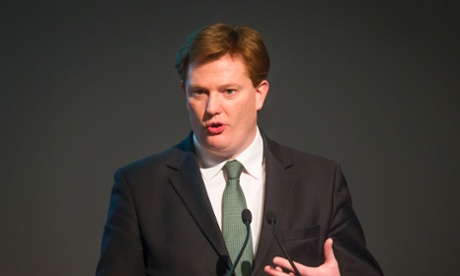
David Gauke gives a statement to parliament on HSBC
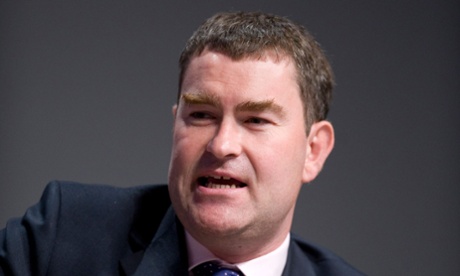
I’m back from live blogging the statement to parliament from the financial secretary to the treasury, David Gauke, on the HSBC tax files. Here’s a summary of what he said –
“HMRC has a long standing approach to tax evasion which is based on collecting the tax and interest due, changing taxpayer behaviour to stop them from evading in future, and enforcing the most effective and appropriate penalties”, said Gauke.
“This means providing disclosure facilities to encourage evaders to sort out their tax affairs, backed by civil penalties to fine them for the offence. This has been the consistent approach of governments of all parties.”
He argued that the government has increased investment in HMRC’s enforcement capacity and has increased the maximum civil fines for hiding money in tax havens to 200% of the tax evaded.
“HMRC has collected more than £1.6bn from 57,000 disclosures, as a result of a wide range of UK and international initiatives”, he said. It has also brought in around £2bn of previously unpaid tax as a result of an agreement with Switzerland and the international Liechtenstein disclosure facility, he said.
Gauke said HMRC has worked through the HSBC data and that £135bn had been raised in tax, interest and penalties from tax evaders who hid their money in Swiss HSBC accounts.
HMRC received data from about 6,800 entities, which – after removing duplication –resulted in information on 3600 businesses and individuals. Of these, over 1,000 were challenged and the cases settled, he said.
“HMRC believe the remainder were compliant, but continue to monitor their activities.”
Gauke said that HMRC was examining the data obtained by the International Consortium of Investigative Journalists (ICIJ) and would be asking for it to share anything it hasn’t yet seen.
“HMRC received the ICIJ data under very strict conditions, which limited the department’s use of it to pursuing off-shore tax evasion and prevented HMRC from sharing the data with other law enforcement authorities.
Under these restrictions, HMRC has not been able to seek prosecution for other potential offences, such as money laundering.”
Updated
Labour MP for Birmingham Ladywood, Shabana Mahmood, will ask an urgent question on the HSBC papers in the Commons. I will be live blogging the question and subsequent government statement over on the HSBC story live blog from 3.30pm and then summarising events here.
See you in a little while!
Analysis from the National Institute for Economic and Social Research, published today, concludes that the economy would grow more under Labour and Liberal Democrat fiscal plans than it would under Conservative plans.
The research looks at the implied 2017-19 economic policies of the three main parties and found Labour and the Lib Dem plans would see GDP grow at a rate of 0.3% more then forecast in 2017, compared to 0.1% under the Conservatives.
In 2018, the economy would grow 0.2% faster under Labour and the LibDems, compared to 0.1% under the Conservatives. In 2019, both Labour and Lib Dem plans would see GDP growth at 0.5% more then current estimates, compared to a rate of 0.2% for the Tories.
The authors of the report say: “Undoubtedly, the parties themselves will disagree with aspects of our analysis. On one level they are correct: each will have a different set of priorities if elected, and the precise tax and spending decisions introduced will reflect those. However, given announcements to date, it is our view that this is a fair reflection of the potential macroeconomic impacts of their different approaches.”
Home secretary Theresa May is answering questions in the Commons on cuts to policing.
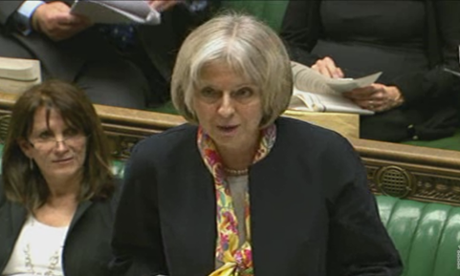
She says that there have been cuts to policing, but they were necessary, like other public service cuts, because of the deficit the coalition inherited from the Labour government.
May says the government has cut red tape and freed the police from central government, allowing them to focus on cutting crime. She says they have saved 4.5m hours of police time, which is the equivalent to 2,100 police officers back on the beat.
The home secretary says that crime has fallen by over a fifth since the last election.
She says she has no plans to reintroduce the targets that the last government had.
Updated
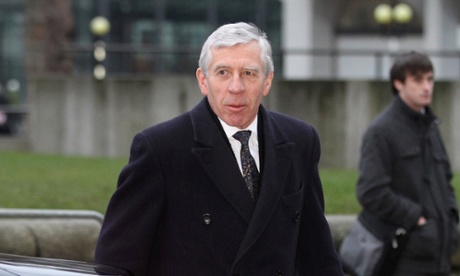
Jack Straw could take a seat in the Lords before the Chilcot inquiry reports, according to the MailOnline.
A senior Labour source has told political editor Tom McTague that the former foreign secretary is open to accepting a peerage when he stands down as MP for Blackburn in May.
Straw is reported to be one of the people to have received letters from Sir John Chilcot informing them that they will be criticised in the report and giving them a chance to respond.
Lunchtime summary
- Responses to Labour’s paternity leave proposals have been rolling in. John Allan from the Federation of Small Businesses has said that some small businesses will struggle to afford four-week paternity leave.
- Labour party donor and businessman Andrew Rosenfeld has died aged 52. Ed Miliband said he was deeply saddened by the news, adding “my thoughts are with Juliet and his family”.
- The Electoral Reform Society has reported that even the smallest changes in support at the general election could have huge effects on the make-up of the next government. The report’s author, Professor John Curtice, compared the current electoral system to a lottery.
Here are some other things that are worth a read this lunch time.
Guido Fawkes reports that Jim Murphy has claimed £1.30 on expenses for his beloved Irn Bru.
The new campaign tactic, a first in UK politics, enables the Tories to completely bypass Britain’s strict ban on paid-for political TV adverts and allows the party substantially more freedom to target video adverts at individuals in marginal constituencies.
Updated
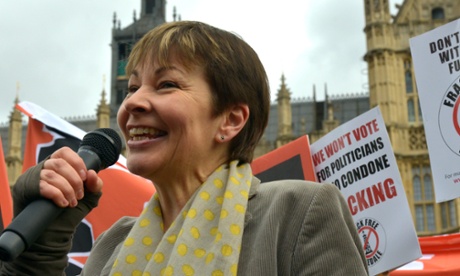
The New Statesman’s May 2015 website, which is dedicated to reporting on the upcoming election, reports that the Green party are going to include their controversial “Citizens Income” policy in their manifesto. The party’s only MP told the BBC’s Today programme: “The citizen’s income is not going to be in the 2015 general election manifesto as something to be introduced on 8 May. It is a longer-term aspiration; we are still working on it.”
Shahrar Ali, one of the party’s deputy leaders, told May 2015: “I don’t really want to go into the interpretations and the ins and outs of what people have said, but let me be clear about what is the case: the citizens’ income is part of the general election manifesto for 2015. That is a fact.”
The citizens’ income involves paying every British adult £72 a week, regardless of income. The Citizen’s Income Trust, a leading advocate of the idea, said last month that the Green party’s proposals would hit the poorest hardest unless they were made more complicated by including a means-tested element.
Updated
It will be easier for Labour to win a majority than for the Conservatives, says report
The Electoral Reform Society has published a report which suggests that “voters would be as well buying a lottery ticket as being handed a ballot paper”. The report uses polling data to demonstrate how relatively small shifts in support among the parties could have a huge impact on the shape of the next Parliament and therefore the next government.
The author of the report, Professor John Curtice of the University of Strathclyde, says that “it looks like there will be no relationship between votes cast and seats won” in May’s election.
Among the findings are:
- Ukip could come 6th in seats but 3rd in votes, and SNP could come 6th in votes but 3rd in seats.
- The SNP could get a game-changing 50-odd seats or a paltry few depending on relatively small shifts in the vote.
- It will probably be easier for Labour to win a majority than it will be for the Conservatives. Even with its difficulties in Scotland, Labour is likely to need a 5-point lead to win a majority, whereas the Conservatives will require a 7-point one.
- A 7 point improvement in the Lib Dem vote to 15% would have little effect on Labour’s chances of a majority, but means the Conservatives would need as much as a 10-point lead.
- Norwich South is the Green party’s best hope of gaining a second Westminster seat.
You can read the report here.

Updated
Cameron chairs a Cobra meeting on a Greek eurozone exit
David Cameron held 1 hour Cobra meeting this morning to discuss risk of Greek exit from Euro including threat of contagion.
— Patrick Wintour (@patrickwintour) February 9, 2015
This morning the prime minister chaired an hour-long Cobra meeting to discuss the potential impact on the UK of a Greek exit from the eurozone. It was attended by senior officials, including the head of the Treasury, Nick Macpherson, the Treasury’s director of financial stability, Lowrie Kahn, and the Bank of England’s international director, Phil Evans. The chancellor didn’t attend as he is on his way to the G20 meeting in Istanbul.
A spokesperson for the prime minister said: “There do remain risks around contagion and uncertainty and so it is important to look at all of those.” But Downing Street has stressed that reforms have lessened the vulnerability of other European countries from events in Greece and that most Greek debt is held by eurozone institutions and not in Britain.
You can follow our live Greek crisis blog here.
Updated
I’ve been sent two comments from prominent employment lawyers on Labour’s paternity leave proposals.
Simon Rice Birchall, partner at law firm Eversheds, says that “the sad reality” is that take up of paternity leave is very low and that greater shared parenting will require a cultural change, not an overnight fix.
“With the introduction of shared parental leave later this year, a scheme founded upon one of the earliest commitments of the coalition government, it might appear that the Labour party is already calling into question its effectiveness by offering increased statutory pay as an added incentive to new dads,” he says
“Whilst these proposals present more good news for some employees and for employment flexibility in the longer term, many are struggling to keep up with the steady stream of changes to parental rights and pay which they have faced in recent years. Today’s story suggests there may be little let up in the coming months.”
Fraser Younson, employment partner at Squire Patton Boggs, says that although Labour’s proposals could be positive for bigger businesses and employees, they would be difficult for smaller businesses to accommodate.
“While families and bigger businesses could benefit from Labour’s proposal, it would be nothing but bad news for [small and medium-sized enterprises] if implemented, since they can’t easily flex their staff resource in the way that bigger businesses can. For SMEs, this follows a pattern of more and more red tape being placed on business over recent years. When taken individually, some of these proposals don’t seem like a big deal – but collectively they represent a major impediment for business.”
British Chambers of Commerce director general John Longworth has said Labour’s proposal amounts to “a tax on business”.
“Although well-meaning, proposals such as this create very real costs for businesses, which can in turn lead to reduced productivity, reduced growth and fewer jobs,” he said.
“Businesses have already had to absorb over half a dozen changes to parental leave in the last decade - with one, shared parental leave, not even fully in place yet. This constant instability raises costs for business and generates uncertainty when it comes to taking on new staff.”
Updated
The Liberal Democrat twitter account has drawn attention to the fact that the party’s paternity leave policy is to give fathers six weeks off, as opposed to Labour’s proposed four weeks, though there is nothing in the policy announcement (from August last year) to suggest they’d change paternity leave pay.
Under our manifesto plans, fathers will get 6 weeks paternity leave http://t.co/7iW4vsJxzZ pic.twitter.com/sizK1xPXYU
— Liberal Democrats (@LibDems) February 9, 2015
The Guardian’s Polly Curtis has raised an interesting point. Labour have said they’d increase paternity leave pay by £100 a week to £260 per week, but have said nothing about what they’d do with maternity leave pay.
Is Labour saying men shd get twice as much for paternity leave than women get for maternity leave? @RachelReevesMP
— polly curtis (@pollycurtis) February 9, 2015
Updated
PoliticsHome have some of Miliband’s comments to the BBC on his paternity leave policy in more detail.
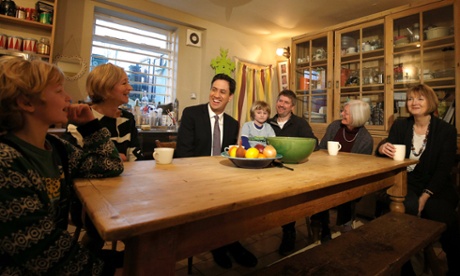
I think that people feel they are working hard for this economy but this economy is not working for them. We’ve got a very clear plan. First of all to double the amount of paid paternity leave from two to four weeks, to pay it at a decent rate, £260 a week, about at the minimum wage. We think that’s important because for dads, those first weeks of a child’s life, and I know this from my own experience, are incredible important. I was with a dad this morning who said ‘I really wished I could have taken more time off, but I only had those two weeks and it felt like a really short time.’
I did take paternity leave for both my kids, I took two weeks. I would have [taken more]. I would have definitely done that. I think it is about changing the way our economy works. At the moment, so many parents … are in a juggling act. I actually think this is about a more productive country as well. If parents feel they’ve got the childcare, and we’ve got plans to expand free childcare from 15 – 25 hours for 3 and 4 year olds, if people feel they’ve got the flexibility, they are going to be more productive. It’s my philosophy, when working people succeed, Britain succeeds. I think that’s our case at this election.
Miliband rejected claims that the plans were anti-business.
That’s not the way I see it… we brought in two weeks’ paid paternity leave and there were similar warnings. I think this is the right step. What is crucial about this is the costs are being paid for by government. At the moment, the situation is that lots of businesses are providing this leave, leading businesses are doing more, but they are having to foot the bill. Actually, this is government saying ‘we want to support business to do this’. This isn’t about the cost on business, this is about saying, wow, we as a society are going to balance the demands, help parents out, give them that crucial time at the beginning of a baby’s life.
I’ve got two young boys, who are four and five. The greatest pleasure in life is spending time with them and Justine. It is really hard, because, like many, many parents, you are working long hours and all of that. You become more and more aware of how important that quality time is. I am sure other political leaders would say the same. Part of the thing I’ve learned to try and do is to try and carve out that time with them, mainly at weekends… I don’t want them to think of me as a dad who wasn’t around. My job as leader of the Labour party is important but my most important job is being a good dad.
Updated
A lot of today’s political news surrounds the leaked HSBC files, which show that Britain’s biggest bank helped wealthy clients avoid millions of pounds of tax.
I’ll be picking up the biggest developments on this blog, but the Guardian’s business reporter Jennifer Rankin will be covering the story in depth on a separate live blog here. You can follow her on Twitter here.
Speaking on BBC news just now, Miliband said:
This is a very serious situation and government has some serious questions to answer. We need to know why HMRC apparently did not act, apart from at the margins, on the information that they seem to have been given about what was going on. We need to know from the government why they appointed Stephen Green of HSBC as a trade minister well after this information was passed to HMRC. So I’d like to see the government explaining today what they did.
We cannot have a country where tax avoidance is allowed to carry on and where government just turns a blind eye.
HMRC have released a statement:
We have systematically worked through all the Lagarde data. As a result tax, interest and penalties have now been paid by those who hid their assets in Switzerland to get out of paying tax. The decision to prosecute is made by the Crown Prosecution Service based on the facts.
The Lagarde list [of alleged tax evaders] was used by HMRC for the express purpose for which it was provided — to assess, collect, enforce and prosecute tax offences.
We have brought in more than £135m as a result of this work and the government has increased the maximum penalty for hiding money in tax havens to 200% of the tax evaded.
We use information provided by whistleblowers as part of our commitment to tackle offshore tax evasion. To date our agreements with Switzerland and Liechtenstein alone have brought in around £2bn in previously unpaid tax.
Here’s a Guardian film on the documents, which were passed to the Guardian and the International Consortium of Investigative Journalists, along with Panorama and around 50 media outlets around the world.
Updated
The Federation of Small Businesses have responded to Labour’s paternity leave announcement.
In a statement, John Allan, FSB National Chairman, says:
Businesses will have legitimate concerns about these proposals and it’s important political parties understand the practical implications of policy changes. Altering paternity leave so soon after introducing shared parental leave has the potential to cause confusion amongst businesses that are only getting to grips with the most recent changes. We’d like to see shared parental leave have a chance to bed in before seeking to give dads extra time off.
The reality is that for small businesses in particular, extending paternity leave from two to four weeks makes it much more likely that they will have to buy in replacement staff as they will struggle with absences. That’s a cost that some firms will struggle to afford.
Updated
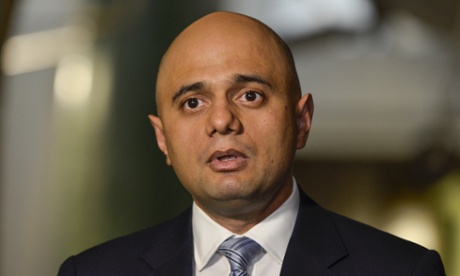
The culture secretary, Sajid Javid, has said he’ll take a “close look” at a call from the all party parliamentary inquiry into antisemitism to crack down on racist remarks on social media.
The inquiry, which reported today, was set up after a rise in antisemitism in July and August last year during the fighting between Gaza and Israel.
I’m very concerned about that and of course I’ve heard about this report today that’s come out which suggests there’s increased antisemitism online which is clearly unacceptable. We rightly have a zero-tolerance approach to anyone who preaches any kind of hate crime to any community and online hate crime is as unacceptable as any other forms of hate crime.
So I think what this report shows today is that, despite the efforts over the last few years – increased use of filters, for example, both for public wifi and for people’s internet connections at home – there’s always more work to do. So I want to take a close look at that report and see what more can be done.
The report, which you can read here, also recommends that the government should commit funds for security at British synagogues, commission research into identifying and explaining antisemitic language, and issue guidance for teachers on how to teach the Middle East conflict in the classroom.
Updated
A quick round up of the most interesting political comment in today’s papers.
George Osborne and the US secretary of the treasury Jacob Lew have written in the Wall Street Journal about the “essential elements” needed in a G20 growth plan, saying “reform, including free trade, should join fiscal and monetary measures on the agenda”. The article is behind a paywall.
Peter McKay writes in the Daily Mail that there might be a connection between Tony’s Blair’s offer of help for Ed Miliband at the the general election and the forthcoming Chilcot inquiry report on the Iraq war. “If Blair is eviscerated by Chilcot, some response will be necessary from the government. Most of us would consider it a crime to knowingly start a war on a false basis,” he writes. “But would a Labour-controlled government start proceedings which might end with the disgrace of its most successful leader?”
In a Telegraph article called “Ed Miliband will never understand that capitalism can cure cancer”, London mayor Boris Johnson joins in attacking Labour’s business credentials, saying that Miliband and Balls have no experience of the private sector and that their lives “have been funded and formed by taxpayers’ money”. Johnson arrives in Boston today for a six-day official visit to the US east coast. He will meet Hillary Clinton in New York, which will undoubtedly fuel speculation about his own political ambitions.
Melanie Phillips writes in the Times that the refusal to acknowledge that grooming gangs in Rotherham were Muslim has had a catastrophic effect. “Louise Casey [who wrote a report that condemned Rotherham council as ‘not fit for purpose’] says the authorities were terrified of giving ammunition to the British National party. But denying the grooming gangs immeasurably strengthened the BNP, enabling it to pose as the only people ‘telling the truth’.”
Updated
Labour party donor Andrew Rosenfeld dies
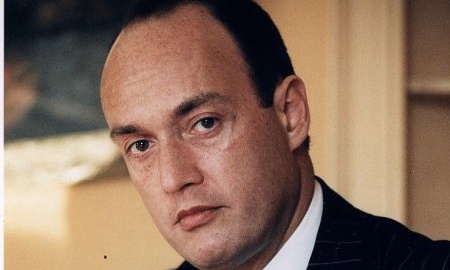
Prominent Labour party donor Andrew Rosenfeld has died aged 52 after a short illness.
Rosenfeld was the co-founder of property company Minerva and chairman of mobile phone provider TPO. He was caught up in the “cash-for-honours” controversy after he gave a million pounds to the Labour party before the 2005 general election. He briefly switched sides and supported the Conservative party in 2010, but returned to Labour shortly afterwards.
Labour business backer Andrew Rosenfeld, 52, has died. Donating £1m+. Had lived as tax exile in Switzerland. Was Lab, Con, the Lab again
— Kevin Maguire (@Kevin_Maguire) February 9, 2015
In a statement his family said: “The family of Andrew Rosenfeld are devastated to announce that he passed away yesterday. Andrew was a devoted and loving husband, father and friend.”
Labour leader Ed Miliband said: “I am deeply saddened by the sudden death of my friend, Andrew Rosenfeld. My thoughts are with Juliet and his family.’’
Updated
Coalition announces £4bn of extra funding for school building
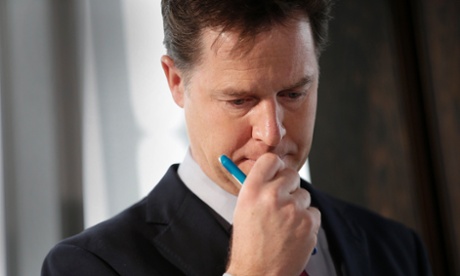
Making an increasingly rare coalition announcement, Nick Clegg told Sky news earlier this morning that, alongside the £2bn from the second phase of the government’s Priority School Building Programme, a further £4bn will be allocated between 2015 and 2018 to improve school buildings.
“Lots of the buildings children are taught in up and down the country are in buildings built in the 50s, 60s and 70s that just simply aren’t fit for purpose right now,” he said.
The government says that £18bn has already been invested in school buildings over the course of this parliament.
In a statement, education secretary Nicky Morgan said the move was part of, you guessed it, the “long term economic plan”:
As part of our long term economic plan, we have continued to invest in school buildings which will ensure we can deliver even more great new schools, transform the learning environment for tens of thousands of pupils and their teachers whilst delivering value for money for the taxpayer.
We’re also making sure, for the first time, that every local area can benefit from more funding certainty, so that local councils, academy trusts and voluntary-aided partnerships can plan ahead and make the right investment decisions that will deliver the best possible value for their schools.
This announcement is a major step towards ensuring all children no matter what their background and no matter where they live have access to the best possible schools and learn in an environment that gives them the knowledge and skills to succeed in the global race.
Updated
Today Ed Miliband will announce Labour plans to double the length of paternity leave to four weeks and increase paternity pay by £100 to £260 per week. He is expected to say –
The Tories want to spend £700m on what they call a married couple’s allowance but which in fact will go to just one in five families with children.
Thanks to the last Labour government, fathers have two weeks’ paid paternity leave. Millions of families have benefited, with parents saying this has helped them support each other, share caring responsibilities and bond with their children. But the money isn’t great, and too many dads don’t take up their rights because they feel they have to go back to work so they can provide for their family. So today we are announcing plans to double paid paternity leave and ensure the money available is as good as the national minimum wage.
The announcement will be one of a set of family-friendly proposals to be outlined this week by the Labour party.
I’m waiting to find out when the announcement will be made, but you can read the Guardian article here in the meantime.
Andrew isn’t here today, so I’ll be filling in for him. I’ll be covering all the breaking political news from Westminster, as well as bringing you the most interesting political comment and analysis from the web. I will post a summary at lunchtime and another in the afternoon.
Hints and tips welcome.
If you want to follow me on Twitter, I’m on @fperraudin.