Young people are disillusioned with electoral politics and political parties, and feel let down by public policy. Who can blame them? Many young people protested against the Iraq War. It happened, but few would now argue that they were wrong.
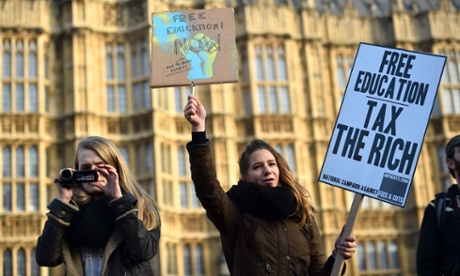
The Liberal Democrats promised not to raise tuition fees, but tripled them to an eye-watering £9,000 (despite massive student protests). The education maintenance allowance (EMA), supporting young people from poorer backgrounds to stay in education beyond the age of 16, was abolished, while winter fuel payments and free travel passes have been maintained for pensioners – irrespective of their wealth and income.
With the general election just over two months away, the political parties are vying for our votes. Most people will visit polling stations on 7 May. But that will not be true for the youngest sector of the electorate.
Turnout among 18-24 year olds has fallen from over 60% in the early 1990s to an average of 40% over the last three general elections. My own research finds that the youth turnout rate in the UK is the lowest of all the 15 members of the old European Union. Voters aged 18-24 in Sweden turn out to vote at double the rate of their peers in the UK.
The prospects for increasing youth turnout have not been helped by the introduction of individual electoral registration by the coalition government. Under the new system, young people and students are least likely to have been transferred onto the new electoral roll.
A recent BBC investigation highlighted the dramatic fall in the number of registered voters in areas with a high concentration of students (as much as 60% in some Oxford wards). Despite the good efforts of groups seeking to bring out the youth vote, primarily BitetheBallot who organised the recent National Voter Registration Day, further action is needed to bolster youth participation.
However, young people are not apathetic. They engage in political issues and projects that have meaning for their everyday lives.
Disillusioned with mainstream politics and political parties, young people in general and students in particular have turned to a dazzling array of alternative activities: from the ballot box, to the street, to social media. A few examples include demonstrations against the Iraq War and student tuition fees, the Occupy movement, consumer “buycotts” of fair trade products, and support for environmental protection (note the recent surge in membership for the Green Party).
However, if young people do not vote (and – as Russell Brand argued – stick two fingers up to the system), politicians will be less likely to listen to their concerns. This, in turn, will lead to an even deeper disillusionment among the millennial generation. And so, the vicious circle continues.
Higher education can help to break this vicious circle of political and public policy neglect by promoting the discussion of political issues on campuses and encouraging students to register to vote.
Why are universities so important? In the UK, less than 2% of 18-24 year olds are members of political parties. Young Britons are also less likely to go to church or become members of trade unions and other civic organisations than was the case in previous generations.
These institutions once provided for the political socialisation of many young people during their transition to adulthood, but are no longer capable of playing this role.
Universities and colleges, with their large reach (around 40% of young people go on to higher education) are the only large institutions that can fill this gap. Young people who hold a university degree are three times as likely to vote as young people who leave school at 16 with no qualifications. There is also evidence to show that being in higher education matters even more than an individual’s level of educational achievement. So, institutions matter.
The political studies association recently launched its charter for active citizenship in higher and further education, which aims to foster civic and political engagement in universities and colleges through its network of politics departments. Royal Holloway University has signed up to this initiative and more universities are considering doing so.
Here are three ways for universities to have an impact:
- Set up events to encourage the discussion of key political issues (that have particular meaning to students) such as Labour’s policy on £6,000 tuition fees and party positions on paid apprenticeships and environmental protection.
- Promote voter registration to students as an issue of empowerment – to make their voices heard so that politicians will pay attention to young people’s politics.
- Empower students (student champions) to set up and promote these initiatives through their own social networks on campus and through social media.
Join the higher education network for more comment, analysis and job opportunities, direct to your inbox. Follow us on Twitter @gdnhighered.