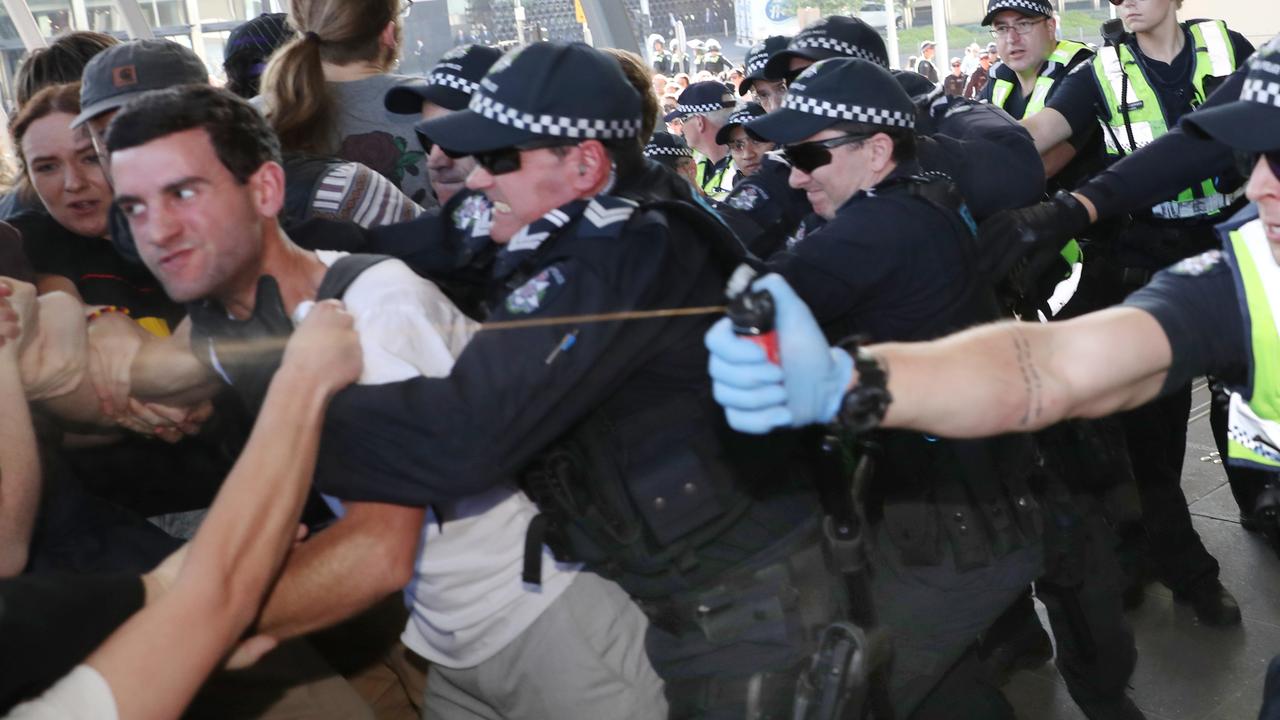
A landmark finding that police committed battery and were "inhumane" in using capsicum spray against protesters should end its use, activists say.
The state of Victoria was on Friday ordered to pay $54,000 in damages to activist Jordan Brown, more than six years after he was hit with oleoresin capsicum (OC) spray at a mining protest.
Mr Brown's case was the first to challenge Victoria Police's use of OC spray at protests.
Justice Claire Harris found two police officers who sprayed Mr Brown had each committed battery and their use of it against him was unlawful.
The judge described OC spray as a "weapon" which can cause "painful effects on persons to whom it is deployed", including skin burning, eye irritation, breathing difficulties and acute pain.
She found the officers' actions against Mr Brown qualified as "cruel, inhumane or degrading treatment" under the Human Rights charter.
The actions of police had limited Mr Brown's rights to freedom of movement and peaceful assembly "in circumstances where the uses of force were not lawfully justified", the judge said.
Justice Harris said her finding would not set a broad precedent for police deployment of weapons against protesters, but related to circumstances similar to Mr Brown's case.
Protesters, including Mr Brown, hugged and clapped inside court after the decision was handed down.
Barrister Sam Hay KC, representing the state, said he needed to read over the judgment and take time before deciding if it will be appealed.
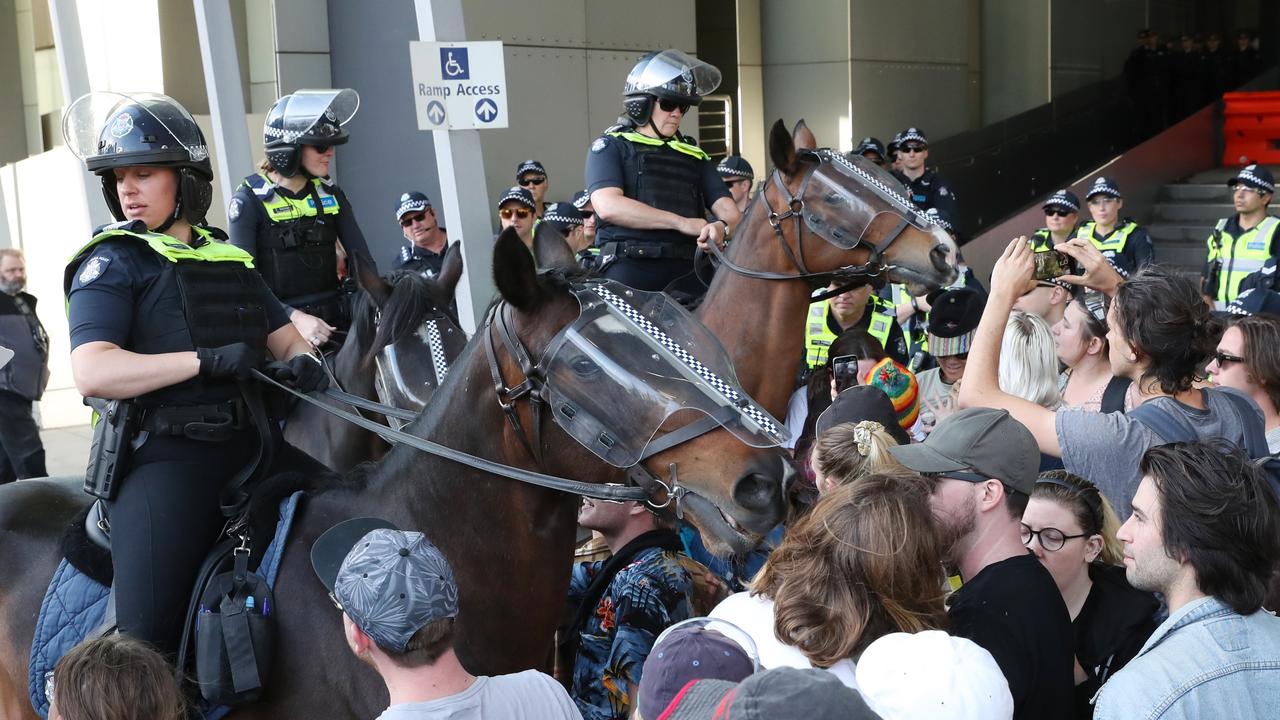
Mr Brown was among dozens sprayed by officers trying to disperse crowds outside the International Mining and Resources Conference in Melbourne on October 30, 2019.
Video played during the trial, which began in February 2025, showed protesters climbing poles outside and unfurling a banner on day three of the conference.
Police had argued the two officers deployed OC spray against Mr Brown as a lawful act of force to arrest one of the protesters climbing up the pole, and claimed it was used in self-defence.
However, the judge rejected both defences and ordered the state pay Mr Brown $54,000 including $4000 for special damages, $10,000 in aggravated damages and $40,000 for general damages.
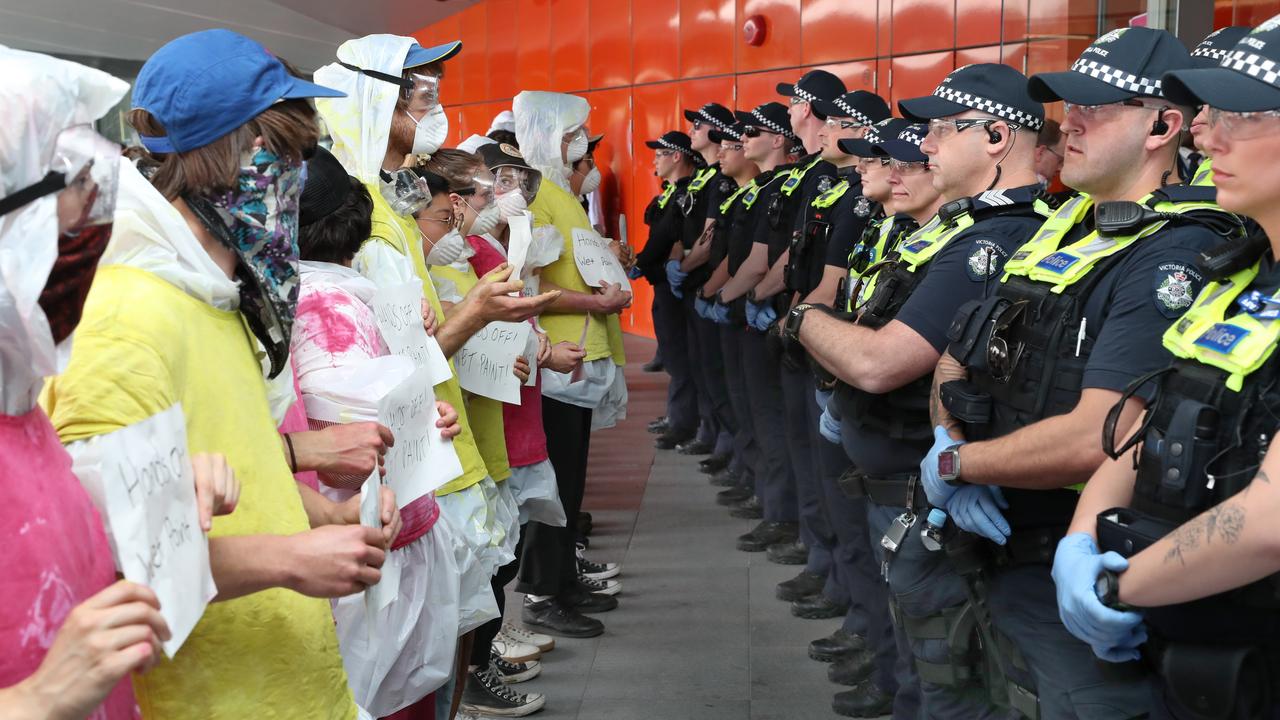
Outside court, activists called for the decision to signal an end to police use of the spray at protests.
"This decision really vindicates the experiences of so many people who have been sprayed with this horrible chemical weapon in the six years since, and it needs to stop," Melbourne Activist Legal Support coordinator Anthony Kelly said.
"This should be the line in the sand when it comes to the use of OC spray in Victoria."
Mr Brown's solicitor Grahame Best said his client had been courageous and brave in bringing the action against police, and the judgment gave police clear boundaries in their deployment of OC spray.
"In this circumstance, that boundary has been crossed and became unlawful," he said.

He said the decision only related to Mr Brown's claim and lawyers must now decide what happens to the rest of the class action group's claims.
Inner Melbourne Community Legal Centre director Michelle Reynolds said it was "a landmark decision" as she called on police to reflect on their actions and how they respond to protesters.
"We need to make sure that OC spray is not used in that way again at protests," she said.
"It's not appropriate, it's not fit for purpose, and the judge made it very clear that OC spray is not a harmless weapon - it's a chemical weapon that causes severe burning."
Victoria Police said it was aware of the judgment and its officers were highly trained with "strict rules surrounding the use of OC spray".