
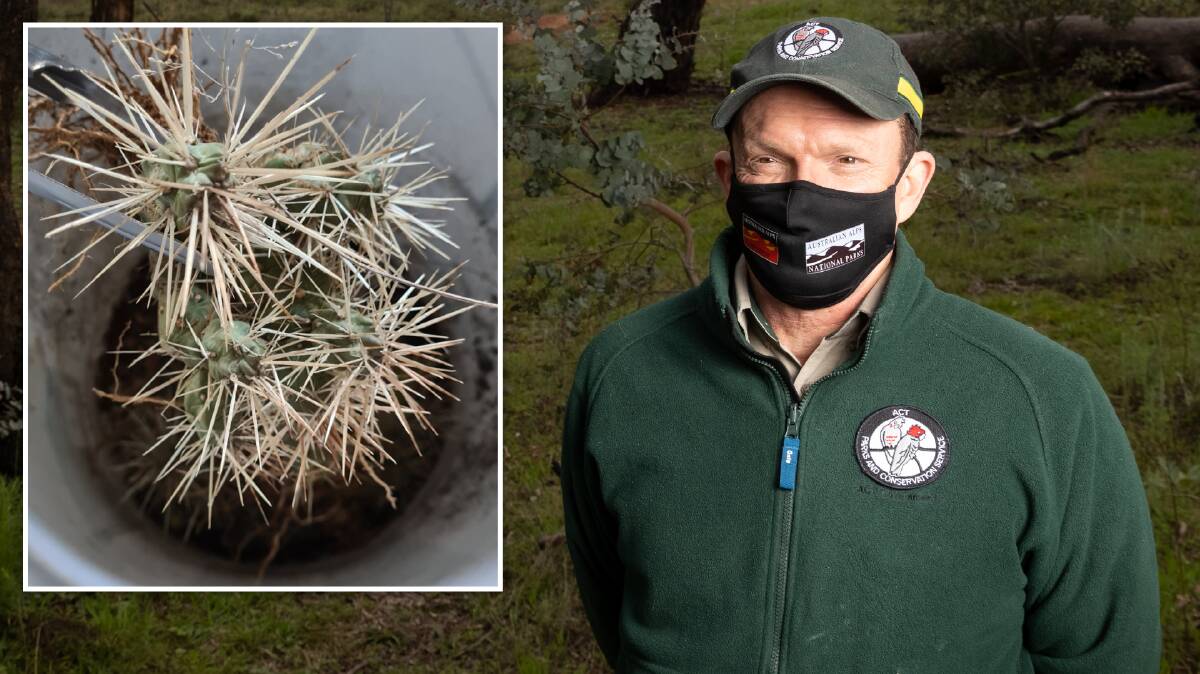
NSW police are cracking down on the trade in one of the nastiest plants known to animals.
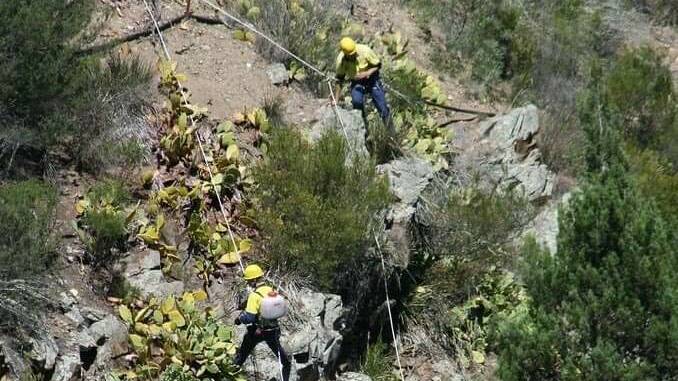
And Rangers in the ACT have had to abseil down cliffs to clear infestations of the plant which causes unimaginable pain to animals.
Prickly pear is beloved by some cactus growers, but its spikes are so vicious that they kill cattle and wild animals in a horrible way.
Kangaroos, for example, tread on the spikes and then try to lick the barbs off - but get their mouths spiked to their feet and then starve in a lingering, horrible death.
The police are now involved in a campaign to try to eradicate possession of and trade in that cactus, with the threat of $1000 fines against people who own the illegal varieties and $22,000 to companies involved in trade.
There have been infestations of the worst types of prickly pear in the Molonglo Gorge and in Red Hill in the ACT.
The council in Queanbeyan is urging anyone with information to call Crime Stoppers.
"They don't need to know who you are, they just want to know what you know," a council spokesperson said.
Prickly pears came to Australia with the First Fleet. By a century ago, they had infested many millions of acres. There was a nationwide attempt to clean the stuff off the land, but now it's coming back.
Global warming will make conditions in Australia more congenial to them, according to Steve Taylor, the invasive plants manager with ACT Parks and Conservation.
Prickly pears came to Australia with the First Fleet. By a century ago, they had infested many millions of acres. There was a nationwide attempt to clean the stuff off the land, but now it's coming back.
Global warming will make conditions in Australia more congenial to them, according to Steve Taylor, the invasive plants manager with ACT Parks and Conservation.
"Ecologists are predicting they will be more of a problem with climate change because our summers will be longer, drier and hotter," he said - just the conditions prickly pears like.
There are 27 types, among them Eve's needle, bunny ears, smooth tree pear and blind cactus, which are traded online.
"Barbed bristles and sharp spines on the plants detach easily from the plant and can cause serious injury to people," a Queanbeyan-Palerang Regional Council statement said.
"They can injure, cause infection in, blind and even kill native animals, pets, working dogs and livestock. Once in the environment, prickly pears can form impenetrable walls of vegetation and cost millions of dollars to control."
The council said that it and other authorities in NSW had joined the police, Local Land Services and the NSW Department of Primary Industries to clamp down on trade in the cactus.
"Prickly pears have nasty spines that can injure people, wildlife and pets, and they are difficult plants to kill," program co-ordinator Simon Holloway, said.
"Spring usually brings an increase in plant sales, so we're appealing to the public to be on the lookout for these cacti in markets and online."
The first official action against prickly pear was in 1886 when the NSW government passed the Prickly-pear Destruction Act, supplanted by acts in 1901 and 1924.
A special type of cactus-eating moth has been tried as well as pesticides, but the prickly pear pest is still with us.













