
MOSCOW — Police on Wednesday searched the Moscow apartment of jailed Russian opposition leader Alexei Navalny, another residence where his wife is living and offices of his anti-corruption organization.
Navalny’s aides reported the raids on social media.
It was not immediately clear whether anyone had been arrested. Leonid Volkov, head of Navalny’s corruption-investigating organization, said the searches were being carried out for alleged epidemiological or sanitary violations.
Police also searched the apartment of Navalny’s spokeswoman, who was arrested last week and jailed, and an investigator for Navalny’s group, the organization reported.
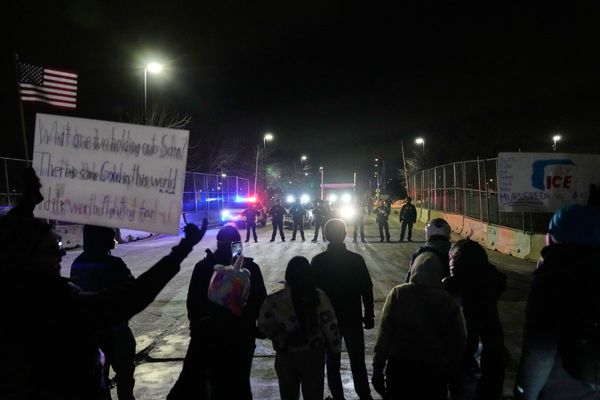
The searches come amid rising tensions over Navalny. Demonstrations demanding his release were held nationwide in Russia last weekend., About 4,000 people reportedly were detained by police in the protests. His supporters have called for more demonstration to be held Sunday.
Navalny was arrested Jan. 17 upon returning to Russia from Germany, where he had spent five months recovering from a nerve-agent poisoning that he has blamed on the Kremlin. The Russian government denies involvement in the poisoning.
Navalny, the Kremlin’s most prominent and durable foe, fell into a coma while aboard a domestic flight from Siberia to Moscow on Aug. 20. He was transferred from a hospital in Siberia to a Berlin hospital two days later. Labs in Germany, France and Sweden, and tests by the Organization for the Prohibition of Chemical Weapons, established that he was exposed to the Soviet-era Novichok nerve agent.
Russian authorities have refused to open a full-fledged criminal inquiry, citing a lack of evidence that Navalny was poisoned.
In December, Navalny released the recording of a phone call he said he made to a man he described as an alleged member of a group of officers of the Federal Security Service, or FSB, who purportedly poisoned him in August and then tried to cover it up. The FSB dismissed the recording as fake.
Navalny’s arrest and the harsh police actions at the protests have brought wide criticism from the West and calls for his release.
Russia’s foreign ministry said Wednesday that a statement by the Group of Seven foreign ministers condemning his arrest constitutes “gross interference” in Russia’s domestic affairs.