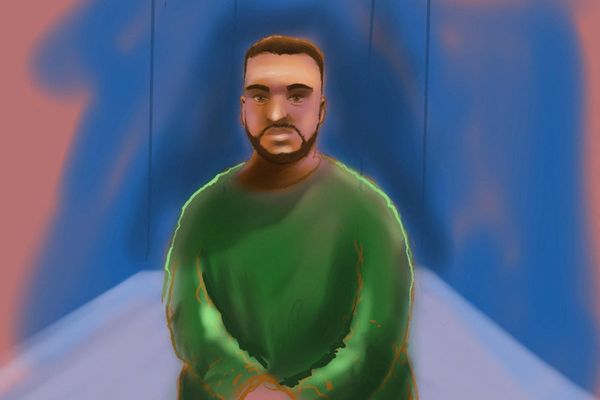
MIAMI _ The so-called "prop money" stuffed in Alexander Binker's wallet _ purportedly meant for a rap-video shoot _ looked real enough to fool most anybody, Miami prosecutors say.
But the phony bills won't be enough to put him behind bars.
The Miami-Dade State Attorney's Office on Friday dropped Binker's felony charge of possessing counterfeit money, saying it couldn't prove that he actually intended to use it to scam anybody. Prosecutors made the announcement days after the Miami Herald reported on Binker's case and the prop-money industry that provides bills for movies, TV shows and rappers making it rain on camera.
Prosecutors said the play money was suspicious because it was mixed in with real bills in Binker's wallet.
"A jury could instead reasonably infer several innocent explanations for the defendant's possession of prop money, such as impressing a date, or flaunting pretend 'wealth' on social media," Assistant Miami-Dade State Attorney Jonathan Borst wrote in a final memo on the case released on Friday.
Binker's defense attorney, George Pallas, who had asked a judge to dismiss the charge, lauded the decision.
"The charge turned out to be as phony as the money," Pallas said.
Prop money is designed to fool the camera, cartoonish and small enough in person that no one should be able to use them to actually buy anything in real life. Prop money is used in popular TV shows such as "Ozark," "Breaking Bad" and "Narcos," countless major movies and music videos.
Still, with the ease of buying bogus bills online, the proliferation of prop money has vexed law enforcement. Across the country, police departments have racked up arrests of people trying to buy stuff.
The money can even be purchased on mainstream sites such as Amazon, through third-party sellers, which hawk them for as little as $10 for a stack of 100 $20 bills.
"The Secret Service is working with the United States Attorney's Office and eCommerce sites to remove these products from their websites," a Secret Service spokesman said in a statement to the Miami Herald earlier this month.
In Binker's case, police found the money in his wallet after he was pulled over and arrested for reckless driving in West Kendall in July.
His bills were clearly marked "For Movie Use Only" and "This Is Not A Legal Tender" _ and featured the logo of a company called "Great Fat White Productions."
Binker was charged with possessing forged bills, a third-degree felony punishable by up to five years in prison. Borst, the prosecutor, said the prop money can still be considered counterfeit because it "visually appears similar to real U.S. currency." But under Florida law, prosecutors had to prove "fraudulent intent."
Owners of prop-money companies that sell bills to production companies say cases like Binker's serve as a valuable reminder.
"These kinds of props are not to be treated like real currency at all and do require some consideration," said Daniel Columbie, the CEO of Prop Movie Money Inc., a South Florida company that provides specially designed bills to major movie, TV and music production companies. "Our props are not to be used in any manner other than for media production, media marketing, promotions, training, or advertising. It is a federal offense to attempt to use prop money to make a purchase."