Police could be embedded within a jail for teenagers where a scathing independent report has identified high levels of “unpredictable and reckless” violence.
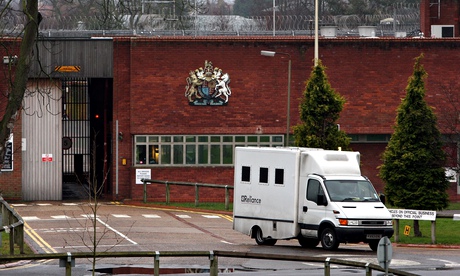
The Youth Justice Board has confirmed that it is in discussions with the Mayor of London’s policing and crime unit (Mopac) to redeploy police officers from the streets to Feltham young offenders’ institution, named last year by the Howard League for Penal Reform as the most violent prison in England and Wales.
The YJB says they opened discussions after the success of a pilot scheme placing officers in the Isis young adults YOI in Thamesmead, which alongside Feltham YOI, was recently named by Nick Hardwick, chief inspector of prisons, as having an unacceptably high levels of violence.
“We are aware of the pilot in which police officers from the Trident Central Gangs Unit have been embedded in a young adult establishment [Isis YOI],” said a spokeswoman for the YJB. “They have targeted known gang members when they enter custody and offered them support to exit gangs and prepare for their release,” she said.
As part of the pilot, inmates at Thamesmead were told that any offences they committed in prison while serving their sentence, would result in “enforcement action”.
“The early results indicate that positive effects may be achieved on both violence within the prison and reoffending on release,” the spokeswoman said.
“The YJB is interested in understanding the effectiveness of this pilot and exploring whether there are benefits which could be gained by a similar approach in an under-18 YOI [Feltham]. We are discussing with Mopac but no firm decisions have yet been taken.”
Two police officers have been embedded in Thamemead YOI since September 2013 as part of a wider scheme that has led to an overall decline in violence by an average of 46% in the last 11 months.
But Frances Crook, chief executive of the Howard League for Penal Reform, said putting police officers into prisons was “bizarre”.
“These are the wrong people in the wrong place at the wrong time,” she said. “If a prison has a problem, particularly with children, and the staff are not able to manage them safely, perhaps you should hire sufficient numbers of properly qualified staff who can.”
Crook said the problem lay with a reduction of prison officers at Feltham: from 403 in September 2010, to 280 in September 2014. The number of inmates, however, has fallen by 36, to 621.