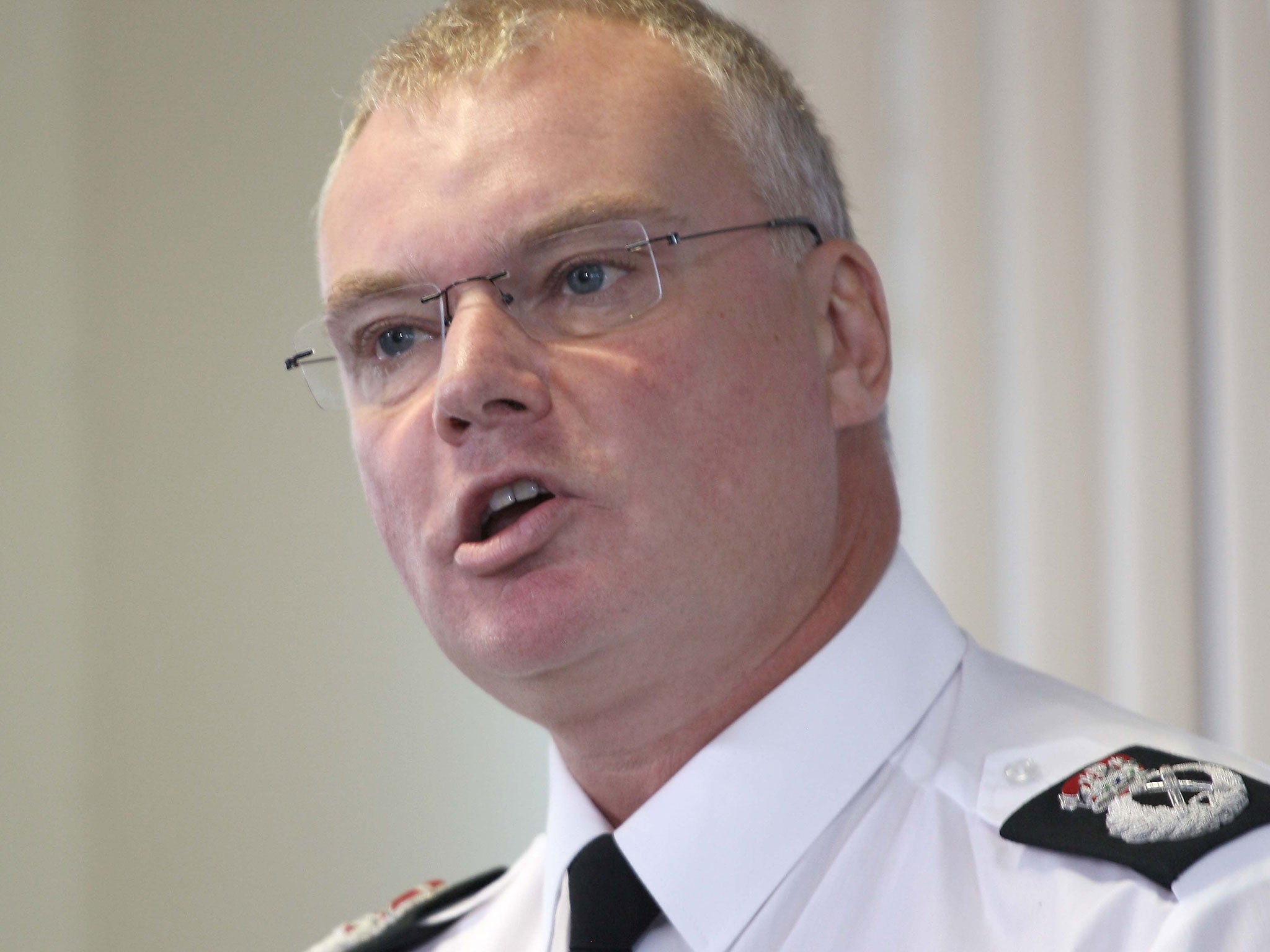
A police chief has been reprimanded after smashing his work phone with a golf club “after playing a poor shot” and then claiming it had been run over.
Chief Constable Mike Veale, who now leads Cleveland Police, was investigated for potential misconduct and providing an inaccurate account of the incident during a controversial high-profile investigation into Sir Edward Heath.
The Independent Office for Police Conduct (IOPC) said that on 23 September 2017, Mr Veale told colleagues his work phone “had been dropped in a golf club car park and inadvertently run over by a vehicle”.
“Mr Veale subsequently explained to our investigators that the damage was in fact caused when he swung a club at his golf bag in frustration after playing a poor shot,” a spokesperson added.
The IOPC found no evidence to support anonymous allegations that Mr Veale had deliberately destroyed the phone to hide evidence over contact with the media – accusations he claimed were cooked up to “tarnish my reputation”.
He was the chief constable of Wiltshire Police at the time and leading Operation Conifer, a national investigation into historical sexual abuse allegations against former prime minister Ted Heath.
The £1.5m operation was closed last October, when police said that if the late Conservative politician were still alive, he would have been interviewed under caution.
Mr Veale was severely criticised for his handling of the claims by friends and supporters of Sir Edward, but insisted there had been “compelling and obvious reasons to investigate” them years after his death.
The IOPC concluded that the officer had taken several phone calls regarding media interest in the investigation during a round of golf with friends on the day of the incident.
“Our investigation found no evidence that the irreparable damage to the phone had been caused deliberately or with the motive to conceal any information, and Mr Veale was considered to have no case to answer for discreditable conduct,” it added.
IOPC director Catrin Evans, who oversaw the investigation, said: “The evidence gathered points to Chief Constable Veale damaging his mobile phone entirely by accident. He then arranged for all data from the damaged phone to be retrieved, and we found no evidence to suggest he was motivated to conceal information.
“Mr Veale volunteered to our investigators that he was embarrassed by his behaviour over a momentary loss of self-control on the golf course, at a time of personal and professional stress.
“However, chief constables are expected to promote ethical values, lead by personal example and act as ambassadors for the standards of professional behaviour. That Mr Veale chose to give a different account to the truth, both verbally and in writing on several occasions and for some time, in our view amounted to a case to answer for misconduct relating to honesty and integrity.”
Mr Veale is being subjected to a “management action plan” put in place by Cleveland Police and Crime Commissioner (PCC) Barry Coppinger, including a programme of professional development.
The IOPC also referred allegations Mr Veale had disclosed confidential information relating to Operation Conifer has also been sent to the PCC’s office “to deal with in any manner deemed appropriate”
In a statement, Mr Veale suggested the anonymous allegations were an attempt to smear him following the “highly politicised and nationally significant and sensitive investigation”.
“I was regularly warned by close confidantes and members of the public I would be subject at some stage to vexatious and false allegations to tarnish my reputation,” he added. “Sadly this has been the case.”
Mr Veale admitted accidentally smashing the phone by hitting his golf bag with a club “after a particularly poor shot” and said he lied to “avoid more unnecessary media attention and to spare my own obvious embarrassment for damaging my phone in such a ridiculous way and most importantly to ensure my colleagues were not aware of the pressure I was feeling at a time when I needed to be strong”.
He apologised for his actions and added: “The account I gave to some colleagues should not have been given.
“My reasons were clear to me then and are now. I wanted to avoid unnecessary, sensationalist coverage in the media.
“I regret that I gave any account at all as to why the damage was caused as there was no reason to do so as this was simple an accident. This was a mistake and I could have handled it differently.”