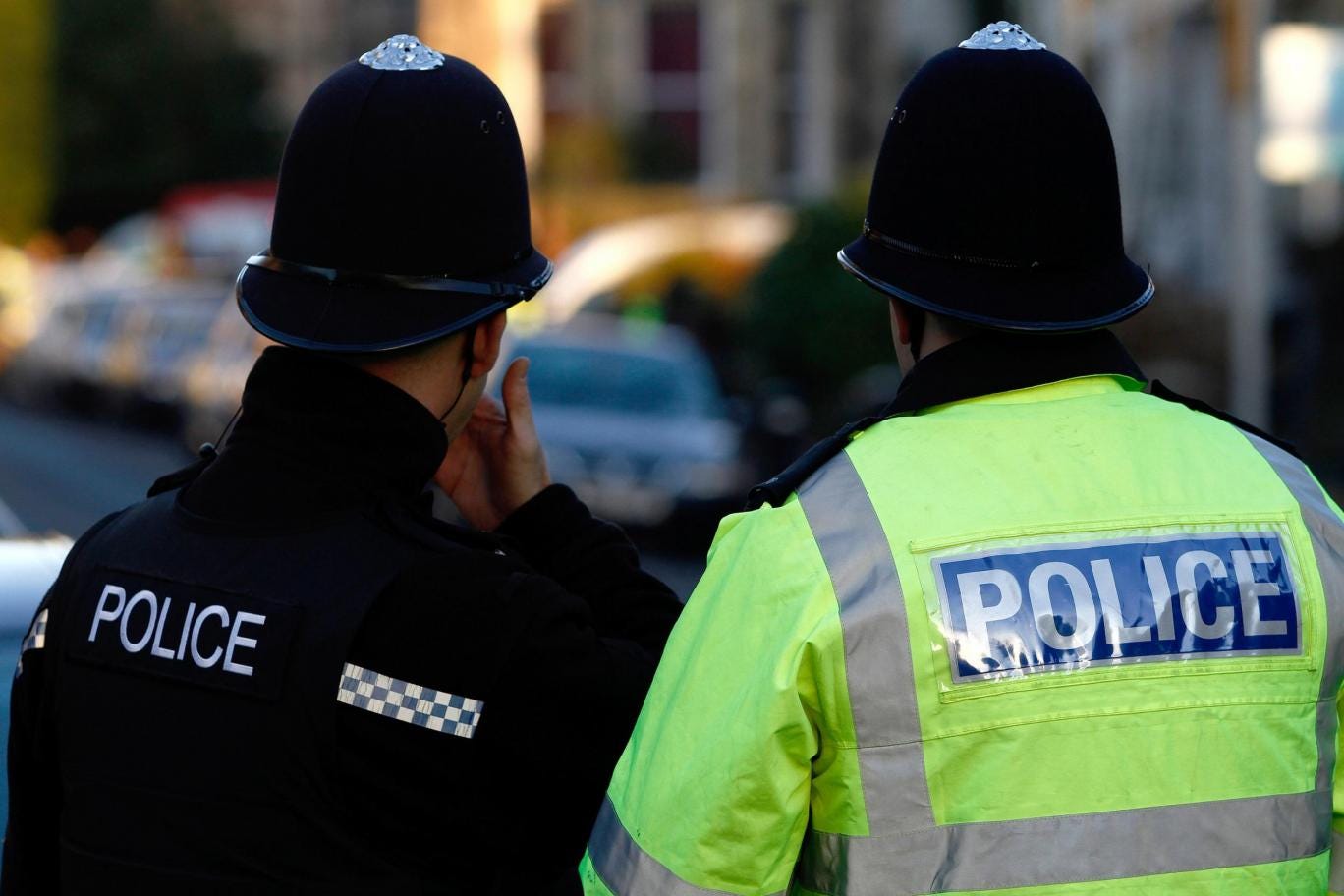
Police officers in the UK are no less likely to believe misconceptions about their profession than ordinary members of the public, recent research has found.
The study, conducted by Chloe Chaplin from the London Probation Trust and Dr Julia Shaw, senior criminology lecturer at London South Bank University, was the first piece of research in the UK to compare beliefs about the law and policing between officers and the general public.
The 100 participants in the study, 44 of whom were police and law enforcement officers and 56 who worked in other fields, were presented with a number of statements related to police procedures, the court system, mental illness and other topics, and asked to say whether they agreed or disagreed with them.
As the British Psychological Society's Research Digest reports, participants were asked whether they agreed with the incorrect statement: "People only confess when they have actually committed the crime they are being charged with."
Other statements included "most mentally ill individuals are violent," "eyewitnesses are always the most reliable source of case-related information," and "if you are the victim of a violent crime, your memory of the perpatrator's face will be perfect."
All of these statements have been proved wrong by research - for example, it is known that certain suspects can be more susceptible to false confessions than others, and despite directly experiencing crimes, eyewitnesses are not neccessarily the most reliable sources of evidence.
These incorrect statements were given to the participants among a number of other demonstrably true ones.
In the course of the tests, it was found that despite having direct experience and involvement in these fields, police officers and law enforcement officials were no less likely to agree with these statements than members of the general public.
Published in October last year in the Journal of Police and Criminal Psychology, the study also claimed that the participants from the world of law enforcement were more confident in their answers, even when they were wrong.
The researchers suggested that their study be used to inform future police training - not only does officers' education need to be more focused on real-life situations, but it also needs to be good enough to displace belief in these commonly-held misconceptions.