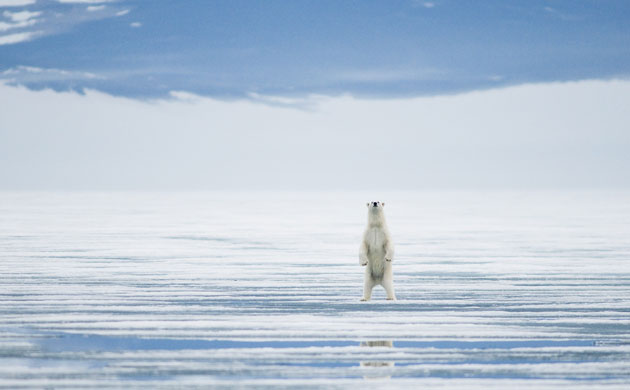
Marine mammal expert and WWF spokesman, Dr Tom Arnbom, from Stockholm, thinks the bears in these images could be part of only two growing populations in the worldPhotograph: Steven Kazlowski/Barcroft Media'The difficulty is that monitoring populations is extremely difficult because they are very hard to find and very expensive to follow so it is difficult to get hard data. But the signs are that there are more of them in Svalbard than we have seen over the last few years,' said ArnbomPhotograph: Steven Kazlowski /Barcroft MediaOnce-in-a-lifetime opportunities included this nosey female coming to within inches of his face as he sat on the edge of Steve Kaslowski's yacht. 'She was a young adolescent and they always seem to be more inquisitive than some of the older bears who know to avoid humans,' said Kaslowski. 'She kept rearing up on her hind legs and sniffing at us. She was really investigating and trying to work out what we were doing there' Photograph: Steven Kazlowski/Barcroft Media
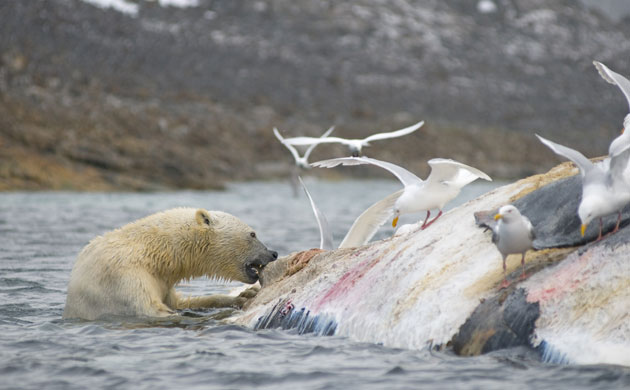
'Getting as close as this to these animals is what I get up for in the morning. It's when all the work you have been doing comes together into that single perfect moment,' said KaslowskiPhotograph: Steven Kazlowski/Barcroft MediaKaslowski photographed the same bear fast asleep next to one of her feeding holes. Just yards behind her the blurry shape of a seal throwing her a worried glance casts a vivid image of life on the remote chilly outcrop Photograph: Steven Kazlowski/Barcroft MediaDespite rapidly shrinking sea-ice - the bear's summer hunting ground - the ban on hunting bears and their prey may be causing their number to increasePhotograph: Steven Kazlowski/Barcroft MediaA polar bear eating the remains of a whale carcass Photograph: Steven Kazlowski/Barcroft MediaThere are 19 populations of polar bears on the planet. Eight are known to be decreasing, three are stable but only one known to be growing is in Canada Photograph: Steven Kazlowski/Barcroft MediaNorway has enforced strict hunting bans on the bears and some of their prey since the 1970s. Walrus numbers are up since the ban on their hunting in 1952 and it could be the reason for more bears: there is more preyPhotograph: Steven Kazlowski/Barcroft MediaTwo polar bears fighting over a whale carcassPhotograph: Steven Kazlowski/Barcroft MediaSteve Kaslowski's incredible six-week journey inland was made possible by boat-worthy channels opening up between warming sheets of ice. The frozen Arctic ocean is breaking apart due to rising summer temperaturesPhotograph: Steven Kazlowski /Barcroft Media
Sign up to read this article
Read news from 100’s of titles, curated specifically for you.