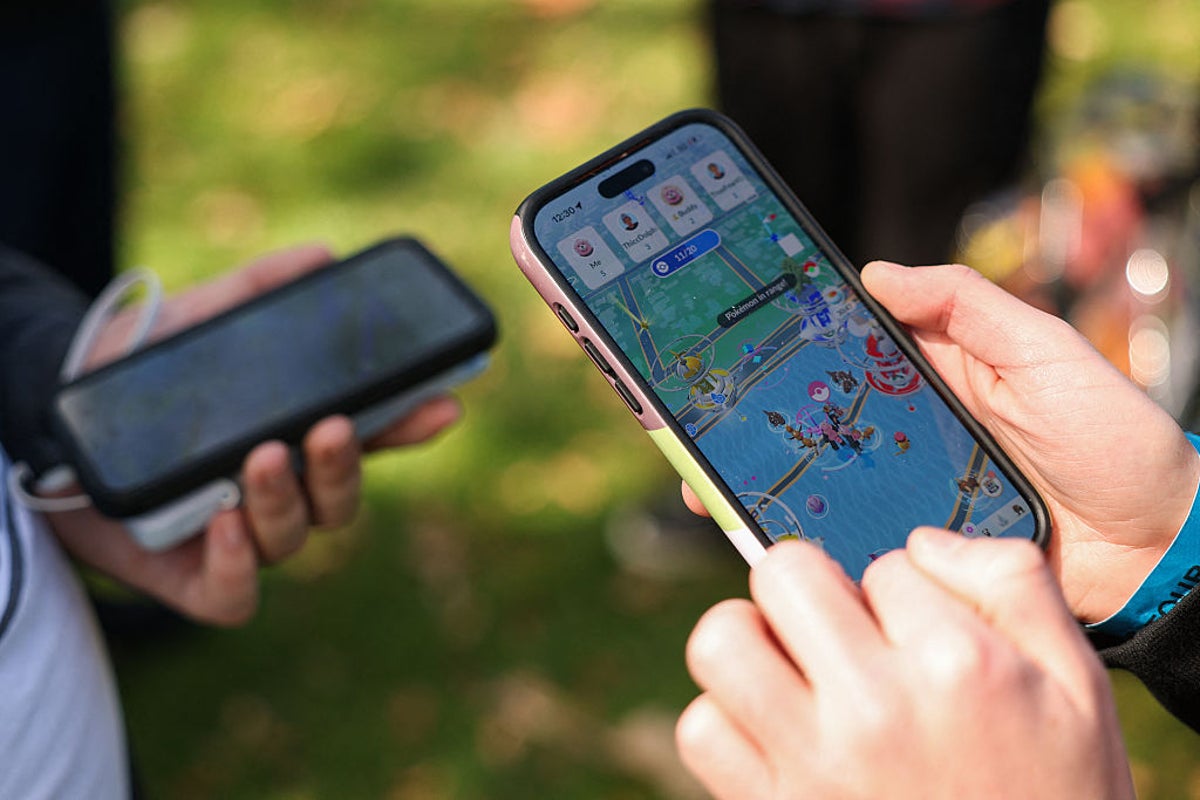
Hundreds of millions of Pokemon Go players have unknowingly helped create an AI navigation system that will now be used by delivery robots.
The augmented reality smartphone game, which uses a phone’s GPS and camera to allow players to catch virtual creatures in the real world, has built up a database of more than 30 billion images since it launched a decade ago.
This has allowed Niantic Spatial, a spin-off of Pokemon Go creator Niantic, to develop a Visual Positioning System (VPS) that is able to pinpoint a location to within a few centimetres without relying on GPS satellites.
This visual approach to location and orientation is particularly useful within indoor environments, where GPS signals can be blocked or degraded, as well as so-called urban canyons, where tall buildings can confuse satellite navigation systems.
Niantic Spatial has now partnered with US-based robot delivery firm Coco Robotics to use its VPS technology to help its machines to navigate in challenging urban environments.
“The promise of last-mile robotics is immense, but the reality of navigating chaotic city streets is one of the hardest engineering challenges,” said Niantic Spatial CEO John Hanke.
“We are thrilled to be working with Coco Robotics as our first robotics partner and deploying spatial intelligence to help solve these challenges head-on.”

The crowd-sourced data has been boosted by in-game features like ‘Field Research’ that encourage Pokemon Go players to scan statues and landmarks in order to receive rewards.
These scans can be converted into 3D models that give a highly accurate visualisation for Niantic Spatial’s VPS technology.
Coco Robotics’ delivery bots, which have completed around half a million deliveries to date, already use GPS and will utilise their four cameras to provide feedback for improved VPS directions when delivering groceries and goods.
“It gives us reliable access to localization services that further improve robot navigation,” said Zach Rash, co-founder and CEO of Coco Robotics.
“Looking ahead, we’ll jointly explore new ways to enable Coco’s robots to operate with increasing safety and autonomy in any city.”