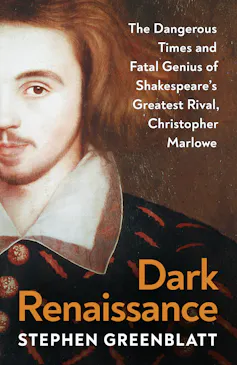
In Dark Renaissance, his new biography of Christopher Marlowe (1564-1593), Stephen Greenblatt shares a trait with Marlowe and the Elizabethan playwright’s most famous character, Doctor Faustus: a desire to conjure.
Review: Dark Renaissance: The Dangerous Times and Fatal Genius of Shakespeare’s Greatest Rival, Christopher Marlowe – Stephen Greenblatt (Bodley Head)
Greenblatt is a giant on the landscape of Renaissance studies. He defined an epoch of literary scholarship by coining the term New Historicism in 1982, encapsulating modes of thought that were already in motion. The thrust was to bring historical context back into the work of literary scholarship, after the New Criticism had orientated it towards the formal qualities of the text.
“I began with the desire to speak with the dead,” Greenblatt wrote in his 1988 book Shakespearean Negotiations. “If I never believed that the dead could hear me, and if I knew that the dead could not speak, I was nonetheless certain that I could re-create a conversation with them.”
Shakespeare’s greatest provocation
Dark Renaissance combines fragmentary documentary evidence with informed speculation on the light Marlowe’s plays and poems shed on his life. It is a form of biography suited to Greenblatt as a scholar of literature. It takes a by-heart familiarity to unearth the intricate threads that connect creative writing with historical sources.
My favourite example of this is James Shapiro’s groundbreaking 1599: A Year in the Life of William Shakespeare (2005). Shapiro’s “micro-history” breaks some rules of factually detached reporting, but makes vivid Shakespeare’s life and personality, allowing us to “speak with the dead”.
Greenblatt’s full title – Dark Renaissance: The Dangerous Times and Fatal Genius of Shakespeare’s Greatest Rival, Christopher Marlowe – sounds like a neo-Victorian detective novel, but it is misleading. It’s a minor flaw, but the attempts to join the dots to explain Marlowe’s early death are a little too insistent. Repetitions of “possibly”, “may have” and “could have” do a disservice to the rich swirl of evidence that fortifies Greenblatt’s many intelligent suppositions.
Shakespeare seems present in the title as a branding expedient, but the book’s account of what he owes to Marlowe the trailblazing dramatist suggests “greatest provocation” might have been more apt.
I have no doubt that if Marlowe had lived longer, we would be talking about Shakespeare as one of his rivals. Marlowe’s artistic brilliance was arguably more concentrated, his imagination more original and his ideas more daring than Shakespeare’s.
Courting danger
Marlowe’s ascent from his humble beginnings as the son of a Canterbury cobbler was Icarus-like.
He attained bachelor’s and master’s degrees at Cambridge, where, as an undergraduate, he produced the first English translation of Ovid’s Amores. His “stylistic solution” to the problem of translating Ovid’s Latin verses would become, as Greenblatt observes, the standard metre for classical translations into the 18th century.
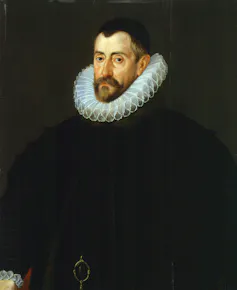
Marlowe would go on to write at least seven groundbreaking plays. He was also evidently deployed on at least one secret mission to France by Queen Elizabeth’s spymaster, Sir Francis Walsingham. The precise details of this mission remain a mystery.
Then, in 1593, at the age of 29, Marlowe was murdered in a tavern at Deptford, under circumstances that have puzzled scholars and historians ever since.
Shakespeare was by comparison a late bloomer. By 1593, Shakespeare had written, with Marlowe, a sequence of three plays about Henry VI, along with Richard III and a few formulaic comedies. If Shakespeare, who was born the same year as Marlowe, had died in 1593, we would not have Macbeth, King Lear, Hamlet, Romeo and Juliet, or even Much Ado About Nothing. In short, we would not have Shakespeare.
Uncannily, the concentrated quality of Marlowe’s intellectual daring and creative ambition made his short lifespan seem inevitable. As Greenblatt puts it, Marlowe “courted danger”.
His earliest play, Dido Queen of Carthage, opens with the homoerotic scene of Jupiter dandling his boy favourite, Ganymede, on his lap. In Edward II, Marlowe turns an allusive account by the chronicler Holinshed into a story of disruptive homoerotic passion between a king and his “base-born” favourite, Gaveston.
The Jew of Malta reveals Marlowe’s familiarity with a book prohibited in Catholic Europe and Protestant England: Machiavelli’s The Prince.
Early in his career, Marlowe’s two Tamburlaine the Great plays appalled and delighted audiences, dramatising the meteoric ascent of the 14th-century Turco-Mongol ruler Timur the Lame, who rose from his rustic shepherd origins by pitiless violence and powerful rhetoric. Greenblatt claims that “no one in English poetry had ever spoken with the grandeur and magnificent self-confidence of Marlowe’s Scythian hero”.
The source of the power was not just the story, but Marlowe’s use of unrhymed iambic pentameter, or “blank verse”. This “brilliant technical innovation”, observes Greenblatt, “almost instantly […] became the dominant verse form on the stage”. It has a “peculiar charge of energy”, a “propulsive” force, an “incantatory power” that leads Greenblatt to claim that “virtually everything in the Elizabethan theatre is pre- and post-Tamburlaine”.

Cosmic stakes
Greenblatt shows how the turbulent contradictions of the historical context were working upon Marlowe’s imagination.
What we might think of as the monolith of the “Western tradition” was a boiling cauldron of sensuous rapture and existential terror. A strange mixture of pagan and Christian influences shaped Marlowe’s education. “Ovid, Lucretius and Lucian,” observes Greenblatt, “rubbed shoulders with Thomas More [and] Erasmus.”
Education was, on one hand, associated with religious piety: its explicit aim was to produce Protestant clergyman who would keep county parishes in line. On the other hand, the gruelling discipline of learning Latin and Greek grammar, enforced with physical punishment, opened doors to the wild world of myths from antiquity, in which pagan gods gratified their lusts in congress with humans and satiated their thirst for power with atrocities. There were no trigger warnings.
If this were not morally confusing enough, young minds also had to contend with the religious state of play – or rather, the play of state. Henry VIII’s break with the Catholic Church was the first of four radical shifts. He was succeeded by his Protestant son Edward, then his Catholic daughter Mary, then his Protestant daughter Elizabeth, whose long reign was beset by violent schemes to return England to Catholicism.
Hence the espionage activity in which Marlowe was evidently caught up. As Greenblatt puts it in his biography of Shakespeare:
In none of these regimes was there a vision of religious tolerance. Each shift was accompanied by waves of conspiracy and persecution, rack and thumbscrew, ax and fire.
In this context, Marlowe’s febrile disdain for religion makes sense. Living as we do in a culture in which “faiths” hover mildly like ice-cream flavours in the corner of most people’s consciousness, it is difficult to grasp the cosmic stakes of his spiritual imagination.
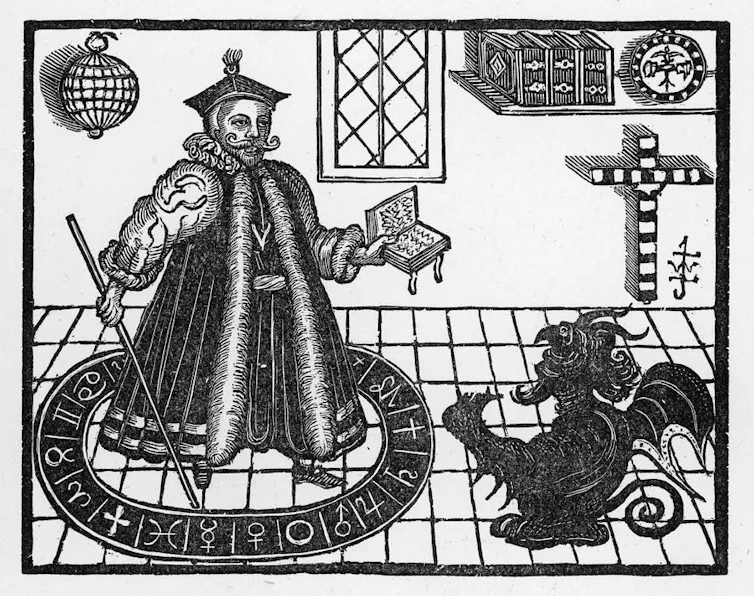
Marlowe was evidently a God-haunted atheist. The turmoil of his inner life is hinted in the way hell figures in his most famous play, Doctor Faustus.
As Greenblatt points out, the medieval hell, in which people were tortured for eternity by extravagant methods, still pervaded the 16th century spiritual imagination, but it owed much more to Virgil and Dante than it did to Jewish or Christian scripture. This hell emerges in Doctor Faustus in the threat of being torn apart by devils. Ironically, it repeatedly scares Faustus away from the brink of repentance.
But there is another more chilling kind of hell. Amid the mockery of superstition, irreverence to the Pope, and the levity of devils playing tricks on the unsuspecting, Marlowe’s play projects a hell that is inescapable because it is chosen by, not for, its inhabitants.
Here is one of the first conversations between the scholar magus Faustus and the demon he thinks he has conjured:
FAUSTUS: Where are you damned?
MEPHISTOPHELES: In hell.
FAUSTUS: How comes it then that thou are out of hell?
MEPHISTOPHELES: Why, this is hell, nor am I out of it.
Faustus speaks to his demonic visitor with the indifference of a modern atheist, which his audience no doubt found shocking: “Come, I think hell is a fable.”
“Ay,” replies Mephistopheles even more shockingly, “think so still, till experience change thy mind.”
We may think the demon refers to eternal damnation, but the play shows Faustus choosing distractions and gratifications that entail their own hell.
At the beginning, Faustus seems to desire knowledge to undertake mighty deeds. But as the play unfolds, he uses his knowledge to gratify foolish appetites. He conjures, for example, a demon who looks like Helen of Troy. He pleads with Mephistopheles to let him have her as his paramour.
Just before this, an Old Man has urged him to turn to the “mercy of thy Saviour sweet […] whose blood alone must wash away thy guilt”. Instead, Faustus latches onto Helen to “extinguish clean” any thoughts of repentance.
Faustus does not want to know God; he wants to be God. His is not a hunger for truth; he chooses what he knows to be a diabolical illusion:
Is this the face that launched a thousand ships,
And burned the topless towers of Illium?
Sweet Helen, make me immortal with a kiss.
“The brilliance of the strategy,” says Greenblatt – and, we might add, the heart of the tragedy – “is to make the recruited one […] actively pursue his own destruction.”
Clandestine activities
Greenblatt deftly connects the story of Faustus with figures from Marlowe’s circle: the glamorous imperialist Sir Walter Raleigh and the restless bibliophile Henry Percy, the “Wizard Earl”. But he also links it to Marlowe’s penchant for risk.
A letter from June 1587 reveals Marlowe had “done her Majesty good service and deserved to be rewarded for faithful dealing”. It stipulates that he should be granted his MA, despite his apparent absences from Cambridge.
Evidently Marlowe’s training for the clergy was derailed by a glittering proposition. Greenblatt suggests he was singled out for an occupation that required razor-sharp intelligence and betrayal of those whose trust he would win. He makes it sound convincingly like a Faustian pact.
It seems Marlowe never outran his clandestine activity. He was imprisoned in Newgate in 1589 on false charges of being accessory to a murder, and again in the Netherlands in 1591 on charges, also likely false, of counterfeiting coins. On May 18 1593, he was arrested but permitted to move about with no charge brought against him. On May 30, he was murdered.
No one was charged. The men at the scene were all associated with undercover activities. His burial is recorded in the parish register of St Nicholas, but his grave is unmarked.
His death may have been the result of a drunken tavern brawl or, as Greenblatt suspects, it may have been a hit on someone who had done the Queen “good service”, but whose outrageous views made him too hot for his handlers.
Speaking with the dead
Scholars of literature know the risks of speculative conflation of the artist’s life with their art. It is scintillating to see Greenblatt resist and succumb to this temptation by turns. Towards the end of the book, he gives in:
In Doctor Faustus [Marlowe] seems to have looked unflinchingly at his own life. To judge from the character he created, he found himself confronting anxiety, regrets, a sense of waste, fear, the hectic turning from one goal to another, and a lingering awareness of having done something disastrously wrong.
As Greenblatt puts it, Marlowe “could turn the things he most feared into art”. Urgency was a keynote. There is a hectic energy and thrilling dramatic pace to Doctor Faustus, written possibly only the year before his murder. When the devil comes to collect his eternal soul, Faustus’ pleading with the implacable force of time is poignant:
Stand still, you ever moving spheres,
That time may cease and midnight never come!
Fair nature’s eye, rise, rise again, and make
Perpetual day, or let the hour be but a year,
A month, a week, a natural day,
That Faustus may repent and save his soul.
O lente, lente currite noctis equi!
The stars move still, time runs, the clock will strike.
If you read the lines aloud, as Greenblatt encourages us to, you may notice the irregularity of the syllabic stress pattern. It is not the “iambic pentameter” with crisp end-stopped lines that Marlowe perfects elsewhere. Instead, it feels like a fluttering, fearful heartbeat or, as the words convey, an attempt to obstruct time’s rhythm.
Remember that Marlowe’s mostly illiterate audience did not take in his words as we do on the page. Meaning for them had to be felt. The metrical scheme is one example of the sensory intensity of Marlowe’s verse. Imagery is another. Greenblatt reveals that the Latin line is from Ovid’s Amores. It means “gallop slowly you horses of the night”.
You may recognise Shakespeare’s brilliant inversion of this sentiment when Juliet urges the sun to set: “gallop apace you fiery footed steeds”. She wants the day to end so that her wedding night can begin.
Shakespeare’s imagination in this instance is no less bold than Marlowe’s. His achievement in verse is just as startling in the way it grants erotic agency through eloquence to a young female character. But just as surely as the young lovers’ prophesied demise haunts Juliet’s impatience, young Marlowe’s brilliance burns in Shakespeare’s better known verses. Evidently, Shakespeare too was speaking with the dead.
This article was originally published on The Conversation. Read the original article.