As of Saturday, 20 December, the Brussels Capital Region, which governs the Belgian capital, has been without a government for 560 days.
Why does the capital of the European Union (EU) find itself in this situation, and what does it mean for its citizens and international residents?
Brussels, My Love? sits down with Lauren Walker, Euronews’ journalist and senior producer, to find the answer to these and more questions.



Why is forming a Brussels government so complex?
Belgium's last regional and federal elections were held in June 2024.
The national federal government was officially formed after negotiations in February 2025, with Flemish conservative leader Bart De Wever appointed as Prime Minister.
As for the regional elections, developments unfolded quite differently. The French-speaking part of Wallonia was the first to form a government in July 2024, followed by the Flemish-speaking part of Flanders in September of the same year.
In Brussels, however, no coalition has yet been formed, leaving the region without a government.
“That’s breaking a previous record, one that actually went into the Guinness Book of World Records, which was 541,” Walker said, specifying that this occurred in 2011, for the federal Belgian elections.
One of the reasons why Brussels struggles more than the Wallonia and Flanders regions to form a government is that the Brussels Capital Region is bilingual and includes both French-speaking and Flemish-speaking parties.
“That makes it very complex because the parties have to look for a majority or for a coalition in their own languages, so the Flemish-speaking side and the French-speaking side, and then they come together to form a government,” Walker explained.
What are the consequences for Brussels’s residents?
“There's a lot of concern for people living in Brussels,” Walker explained.
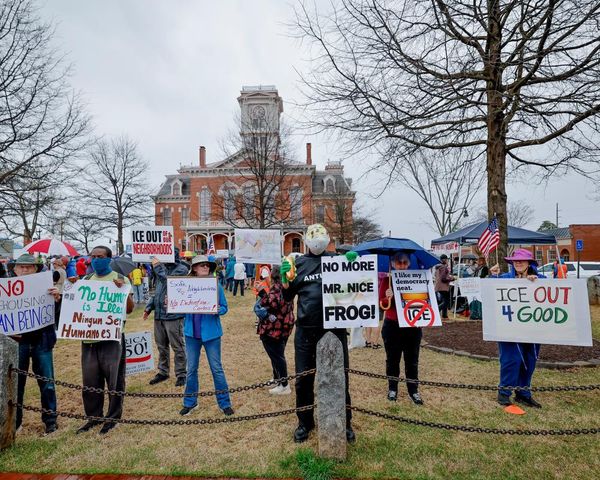
Especially in recent months, protests have piled up across the Belgian capital.
The lack of a government has had an impact on many sectors of the economy and society.
“They have social support organisations losing subsidies, so this is very concerning for organisations that are trying to support, for instance, homeless people,” Walker explained.
Other repercussions are more visible even to those less invested in the political debate, with construction work being put on hold or delayed due to a lack of funding.
According to Walker, the situation has not yet had a major impact on EU institutions or the people working within them, but if it persists, it could affect the EU’s public image.
“I think by kind of not taking this responsibility to create a government, it's not only damaging for people in Brussels, but it's also really damaging their international reputation,” Walker explained.
Get in touch with us by writing to @brusselsmylove@euronews.com.