Evening summary
- George Osborne has used a 90-minute debate on the charter for budget responsibility, committing the government to running a permanent budget surplus in normal times after 2019, to attack Labour as a party of “fiscal irresponsibility”. In his first parliamentary outing against Osborne, John McDonnell, the shadow chancellor, rejected this claim, saying Labour was committed to reducing the deficit in a way that was fair. McDonnell was mocked for his U-turn on this issue this week, but he insisted that he had only changed his mind on tactics not policy. As I write, the full voting figures are not available, but Labour says fewer than 30 MPs chose to abstain rather than to support the party line and vote against the government. That represents a blow to Jeremy Corbyn’s authority, but a relatively minor one because, in parliamentary terms, an abstention does not normally count as a proper rebellion. There is more on the debate here, at 8.52pm.
That’s all from me for tonight.
Thanks for the comments.
Labour whips, an official account, says it looks as if fewer than 30 Labour MPs abstained, instead of voting with the whip against the fiscal charter.
On charter vote it looks like less than expected, with under 30 abstentions. Will get exact numbers within the hour and confirm.
— Labour Whips (@labourwhips) October 14, 2015
There are no reports of any Labour MPs voting with the government.
Sky News’ Faisal Islam thinks around 15 to 20 Labour MPs may have abstained.
Fiscal Charter passed by 320 to 258: at a guess, minus SNP and pairings.. so around 200 Labour MPs voted for it -estimate: 15-20 abstentions
— Faisal Islam (@faisalislam) October 14, 2015
MPs have voted for fiscal charter by 320 votes to 258 - a majority of 62
MPs have voted for the fiscal charter by 320 votes to 258 - a majority of 62.
Osborne v McDonnell on the fiscal charter - Snap summary and analysis
It was a lively exchange, but probably less scintillating and and defining than some people expected. George Osborne put in a very accomplished performance, and he used his speech to hammer home his claim that Labour is economically irresponsible. But it was a performance that largely glossed over the multiple serious objections to the charter for budget responsibility. (See 7.08pm.) John McDonnell was far less accomplished, and Tory MPs laughed loudly when he began by candidly admitting that he had performed a clear U-turn on this. But once he got going McDonnell held his own and, for someone who has never spoken from the despatch box in a Commons career lasting almost 20 years, he was surprisingly assured. What he did fail to do, though, was comprehensively reset the argument about economic policy. He argued that Labour was not to blame for the crash, and he set out an alternative approach to deficit reduction, incorporating flexibility to invest, modest redistribution, closing corporate tax loopholes and more focus on growing the economy. But it was very hard to identify anything in this that had not been said by Ed Miliband and Ed Balls.
Here are the key news points.
- Osborne accused Labour of wanting to borrow forever (see 8.07pm) and claimed that Labour was becoming “the permanent party of fiscal irresponsibility”.
The complete chaos and confusion and incredibility of Labour’s economic policy is more eloquently expressed by Labour members of parliament than by any of my colleagues. To call the whole episode a shambles is an understatement, like saying the charge of the light brigade did not achieve all of its objectives.
The serious point is this; in my experience, shadow chancellors come and go, but what is permanent is the economic approach that the Labour party committing itself to tonight. They are becoming the permanent party of fiscal irresponsibility, the party of never-ending borrowing, the party that would run a deficit forever, a Labour party that is a standing threat to the economic security of the working people of this country.
He urged Labour MPs to vote for “budget responsibility and economic sanity”.
- McDonnell announced that Danny Blanchflower, a former member of the Bank of England’s monetary policy committee (MPC), will head a Labour review looking at whether the MPC’s remit should be extended so that it does not just focus on inflation. He wants to consider extending it so that the MPC could take factors like promoting growth, increasing employment and raising earnings into account when setting interest rates. Lord McFall, the Labour peer and former chair of the Commons Treasury committee, will work with Blanchflower on the review. McDonnell said the party would review this issue in his Labour conference speech, but we did not know Blanchflower and McFall would be in charge.
- McDonnell described the fiscal charter as a “puerile political trap”.
It is no wonder [the charter] has been seen as one of those puerile political traps the chancellor likes to set. Vote against the charter and you are a deficit denier. Vote for it, and for the next five years he will claim you have signed up to support every one of his cuts in public services and in benefits.
But the highlights in the opening exchanges probably came from two backbenchers, not Osborne or McDonnell. One was the former Conservative chancellor, Kenneth Clarke. He summed up the argument against Labour, in terms of to what extent it was to blame for the crash, more succinctly than I’ve heard it put. He said:
What happened under the last government was that the chancellor and his regulatory authorities allowed, first the dotcom bubble, and then the crazy credit boom. That meant tax revenues temporarily soared to astonishing levels. The then Labour government carried on running a deficit on top of those tax revenues, and then the revenues collapsed and left us with the worst annual deficit in the G20. The last government was complicit in the consequences of 2010.
And the other good backbench contribution came from the Labour MP Jonathan Reynolds. He summed up the case against the fiscal charter better than McDonnell. He said:
We’re getting to the crux of this debate, which is that this fiscal charter is intellectually moronic. It essentially commits this House to never borrowing to invest, even when the cost/benefit analysis of that investment is such that the country would benefit greatly. And that is why it has not one serious economist backing it, other than the self-styled experts on the government benches.
Updated
In the Commons Stewart Hosie, the SNP’s Treasury spokesman, is speaking. John McDonnell intervenes, to ask him to accept that the SNP’s policy now is the one that Labour advocated six months ago. Hosie says that the SNP voted against the fiscal charter (a different version) when MPs debated it in January; but Labour supported it.
Here is one of the key quotes from George Osborne. He accused Labour of wanting to run a deficit forever.
The people who oppose this charter never want a surplus. They want to run a deficit forever, they never want Britain to be earning more than it spends. I’m setting a date, 2019, years from now at the end of this decade, nine years after the end of the recession - that is the date we are voting on. The truth is they want to borrow forever. They want to run a deficit forever. They believe our debts should rise and rise, not ever come down. And they just don’t have the courage to admit it to the British people.”
The truth is running a deficit forever is not socialist compassion it is economic cruelty and Britain wants no more of it.
McDonnell says Labour will consider widening remit of Bank of England's monetary policy committee
McDonnell says Labour will tackle the deficit.
But it will not do it on the back of the poor and middle earners.
And it will do it to a timescale that is fair, he says.
It will do it by stopping tax cuts to the wealthiest in society. Labour will tell people that the government has cut inheritance tax, helping the wealthiest.
It will also cut down on corporate tax loopholes that allow companies like Facebook to get away with paying next to no tax.
And, above all, it will grow the economy, so that tax revenues increase. There will be a national investment bank, and more investment in skills. The proceeds of growth will benefit all parts of society, he says.
He says he can today announce that he has appointed David Blanchflower to conduct a review of whether the Bank of England’s monetary policy committee’s mandate should be widened (so that it does not just concentrated on inflation).
And that’s it. McDonnell has finished.
I will post a summary of what Osborne and McDonnell said shortly.
McDonnell says the worst false economy is the failure to invest.
Britain is ranked low in terms of infrastructure.
Business leaders, unions and a host of others are calling for investment. It makes no sense to rule it out, he says.
Labour’s Jonathan Reynolds says this fiscal charter is “moronic’. It would stop the government borrowing to invest. That is why no sensible economist backs it.
McDonnell says he could not have put that better himself.
McDonnell says the original fiscal reform act in 2009 was supposed to bolster the Labour government’s economic credibility. Osborne described it a gimmick. But he then realised charter mandates could be useful.
He quotes prominent economists saying the fiscal charter has no economic value.
James Cleverly, a Conservative MP, says the wording of the charter has not changed in the last two weeks. What changed? Had McDonnell not read the charter two weeks ago?
McDonnell says, before an MP intervenes in a debate, it is best to have listened to it first, so that one can be sure one is adding something to the sum of human knowledge.
Then he suggests he might be being “too harsh” on Cleverly.
Updated
Jacob Rees-Mogg, a Conservative, says McDonnell says he wants to eliminate the deficit. But he opposes all cuts. So how could that happen?
McDonnell says he will get to that in his speech.
The Tories have persuaded the public that the crash was caused by Labour spending. That has been one of the most successful attempts to rewrite history in recent times. He will correct that tonight. The Tories backed Labour spending until Northern Rock. And it was not hiring doctors and nurses that caused the crash. The deficit was not the cause of the crash. It was the consequence of it.
Kenneth Clarke, the Conservative former chancellor, says the last government allowed the dotcom bubble. Tax revenues soared. The government then spent all that money, not realising that it was a bubble, he says.
McDonnell says the Tories supported that spending programme.
Updated
McDonnell says he cannot support the government’s policies on matters like the bedroom tax, or disability cuts.
He does not want Labour associated with these plans in any way.
Sir Edward Leigh, a Conservative, asks what changed to explain McDonnell’s change of heart.
McDonnell says it was partly professional advice. But it was also meeting the families in Redcar.
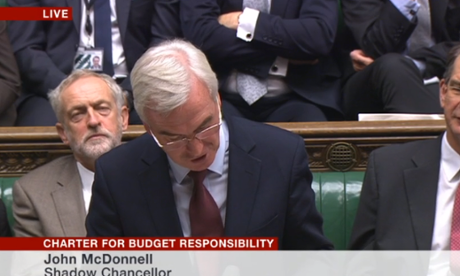
McDonnell says the charter is a “puerile political trap”. Vote against it, and you are a deficit denier. Vote for it, and you are backing all cuts, he says.
He says originally he wanted to use today’s debate for knockabout. He wanted to out-Osborne Osborne.
But he changed his mind after meeting steelworkers in Redcar in tears. The refusal to allow government to invest will be embedded in the charter.
A Tory MP says McDonnell complained in the last parliament 100 times about the government failing to consult. Isn’t that ironic, given that he did not consult his colleagues.
McDonnell says Labour is very democratic; it is so democratic that its disputes appear in the papers every day.
John McDonnell's speech
John McDonnell, the shadow chancellor, starts saying he wants to deal with his U-turn. He said he would back it, and now he is saying vote against.
Tory MPs laugh.
McDonnell admits this is embarrassing. But when circumstances change, you should change your stance.
And he says David Cameron has also changed his stance on providing justice services to Saudi Arabia.
McDonnell says his change was about tactics, not about policy.
Given that Osborne does not take his charter seriously, why should Labour?
Osborne says he has been chancellor and shadow chancellor for 10 years. He could read out comments attacking McDonnell’s U-turn. But the criticism from Labour MPs is more serious. It is like Labour saying the charge of the light brigade did not meet all its objectives.
Labour is losing its economic credibility, he says.
He urges Labour MPs to vote for “economic sanity” and back the government tonight.
And that’s it. Osborne has finished.
Osborne says some people argue that government can just tell the Bank of England to print money. Jeremy Corbyn backs that idea. But no one has seriously proposed that idea in this country for decades, he says. It would lead to rising prices, savings wiped out, and jobs lost. It is a very old and very dangerous idea, he says.
Yvette Cooper, the former chief secretary to the Treasury, said it was “bad economics”, Osborne says. He also quotes Jack Straw saying it would be the approach of Venezuala and the Weimar Republic.
Osborne welcomes John McDonnell to his new job. And he says McDonnell backed the fiscal charter two weeks ago.
Caroline Lucas, the Green MP, says borrowing to invest can stabilise the economy, increase jobs and increase tax revenues.
Osborne says that is an argument for continual borrowing. When would she stop borrowing?
Lucas replies: You stop borrowing when you can no longer afford to pay back.
This generates much laughter from the Tories.
Lucas says economists are saying this is a “silly trick”. People in the country are not laughing.
Osborne says borrowing until you cannot pay back is the route to bankruptcy. That might be a good pitch to be shadow chancellor, but it is no good for the country, he says.
Dennis Skinner, the Labour MP, asks why the Tories deserted the people of Redcar.
Osborne says the government has offered support for the workers of Redcar, more than Labour did when the steel plant closed under Labour.
Osborne say some argue fiscal rules are meaningless.
But he disagrees, he says. Governments need rules.
Rules are meaningless if you are your own judge of whether you have met them, he says. That is what happened under Labour. But he says, under his plan, he would be held accountable by the Office for Budget Responsibility.
Osborne says the fiscal charter is a simple proposal to make the government accountable.
Osborne says the trouble with people who say now is a good time to borrow is that they say it is always a good time to borrow. If the economy is doing badly, they say you need to borrow. If it is doing well, they say you can afford to borrow.
Osborne says the Tories are now “the true party of labour”.
Osborne says Labour want to run a deficit forever
Osborne says his opponents never want the government to run a surplus.
Labour MPs should “nonsense”. Osborne says, if that is the case, they should say when they will run a surplus.
They want to run a deficit forever, he says.
Ian Austin, the Labour MP, says Osborne has failed to meet all his deficit reduction targets. The government should prepare for the problems coming.
That is what the government is doing, says Osborne.
As “Ben from Exeter” might put it (Ben Bradshaw - see 11.57am), Labour left a “shambles”, Osborne says.
Running a deficit forever is not “socialist compassion” but “economic cruelty”, he says.
George Osborne says he is aiming for a budget surplus in 2019.
If the government cannot run a surplus nine years after the recession, when will it do so? Never, he replies.
John Mann, the Labour MP, says none of the experts who gave evidence to the Commons Treasury committee defended this. It is a “gimmick”.
Osborne says a gimmick is having one policy, then ditching it two weeks later. Mann described Labour’s policy as a “joke”, he says.
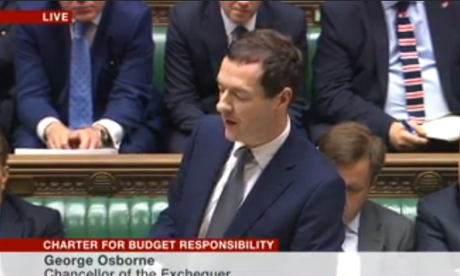
Chris Leslie, the former shadow chancellor, says Osborne should remember the need for government to be able to take measures to help the poor.
Osborne says running a surplus does help the poor. It is the poor who lose most when the economy crashes, he says.
George Osborne's speech
George Osborne, the chancellor, is opening the debate.
He says the question is very simple: Will Britain live within its means, and pay its debts? Or will it be profligate again? Will we consign Britain to a future of high debts? No, he says. He will put economic security first.
He rejects the “irresolution” of politicians in the past.
It is remarkable that this is even contentious, because the charter just says we should reduce our debts until we run a surplus, and that after that we should continue to run a surplus so that we can fix the roof when the sun is shining.
MPs debate the charter for budget responsibility
The debate on the charter of budget responsibility is about to start.
Here’s a charter of budget responsibility (or fiscal charter) reading list, as promised much earlier in the day.
Our polling, published in Prospect‘s November issue, finds that Osborne has not won the fiscal debate as fully as he might assume and that several of Labour’s economic policies have a clear and in some cases very substantial approval rating among voters.
In some cases, the polling revealed startling levels of popular support for Labour policies, for example the idea of capping rents in the private sector. Our YouGov/Prospect polls found that 74 per cent of people supported this idea, while only 17 per cent are opposed. There are other similarly arresting poll findings, which will be published in full by Prospect on Thursday.
What this suggests is that McDonnell’s withdrawal of support for the government’s Fiscal Charter may make more sense that the yowling Labour backbenches appreciate. Osborne has made cuts—but much deeper cuts are to come, says McDonnell. In this, he is correct.
There is an opportunity now for the Labour party to reshape the economic debate to its advantage, by making clear that the British economy is no longer in the grip of economic crisis. The austerity medicine may have made sense back in 2008 and 2009, but that moment is now past. Growth has returned, employment is rising and inflation remains low. The crisis is gone. So why, McDonnell and Labour may well ask, is the government sticking with crisis economic measures?
It is generally accepted Britain’s debt burden needs to fall, so that future generations do not have to pay for today’s spending and, in the event of another crisis, the country is not already borrowed to the hilt and has the scope to increase borrowing in response.
But to what level debt needs to be reduced, and how quickly that should happen, is controversial. A large number of economists think a slower pace would not be dangerous and may have benefits. A vocal group argue that the focus on deficit reduction during the last parliament has severely hurt growth.
When the Chancellor first mooted the idea of the Charter in June – ahead of his Mansion House speech – we were told that he intended to outlaw budget deficits by legislation. In fact the Mansion House speech made no mention of legislation. Instead Osborne referred opaquely to a “a strong new fiscal framework to entrench this permanent commitment to that surplus” which he argued, will enable “our nation to entrench a new settlement …” (my emphasis).
It’s an idea that is older than Lord Palmerston’s Victorian Commission for the Reduction of the National Debt convened 150 years ago!
But it turns out that nothing will be entrenched in legislation after all. Instead Parliament is invited simply to vote on a Charter – a legally flimsy, easily voted down and politically useful instrument. And interestingly, in one respect Osborne’s Charter is not as fiscally conservative as Gordon Brown’s was: it requires a budget surplus (of unspecified size) in “normal times” and does not require “balancing over the cycle” in line with Brown’s “golden rule”. But crucially, whereas Brown’s golden rule allowed borrowing for investment purposes, Osborne’s proposed new rule would be far more damaging as it would prevent any borrowing for investment, as well as for current budget purposes.
Mr Osborne’s Charter gives himself, however, plenty of leeway for running a deficit over the period 2010 -2019. In effect, he defines this period as “abnormal times” to justify his failure to “eliminate the deficit”.
The simple fact is that as the economy grows, and as the volume of savings within it grows, and as the demand for secure homes for such savings increases, particularly with an ageing population, there is an increased demand for government debt. All of these situations exist at present. The only way in which this demand for government debt can be met is by running deficits or by borrowing to invest through a National Investment Bank. To deny people the gilts that they want at this point in time would be to undermine the stability of the UK savings and investment market. If that is what George Osborne is planning to do then he should be explicit about it and say why he thinks that is a good thing.
And here is the fiscal charter itself (pdf).
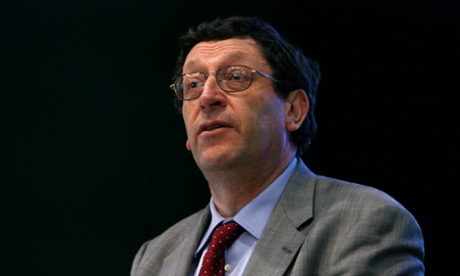
I have not found it easy finding articles strongly defending the fiscal charter. David (Danny) Blanchflower, another member of Labour’s new economic advisory committee, thinks he has an explanation.
nobody to this point has been able to show me any comment from a serious economist supporting @George_Osborne fiscal charter stunt
— Danny Blanchflower (@D_Blanchflower) October 14, 2015
As far as I can tell the Tories don't have a single credible economist supporting their ridiculous fiscal charter stunt - more ideology
— Danny Blanchflower (@D_Blanchflower) October 14, 2015
John McDonnell, the shadow chancellor, has posted a preview of what is going to say in tonight’s debate on YouTube.
This is from Sky’s Faisal Islam.
One Labour MP minded to abstain just told me would now vote against fiscal charter after PM's appeal for Labour rebels at PMQs
— Faisal Islam (@faisalislam) October 14, 2015
This is from HuffingtonPost’s Owen Bennett.
Rumours round the bars in parliament is around 20 abstentions from labour on the budget charter vote tonight.
— Owen Bennett (@owenjbennett) October 14, 2015
According to the Spectator’s James Forsyth, tonight’s fiscal charter debate could get a bit rowdy.
Tory MPs were encouraged to pipe down for Corbyn at PMQs today, but they’ve been encouraged to give John McDonnell the treatment tonight
— James Forsyth (@JGForsyth) October 14, 2015
Afternoon summary
- Labour has forfeited the chance to regain voters’ trust on the economy after its U-turn over the government’s fiscal charter, one of the party’s MPs has claimed hours before a vote on it in the Commons. The debate will start at around 7.30pm, and the vote will take place at around 9pm. Some Labour MPs are expected to abstain, instead of following the party whip and voting against, but the main interest may be in the first Commons exchange between George Osborne and his new Labour shadow, John McDonnell, and in what McDonnell can say to assert his authority following this week’s U-turn. I will be covering the debate in detail.
- Scottish Labour has said that the rights of women in Scotland could be undermined by the Westminster government’s decision to give the Scottish parliament power to decide abortion policy in the country. (See 4.48pm.)
- Jean-Claude Juncker, president of the European commission, has said that talks on Britain’s demands for an EU renegotation are not making “huge progress”. As the Press Association reports, in an apparent sign of frustration with the UK, he told the European parliament that “it takes two to tango” and that “our British friends have to dance”. Juncker’s comments also sparked confusion among Europe watchers after he appeared to suggest that “personally I don’t think that Britain needs the European Union”. The apparent remark was hailed by Ukip leader Nigel Farage, who said he would buy Juncker a bottle of champagne, while the Vote Leave campaign for an Out vote in the referendum due by the end of 2017 said it was “encouraged” by his stance. But a spokeswoman for the president rushed out a clarification, insisting that the Luxembourger - who speaks English as a second language and appeared to “swallow” the critical word as he spoke - had been misheard and had in fact said “personally I do think Britain needs the European Union”.
- Ministers have suffered a defeat in the House of Lords that Tories claim could delay plans to extend free childcare. (See 5.51pm.) Lord Nash, the education minister, said the amendment, which would delay implementation until a funding review has been carried out, risked substantially delaying the change for working parents in 2017. But Labour does not accept that.
@AndrewSparrow not true. What is being asked for won't delay 2017 implementation. Govt is attempting to defend a shoddily drafted Bill
— LabourLordsUK (@LabourLordsUK) October 14, 2015
- Labour has said that Jeremy Corbyn could raise concerns about China’s human rights record when he attends a state banquet at Buckingham Palace in honour of Chinese president Xi Jinping. As the Press Associaton reports, Corbyn is seeking private meetings with senior figures from Beijing during the state visit, though the party has not said whether he hopes that will include the president himself. His spokesman said any such meetings would be the appropriate venue for discussions about rights abuses but did not rule out using the royal function to do so if necessary. “He will be raising issues about human rights next week,” the spokesman said after Prime Minister’s Questions. “If he gets private meetings he will be doing it in those meetings - that’s the right thing to do. We are always concerned that the Government doesn’t raise human rights issues as well as it should.
-
Greg Clark, the communities secretary, has said the government will not be imposing mayors on areas like the north east against their will. He was speaking as MPs debated the second reading of the cities and local government devolution bill, which will allow combined authorities to have directly-elected mayors, and he was responding to Ronnie Campbell, Ronnie Campbell, Labour MP for Blyth Valley, who said:
In the North East of England it seems as though you are imposing a mayor on the leaders and the feeling in the North East is that they don’t want the Geordie Boris. If it is all about democracy and sharing democracy why are you imposing the mayor on us?
Ben Harrison discusses the bill in more detail here, in a blog on the Centre for Cities website.
Updated
Plans to extend free childcare could be delayed after government suffers Lords defeat
The government has been defeated in the House of Lords this afternoon over the childcare bill. The Press Association has the details.
The government has suffered a defeat in the Lords over its plan to double the amount of free childcare for parents of three and four-year-olds.
Labour and Liberal Democrat peers voted 222 to 209, majority 13, for the change not to come into force until a full analysis of funding the policy has been carried out.
They backed an amendment to the childcare bill at report stage also demanding a “comprehensive and sustainable funding solution” for childcare places.
Education minister Lord Nash warned the defeat risked delaying the implementation of the policy for working parents.
The bill, which delivers a Tory manifesto commitment, will double free hours from 15 to 30 hours for 38 weeks a year - a total of 1,140 hours of childcare a year.
For Labour, Baroness Jones of Whitchurch said the opposition supported the concept of extending free childcare.
But she told peers: “We want a policy that won’t just grab the headlines. We want a policy that will work.”
Complaining abut a lack of detail in the bill, Lady Jones said: “There are real questions about now these new places are to be funded and what will happen if they aren’t fully funded.”
She said the plan wasn’t viable without a considerable injection of cash and demanded a review of the funding system before the bill became law.
UPDATE AT 6.18PM: Lord Nash, the education minister, said the amendment, which would delay implementation until a funding review has been carried out, risked substantially delaying the change for working parents in 2017. But Labour does not accept that.
@AndrewSparrow not true. What is being asked for won't delay 2017 implementation. Govt is attempting to defend a shoddily drafted Bill
— LabourLordsUK (@LabourLordsUK) October 14, 2015
Updated
The Jeremy Corbyn campaign have tweeted five reasons why the fiscal charter should be opposed.
5 things you should know about @George_Osborne's fiscal charter & why @UKLabour will be voting against it. pic.twitter.com/fd8IEWCxbS
— JeremyCorbyn4PM (@JeremyCorbyn4PM) October 14, 2015
In an interview with the New Statesman Maria Eagle, the shadow defence secretary, has said that Labour’s defence review will look at whether or not the party should continue to back Trident “with a completely open mind”. She said:
It’s a genuine [defence] review and so we’ll be looking at it on the basis of facts and figures with a completely open mind . . . I’m not ruling it out [if the Labour party decides to endorse unilateral disarmament].
I think at a time when you’ve got austerity and big cuts in public expenditure it’s reasonable for people to ask whether or not the money that we’re spending on defence generally and on a successor submarine, in particular, is properly spent.
Caroline Lucas, the Green MP, has put out a statement explaining why she will be voting against the charter for budget responsibility. She said:
This charter is a massive and reckless gamble with our economy. These plans will either crash the economy now by sucking away demand, or crash it later by relying on dangerous levels of private debt to keep demand growing. The sad fact is that this economic illiteracy will lead to further cuts and privatisation – harming communities up and down the country.
Scottish Labour criticises government decision to give Scotland control over abortion policy
The Scotland bill will be amended to give Scotland control over abortion policy, David Mundell, the Scottish secretary, has told MPs on the Scottish affairs committee.
The Scottish Labour party has criticised the decision. This is from Jenny Marra, its equalities spokesperson.
The secretary of state has taken this decision behind closed doors without any consultation with women’s groups across Scotland. The Smith Commission promised a process to consider this, but that seems to have only meant a process that involved ministers of the UK and Scottish governments, and not women across Scotland.
Scottish Labour firmly believes that the safest way to protect the current legal framework around abortion is for it to remain at UK level where there is a strong consensus around the current time limits.
Leading human rights and women’s groups have said that devolving abortion law could undermine the right of women to make their own decisions.
Scottish Labour want to see powers devolved for a purpose, like tax powers to invest in education or welfare powers to protect our vulnerable, and we join a ranged of groups who believe that abortion law should stay at a UK wide level, groups who the UK Government have failed to consult with.
Labour’s new high-powered economic advisory committee has not met yet, one of its members has confirmed. Ann Pettifor, director of Policy Research in Macroeconomics (Prime), told the World at One:
It is for John McDonnell to convene a meeting and he has not done so so far. Clearly they have a million things on their plates - it is all pretty intense and I am therefore not surprised that a formal meeting with a bunch of advisers has not been set up, but I do hope it will be soon. We have written and asked that it will happen soon.
This is no great surprise. The new body was only announced at the Labour conference, and two of its members are based in the US, and one in France.
Pettifor also said that Labour’s position on the fiscal charter had been “a muddle” but that the party had now taken the right decision to oppose it. She said:
I think it is absolutely the right decision, I only wish he’d come to it earlier. Clearly what John McDonnell was doing was thinking about the politics of it. It does sound to me to have been pretty messy. Clearly it is a new opposition, they have been in a muddle, but thank goodness they have made the right decision.
The leader of the Fire Brigades Union has accused some Labour MPs of trying to “put the knife in” to Jeremy Corbyn and John McDonnell following this week’s fractious Parliamentary party meeting.
Matt Wrack, the union’s general secretary, said that parliamentarians who have attacked the party’s leader and shadow chancellor should “shut up” and “wind their necks in” at a meeting of union activists in parliament.
His comments come amid growing speculation that the union, which today was holding a lobby of MPs over cuts to Britain’s fire service, could re-affiliate to the party under Labour’s new left-leaning leadership. Corbyn and McDonnell are longstanding supporters of the union.
Speaking in a committee room to a group of firefighters, Wrack said:
I don’t want to pry into the business of the parliamentary Labour party too much, but people may have seen the press reports of what went on in the Parliamentary Labour party this week and the attacks that were made on the Corbyn leadership.
On behalf of the executive council, and I hope on behalf of everyone, I would say to those people who are trying to put the knife into Jeremy Corbyn and John McDonnell they need to wind their necks in and shut up and abide by the democratic decision of Labour party members, affiliated trade unionists and supporters and also in non-affiliated trade unions like us, like PCS, like the RMT. John and Jeremy have stood by those unions through thick and thin.
Updated
This is from the BBC’s Laura Kuenssberg.
Sounds like @labourwhips working hard this afternoon to minimise number of abstentions on fiscal charter and shore up McDonnell position
— Laura Kuenssberg (@bbclaurak) October 14, 2015
The Labour MP Chris Evans has said he will abstain in the vote on the charter for budget responsibility tonight, instead of following the party line and backing it. He explained:
It is my view that Labour should support a budget surplus in principle but ensure that certain tests are passed. Are the NHS, vital public services and the national security safe? Are the vulnerable and poorest protected? Are we taking the right action to support people fulfil their ambitions?
Labour should be setting these tests and extracting concessions from the Government. This would be acting as a sensible, mature and responsible opposition and would be an effective start to the fightback. We cannot achieve this with inconsistent policy positions.
As a result of this I have decided to abstain on today’s vote on the fiscal charter. I cannot in good conscience support a position which I do not agree with, which has been inconsistent with existing Labour policy and which has not been properly explained by the shadow chancellor and Labour leadership.
Chris Leslie, the former shadow chancellor, and Liz Kendall, the former leadership candidate, have both said they will abstain.
And the Labour MP Jamie Reed has also said he will abstain.
#pmqs I'll be abstaining tonight. It's a pantomime proposition. Parliament at its most pointless.
— Jamie Reed (@jreedmp) October 14, 2015
In his letter to Labour MPs earlier this week explaining why the party would be voting against the charter for budget responsibility, John McDonnell, the shadow chancellor, said the party would promote its own “fairer alternative” tonight. There was speculation that he might release an alternative fiscal charter. But, according to the BBC, that won’t happen.
Labour sources say John McDonell will not be announcing an alternative Fiscal Charter for today's debate
— norman smith (@BBCNormanS) October 14, 2015
Labour and other parties support the idea of a constitutional convention. To establish how that could work, two four-day “citizen’s assemblies” are being held in the next few weeks in Southampton and Sheffield to allow people to discuss the future of the areas. They are being organised by Democracy Matters, a group involving academics and the Electoral Reform Society. There are more details here, on its website.
Jon Ashworth, the shadow minister without portfolio, has written to David Cameron following his refusal to answer Kevin Brennan’s question about when he learnt about Lord Ashcroft’s non-dom status. In it, he points out that after PMQs Cameron’s spokesman dodged this question 11 times.
In the post-PMQs briefing, David Cameron's spokesman was asked 11 times exactly when Cam learned about Lord Ashcroft's tax status. No answer
— Jack Blanchard (@Jack_Blanchard_) October 14, 2015
Ashworth said:
Desperate attempts to avoid giving a straight answer mean the questions are only growing and it’s beginning to look like the prime minister has got something to hide. He needs to come clean and he needs to do so straight away.
And here’s a Guardian video with another exchange from PMQs.
Lunchtime summary
- Jeremy Corbyn has used PMQs to accuse David Cameron of limiting the life chances of hundreds of thousands of children from low- and middle-income families by introducing cuts to child tax credits as part of the government’s £12bn welfare cuts. As Nicholas Watt reports, in their second encounter at prime minister’s questions, the Labour leader quoted from a single mother with a disabled child who will lose £1,800 a year as he contrasted the Tories’ tax credit cuts with their introduction of tax breaks for the wealthy.
- Cameron has forcefully defended British military intervention in Afghanistan and Libya in the face of criticism from the SNP. At PMQs Angus Robertson, the SNP’s parliamentary leader, said those interventions should make Cameron think twice before authorising air strikes against Islamic State in Syria. Robertson said:
More than 450 UK service personnel died in Afghanistan but sadly the Taliban are back. The UK spent 13 times more bombing Libya than in rebuilding the country and there has been anarchy. The US has just dropped a 500m US dollar programme to support the Syrian opposition, Russia is bombing Syria and the UK has no plan to help Syrian refugees who have made it to Europe.
There is no surprise that there is growing scepticism about the drumbeat towards war. Will the prime minister give an assurance that he has learned the lessons of Iraq, of Afghanistan, and Libya and he will never repeat them?
Cameron accused Robertson of ignoring the consequences of doing nothing. He replied:
I can’t remember a question with so many errors in. First of all, the idea that Britain isn’t helping Syrian refugees when we are the second largest bilateral donor to Syrian refugee camps in Jordan, in Lebanon, in Turkey, and that’s because we’re spending 0.7% of our gross national income on aid. We’ve done more than almost any other country in the world to help Syrian refugees but frankly, I don’t recognise the picture you paint of Afghanistan - the fact is that we have supported an Afghan national army and police force and an Afghan government that are in control of that country.
But the final point I’d make to you is it’s all very well standing on your high horse and lecturing about the past - would you be happier with an Afghanistan that had a Taliban regime and al Qaida in Afghanistan? Would you be happier with Gaddafi running Libya, would you be happier with that situation? So as I said, the consequences of non-intervention are also worth considering.
- Cameron has sidestepped a question about whether he is “telling porkies” about when he first learnt about Lord Ashcroft’s non-dom status. At PMQs the Labour MPs Kevin Brennan asked:
Can you help clear something up for the House and the country and it concerns the recent biography of you by Isabel Oakeshott? In it Lord Ashcroft says he told you in 2009 about his non dom tax status and yet in 2010 you said you didn’t know the detail of Lord Ashcroft’s tax status. Clearly someone is telling porkies. Is it you or Lord Ashcroft?
Cameron did not answer the specific question, although he said that Brennan could find better uses of his time than reading the Ashcroft book and that he pushed for a law stopping non-doms from sitting in the Lords.
- Cameron has accused the SNP of inventing grievances. At PMQs the SNP MP Callum McCaig suggested that Scotland might not get its share of revenue from the new apprenticeship levy. Cameron said the rate of the levy had not yet been set, but that Scotland would get its full share. He went on:
But as ever with the SNP, they invent a grievance before it even exists.
- Corbyn has urged Cameron to keep promises on tracking and using data on secondary breast cancer.
- MPs’ and peers’ private communications are not protected from interception by the so-called Wilson doctrine that was widely thought to provide special privileges for parliamentarians, according to a court ruling. A surprise decision by the investigatory powers tribunal (IPT) has found that guarantees – which even the home secretary, Theresa May, reasserted this week – do not apply.The ruling prompted emergency questions in parliament and calls from MPs for statements by both the Commons Speaker, John Bercow, and the government.
- Theresa Villiers, the Northern Ireland secretary, has said Corbyn’s stance on the IRA is a matter of “great concern”. In Northern Ireland questions she was asked by the Tory MP Maria Caulfield if she agreed that it would be “helpful to have cross-party agreement in this place in terms of our stance against terrorism in order to show support to the Northern Ireland executive”. She replied:
It is important and I think for the most part that is a shared view across the House. It is obviously of great concern that the leader of the Labour party as recently as August, when asked to condemn IRA terrorism, said that he condemned the actions of the British Army in Northern Ireland.
- The SNP has announced that the head of the Scottish Trades Union Congress (STUC) will address its conference for the first time. The conference starts tomorrow, and the STUC’s Grahame Smith will speak on Saturday. After the general election Smith warned that “Labour is in real danger of becoming irrelevant in Scottish politics” as he signed a memorandum of understanding with SNP leader Nicola Sturgeon to oppose Tory austerity and demand further powers for Scotland.
Here’s a Guardian video with highlights from PMQs.
PMQs - Verdict from the Twitter commentariat
And this is what political journalists are saying about PMQs on Twitter.
Generally, Jeremy Corbyn has made a good impression.
I’ve found two people, or two and a half, calling it for him.
From the Mirror’s Jason Beattie
My snap verdict on who won this week's #PMQs http://t.co/hldpxRHhCo pic.twitter.com/8tC3flWLJ4
— Jason Beattie (@JBeattieMirror) October 14, 2015
From the Times’s Patrick Kidd
PMQs a narrow win for Corbyn. Much better attack lines than last time, landed some blows and cheered his backbenches
— Patrick Kidd (@patrick_kidd) October 14, 2015
From Prospect’s Josh Lowe
Can we call that a Corbyn win? Sort of, maybe, a bit. Should have mentioned Saudis and stuck harder on tax credits. But not bad #PMQs
— josh lowe (@JeyyLowe) October 14, 2015
Two people are calling it a draw.
From the Guardian’s Michael White
#PMQs This week's score. Well, no great substance or drama, but Corbyn kept his dignity & Cam was civil. So let's call it 3 all.Can it last?
— MichaelWhite (@MichaelWhite) October 14, 2015
From the BBC’s Norman Smith
PMQs: The Instant Verdict.... http://t.co/QFWahxij0r
— norman smith (@BBCNormanS) October 14, 2015
Mostly, though, people are just welcoming the contrast with the old-style, abuse-chucking PMQs.
From the New Statesman’s George Eaton
My #PMQs review: Corbyn's best moment as leader http://t.co/RhfCtXiByq
— George Eaton (@georgeeaton) October 14, 2015
From the Times’s Michael Savage
It was a creditable outing from Corbyn at #PMQs, but the bottom line remains - dull and polite is fine for the PM.
— Michael Savage (@michaelsavage) October 14, 2015
From the Telegraph’s Asa Bennett
#pmqs summary: Corbyn did better, but his slow questions meant Cameron had lots of time to think of a response.
— Asa Bennett (@asabenn) October 14, 2015
From Huffington Post’s Owen Bennett
I might be in the minority, but I like this new #pmqs from Corbyn. Better than watching 2 people try and out-soundbite each other #pmqs
— Owen Bennett (@owenjbennett) October 14, 2015
From the Guardian’s Patrick Wintour
By recounting stories of real people in poverty or struggling with housing, Corbyn dignifies PMQs, and raises the tone. It's progress.
— Patrick Wintour (@patrickwintour) October 14, 2015
From ITV’s Carl Dinnen
Jeremy Corbyn much better at PMQs today. May yet use it to good effect. #PMQs
— Carl Dinnen (@carldinnen) October 14, 2015
From Sky’s Adam Boulton
COMMENT #PMQs turning into PM's Surgery. Reasonably questions, reasonably answered. Won't damage either JC or DC. JC does not rise to bait.
— Adam Boulton (@adamboultonSKY) October 14, 2015
From the Guardian’s Rafael Behr
Corbyn's new #pmqs style still a work in progress but civility + policy detail definitely have potential to get better of Cameron.
— Rafael Behr (@rafaelbehr) October 14, 2015
From the BBC’s Sam Macrory
Making the PM look uncomfortable on policy & also coming up with some TV-friendly soundbites. Might Corbyn actually be quite good at #pmqs..
— Sam Macrory (@sammacrory) October 14, 2015
From the Independent’s Nigel Morris
Know it's not great theatre, but am liking this new-style #PMQS
— Nigel Morris (@NigelpMorris) October 14, 2015
From Newsnight’s Ian Katz
.@jeremycorbyn channeling the "world weary headmaster with trying pupil" vibe quite effectively today #PMQs
— Ian Katz (@iankatz1000) October 14, 2015
From Mark Ferguson, the former LabourList editor
Corbyn’s doing much better today with these questions. Far more coherent than last week, and better prepared for Cameron’s answers #pmqs
— Mark Ferguson (@Markfergusonuk) October 14, 2015
From the Specatator’s Isabel Hardman
Corbyn should have stuck with tax credits. Cameron was struggling on that #PMQs
— Isabel Hardman (@IsabelHardman) October 14, 2015
From the Sunday Times’s Tim Shipman
Better outing from Corbyn. Tax credits a useful scab to pick at. Cameron sound on the big economics. But the Corbyn deprecation of Dave good
— Tim Shipman (@ShippersUnbound) October 14, 2015
But not everyone likes the new PMQs
From the Telegraph’s Christopher Hope
Has Jeremy Corbyn killed #PMQs? The laboured questions take forever and remove the pace of debate. MPs are studying Twitter on their phones.
— Christopher Hope (@christopherhope) October 14, 2015
And the Spectator’s James Forsyth has a good point to make about the new dynamics of PMQs
One feature of this new PMQs is that Cameron takes out his pent up aggression on the SNP's Angus Robertson when he asks his two questions
— James Forsyth (@JGForsyth) October 14, 2015
PMQs - Verdict
PMQs - Verdict: During the Conservative party conference, David Cameron, and other ministers, were asked repeatedly to accept that millions of low-paid workers will lose out from the tax credit cuts (or the work penalty, as Owen Jones says we should call it, in a column that Jeremy Corbyn, unlike Jess Phillips - see 11.44am - appears not to have read). Andrew Neil was probably the only broadcaster who seriously troubled his interviewees on this (though not Cameron, of course, because Number 10 is far too smart to let Cameron anywhere near Neil). Despite the fact that it is obvious that the budget giveaways won’t remotely compensate for the tax credit cuts, Cameron and others mostly managed to wriggle their way out of these interviews quite easily.
Today Jeremy Corbyn used his first three questions to have a go on the same topic himself. As in September, his tone was mature, reflective and sensible - and that made a welcome contrast with the usual, old-style PMQs. He even made the point about people like Kelly losing out massively quite forcefully.
But none of it appeared to discomfort Cameron much at all. In fact, he appeared to find the whole encounter about as unsettling as an interview on ITV’s This Morning. Corbyn used follow-up questions today, unlike in his first PMQs, when he tried six questions on six topics, but they were flaccid, and they did not really advance his case. As I have said many times before, questions at PMQs are not about eliciting answers; they are a means by which MPs articulate a political argument. A leader of the opposition needs to be able to “weaponise” them. Corbyn has not found a way of doing that, although it is not clear yet whether that is down to ineptitude, or whether that it is because overt point-scoring is part of the “old politics” that he has decided to reject.
In his final question Corbyn struck another “new politics” note when he asked about a relatively unusual non-partisan issue, secondary breast cancer. (See 12.18pm.) It is good to hear topics like this getting raised. But even this worked to Cameron’s advantage, because he explained Corbyn’s point about data collection in relation to this slightly better than Corbyn did.
The SNP’s Marion Fellows says some of her constituents are suffering real hardship because of the way child support is paid. There are no penalties if parents do not pay the money they are meant to pay.
John Bercow says MPs need to ask shorter questions. (We have already over-run by seven minutes.)
Cameron says all MPs are familiar with this issue. He will look closely at it, he says.
Liz McInnes, a Labour MP, asks if trade union members will be able to cast their votes electronically in strike ballots under the trade union bill.
Cameron says it is not clear yet that electronic voting can be used in a way that is safe and secure. If people are planning to go on strike, it is not too much to expect them to fill in a ballot paper, he says.
Lucy Allan, a Conservative, asks about the case review into the murder of Georgia Williams.
Cameron says the police need to learn the lessons from this “tragic” case.
Cheryl Gillan, a Conservative, asks about a decision being taken on Friday by Nice about whether a new drug will be approved.
Cameron says the decision must be made by clinicians. But the government needs to talk to drug companies about getting the cost of drugs down. This one can cost £400,000 per patient per year.
Cameron says he wants to build on the government’s record of increasing the number of low-income students going to university.
Cameron says if you do not believe in having a surplus after nine years, when will you have one. Labour MPs should support the Tories on the fiscal charter tonight, he says.
Labour’s Kevin Brennan asks when Cameron found out about Lord Ashcroft’s non-dom status. Someone is telling porkies.
Cameron says Brennan should have better things to do than read Ashcroft’s book. He offers to lend him a copy. In 2010 Labour and the Tories both backed a ban on non-doms being in the Lords, a ban that Cameron proposed, he says.
Victoria Prentis, the Conservative MP for Banbury, asks about housing in her constituency, which is next to Cameron’s.
Cameron says Bicester shows that councils in the south east do favour building.
Labour’s Holly Lynch asks if Cameron will meet with her to discuss how the Tories can honour their promise to protect services at a local hospital.
Cameron says these decisions should be made locally. Calderdale hospital is a vital service, he says.
Cameron says councils need to complete their local plans, so that more building can take place.
The SNP’s Callum McCaig asks if Scotland will gets its fair share of the money from the apprenticeship levy.
Cameron says Scotland will get its fair share. But the rate of the levy has not been decided, not the size of firm it will apply to. As ever, the SNP are inventing a grievance before it even exist, he says.
Nigel Huddleston, a Conservative, asks about the new national infrastructure commission.
Cameron says he is delighted he is establishing this. He hopes it will put infrastructure decisions beyond politics. And Lord Adonis will be an excellent chair.
As Labour MPs shout “Labour policy”, Cameron says, where the government finds a good Labour policy, it implements. And tonight Tories will be voting for something that until last week was Labour policy, he says.
That provokes lots of Tory cheering.
Snap PMQs Verdict
Snap PMQs Verdict: That was a creditable performance from Jeremy Corbyn - serious and abuse-free, in a manner that seemed to go down well last month (see 11.51am) - but, even though Corbyn was using follow-up questions today, he has not worked out how to “weaponise” them, and Cameron was hardly discomforted at all.
Corbyn says it would be nice if Cameron answered the question asked. John Bercow urges MPs to calm down. Corbyn says he is calm. What will Cameron do to let councils borrow to fund building? Cameron can write to him on this. Yesterday was secondary breast cancer awareness day. Corbyn discussed this with two women in Brighton yesterday. Cameron had promised their organisation that data on this would be collected. But that has not happened. Will Cameron undertake to do this?
Cameron says he has met these campaigners at his conference. They are asking for more information, so that we can be sure we are spreading the best practice in every hospital. He says he will write to the health secretary about this. It is essential to tackle secondary breast cancer properly.
Updated
Corbyn says he will bring Cameron back to reality. That provokes jeering. Rents are rising. Even the CBI says an extra 240,000 extra homes are needed. Will Cameron let councils build more homes?
Cameron says now that the housing association movement is backing right-to-buy, more homes will be built. And since he became prime minister, more council homes have been built than during the 13 years of Labour. And we need a strong economy. That won’t happen if the government follows Labour’s policy of borrowing for ever.
Corbyn says Cameron is doing his best. But people in work rely on tax credits. Inequality is getting worse, not better. Shouldn’t Cameron think about the choices he is making?
Cameron says the bill for tax credits went from £6bn to £30b between 1998 and 2010, but in-work poverty went up.
The figures Corbyn is quoting for inequality are wrong. There are 800,000 fewer people in relative poverty than in 2010. Labour has a choice tonight, he says. They used to be committed to cutting the deficit. Now they want more borrowing.
Corbyn says 3m low and middle income families will be worse off as a result of the tax credit cuts. There will be a debate next week. Cameron can take part, and explain his policies. He turns to housing. As Tories laugh, he says this is not funny to Matthew or other people. Despite earning well over the minimum wage, he cannot afford a home. Can ordinary people aspire to buy a home worth £480,000?
Cameron says the government is doing everything it can to get more affordable homes available. £480,000 will be the upper limit for starter homes in London. The government wants homes to be available for £150,000. And the government is introducing right-to-buy for people in housing association properties.
Jeremy Corbyn also pays tribute to the dead RAF airmen, and the dead policeman. And he pays tribute to those killed in the Turkish bomb attack.
He reads a question from Kelly, who will lose money from the tax credit cuts. How much worse off will she be?
Cameron says the national living wage will represent a £20 a week pay rise from next year. People like Kelly will benefit as it goes up to £9 an hour. As Labour MPs jeer, he asks what happened to the new approach. And the tax allowance has gone up. If Kelly has children, she will get more free childcare. And if she is a council tenant, her rent will go down.
Corbyn says Kelly will be £1,800 worse off. Some 3m families are in the same position. And 500,000 more children will be in poverty. Shouldn’t Cameron be aware of this in the decisions he takes.
Cameron says there are 480,000 more children in families where people work, and 2m more people in work. Corbyn still has not welcomed the fall in unemployment. All people benefit from a growing economy, and stability. MPs will vote on that tonight.
Karl McCartney, a Conservative, asks about the fall in unemployment. The recovery would be put in jeopardy by the “shambles” represented by the “honourable” (ie, not a privy counsellor yet) Jeremy Corbyn.
Cameron says his government has a long-term economic plan.
Lisa Cameron, an SNP MP, asks about funding for mental health treatment for members of the armed forces.
Cameron praises his namesake for raising this. There is an opportunity to look at this in the strategic defence review. And the defence budget will be rising.
Cameron at PMQs
David Cameron starts by paying tribute to two RAF airmen who were killed in the helicopter crash in Kabul. And he pays tribute to David Phillips, the police officer killed in Liverpool.
Little nod between Cameron and Corbyn across the floor ahead of #pmqs. Lovely to see
— Graeme Demianyk (@GraemeDemianyk) October 14, 2015
Jeremy Corbyn’s press officer had trouble getting into the press gallery for PMQs.
Corbyn spinner Kevin Slocombe stopped at 1st attempt to enter gallery for #pmqs - wasn't wearing a tie. Has donned 1 of the emergency ties.
— Tim Sculthorpe (@timsculthorpe) October 14, 2015
This is from the Conservative MP Jake Berry.
Corbyn arrives at #PMQs, greeted by wall silence from his own side. #Awkward
— Jake Berry (@JakeBerry) October 14, 2015
Corbyn allies Clive Lewis, Kate Osamor, Richard Burgon all sitting on 2nd row ready to cheer on the leader at PMQs
— Emily Ashton (@elashton) October 14, 2015
Must be very tempting for Cameron to shoehorn in a reference to ‘Ben from Exeter’ in response to Corbyn’s crowd sourced questions at PMQS
— James Forsyth (@JGForsyth) October 14, 2015
That’s a reference to what the Labour MP Ben Bradshaw had to say after Monday’s meeting of the parliamentary Labour party.
Jeremy Corbyn looks relaxed ahead of PMQs, my colleague Gaby Hinsliff reports.
Just passed a rather relaxed looking Jeremy from Islington, heading in for #pmqs (sadly I'm heading the other way for an interview)
— Gaby Hinsliff (@gabyhinsliff) October 14, 2015
Voters liked Corbyn's first, abuse-free PMQS, YouGov poll suggests
After Jeremy Corbyn’s first PMQS, YouGov carried out some polling to find out whether voters liked his new, serious, abuse-free approach. As Peter Kellner writes in a post for the YouGov website, they did. Here is an extract.
Among those who said they had either watched the whole of PMQs, or seen news clips from it, we found a marked improvement in three respects, compared with two years ago:
- The proportion saying that week’s PMQs was ‘too noisy and aggressive’ halved from 47% to 23%
- The number saying ‘there was too much party political point-scoring instead of answering the question’ was down from 67% to 45%
- The proportion saying that ‘the MPs behave professionally’ doubled, from 16% to 34%
That’s the good news; however, in other respects, there has been little or no movement, with 37% saying it was informative (compared with 36% in 2013), 20% describing it as ‘exciting to watch’ (20% in 2013), and 14% saying ‘it made me proud of our Parliament’ (12% last time). The proportion saying ‘it dealt with the important issues facing the country’ was actually down, from 40% to 35%. This probably reflects Corbyn’s decision to concentrate on specific cases rather than large, fundamental issues.
The obvious conclusion is that Corbyn – and therefore Cameron – are on the right track. In three respects, public approval is up sharply; on the only one where the figures have gone backwards, the change is a modest five points. A sustained change to a more courteous and informative approach to PMQs would win public approval.
But he suggests that people could eventually get bored of an over-polite PMQs.
I fear that an excessively courteous PMQs would go the way of Liaison Committee meetings: civilised, but little noticed. The biggest single reason why PMQ attracts so much attention is that it is often dramatic. And it is usually dramatic precisely because it is raw and rumbustious – or, in the words of our question for the Hansard Society, ‘noisy and aggressive’.
Cameron and Corbyn at PMQs
PMQs starts in about 15 minutes.
On BBC News a few minutes ago Clive Lewis, the Corbyn-supporting Labour MP, said that he expected Jeremy Corbyn to use questions from members of the public at PMQs today, as he did at his first PMQs last month, but to include some follow-up questions too. Last time he did not use follow-ups, which allowed David Cameron to go unchallenged.
And, in the same interview, the Labour MP Jess Phillips said she wanted to hear Labour going on about “the work penalty” (ie, the tax credit cuts) at every opportunity. It sounded as if she’s been reading Owen Jones in the Guardian today.
Updated
Boris Johnson says low immigration can be bad for the economy
John McDonnell is not the only west London MP who has been sending out mixed messages recently. Last week Boris Johnson gave a speech to the Conservative conference suggesting there should be much tougher controls on EU migration. But today, on his tour of Japan, he has been making the point that low immigration can lead to economic stagnation. Speaking in Tokyo he said:
They [the Japanese] have been going through a long period of stagnation but they are hoping to pull out of it. They have got demographic problems. One of the questions that people in Britain might think about is obviously that they have very, very low immigration and very, very low, in fact negative, population growth, they have got a shrinking population.
That has, of course, contributed to the long period of economic stagnation they are going through but that has got to be seen in context. This is still an amazing, dynamic, vibrant, fantastically rich economy, the third biggest in the world and we have got to be here.

Tory donor Lord Bamford criticises Cameron for keeping public 'in the dark' about EU renegotiation
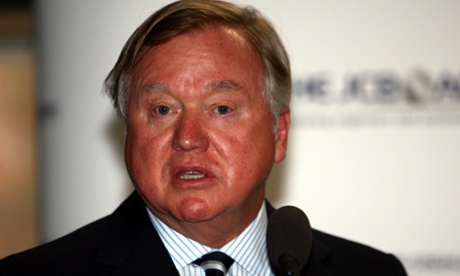
Lord Bamford, the JCB chairman and a major donor to the Conservative party, has written an article for the Daily Telegraph criticising David Cameron for keeping people “in the dark” about his EU renegotiation.
My main concern is that we’re being kept in the dark on the negotiations. Keeping us in the dark is not helping the government, in my view, nor will it help convince the public when the referendum comes around. The prime minister has stated that he is seeking proper full-on treaty change and a fundamental change in Britain’s relationship with the EU. I applaud his ambition and sincerely wish him well but I do believe we’re entitled to greater transparency. We need to see some real detail.
Bamford also indicated that he was minded to vote to leave the EU.
We hear a lot about the risks of leaving the EU, but we do not hear enough about the risks of staying in. We do not have enough sovereign control over our own affairs now but will we have still less in the future? We are over-regulated now but will it become even more onerous? ...
If the government fails to secure truly radical reform, I will have no other choice but to vote to leave. Let me be clear: Britain’s exit from the EU is not my preferred option, but if that’s what happens, so be it. If the choice of the British people is to leave, we have nothing to fear but fear itself.
Here is some more reaction to the unemployment figures. (See 9.45am.)
From Frances O’Grady, the TUC general secretary
Renewed employment growth is welcome and while there are still years of lost ground to make up it’s good to see private sector wages rising. But public sector workers are increasingly falling behind. The challenge now is delivering a recovery that works for everyone across the country, regardless of which region or sector they work in.
Despite today’s improvements, it is also clear that there is still spare capacity in the jobs market. With inflation at zero, and rising numbers of workers in temporary jobs looking for full-time work, there is no case for immediate rate rises.
From Matthew Whittaker, chief economist at the Resolution Foundation
It’s encouraging to see unemployment falling again, after a pause earlier this year. But there is significant variation in the extent to which this jobs’ revival has been shared across the country. Many parts of the UK remain a long way short of their pre-recession levels.
From Paul Kenny, the GMB general secretary
The job losses at Redcar steel works and JCB are dark clouds on the horizon. Employment growth is likely to slow as large cuts in public sector employment kick in and as lower-paid workers seek more hours to make up for the nearly 30 per week cuts they face in tax credits.
James Sproule, chief economist at the Institute of Directors, said: “Another month of impressive jobs figures and strong wage growth show that the business-led recovery is well on track. Despite uncertainties at home and abroad, employers have continued to create jobs, raise productivity and boost pay in a vote of confidence in the British economy.
“Employment is up in most sectors and across the country, pay is growing and long-term, short-term, and youth unemployment are all falling. This is a welcome sign of a healthy economy, a strong private sector, and a tightening labour market.”
From James Sproule, chief economist at the Institute of Directors
Another month of impressive jobs figures and strong wage growth show that the business-led recovery is well on track. Despite uncertainties at home and abroad, employers have continued to create jobs, raise productivity and boost pay in a vote of confidence in the British economy.
Employment is up in most sectors and across the country, pay is growing and long-term, short-term, and youth unemployment are all falling. This is a welcome sign of a healthy economy, a strong private sector, and a tightening labour market.
My colleagues Owen Bowcott and Ian Cobain have written up the Investigatory Powers Tribunal ruling. Here’s the start of their story.
MPs’ and peers’ private communications are not protected from spying by the so-called Wilson doctrine that was widely thought to provide special privileges for parliamentarians, according to court ruling.
A surprise decision by the investigatory powers tribunal (IPT) has found that guarantees – which even the home secretary, Theresa May, reasserted this week – do not apply.
The investigatory powers tribunal judgment is in response to a claim brought by two Green party parliamentarians – Caroline Lucas, MP for Brighton Pavilion, and Jenny Jones.
MPs not protected from bulk interception, tribunal rules
The so-called “Wilson doctrine”, a rule that supposedly protects MPs from being spied upon, has “no legal effect”, the Investigatory Powers Tribunal has said today.
It made the ruling in a case bought by the Green MP Caroline Lucas, the Green peer Jenny Jones and the former Respect MP George Galloway. In 1966 Harold Wilson, the then Labour prime minister, announced that MPs would be guaranteed that they would not have their phones tapped. Subsquent prime ministers, including David Cameron, have said this still applies, but Lucas, Jones and Galloway wanted an assurance that this meant MPs would not have their emails subject to mass internet surveillance by GCHQ.
And that have not had that assurance. Here are the key findings from the ruling (pdf).
The Tribunal accordingly answers the preliminary issues attached to this judgment as follows:
i) The Wilson Doctrine does not apply to s.8(4) warrants at the stage of issue.
ii) It applies to targeted, but not incidental, interception of parliamentarians’ communications, both in respect of s.8(1) warrants at date of issue and in respect of s.8(4) warrants at the date of accessing/selecting such communications.
iii) The Wilson Doctrine does not operate so as to create a substantive legitimate expectation.
iv) The Wilson Doctrine has no legal effect, but in practice the Agencies must comply with the Draft Code and with their own Guidance.
v) The regime for the interception of parliamentarians’ communications is in accordance with the law under Article 8(2) and prescribed by law under Article 10(2), in particular by reference to s.5(3) of RIPA.
MPs’ communications with their constituents and others are protected, like those of every other person, by the statutory regime established by Part 1 of RIPA 2000.
This means that, although although the policy of not targeting MPs specifically still applies, the intelligence services could still monitor their communications as part of a bulk surveillance operation (ie, of the kind involved in the Tempora programme exposed by Edward Snowden). Those s.8.(4) warrants authorise bulk interception that takes place when millions of emails are read electronically by computers looking for keywords or patterns.
Lucas has strongly criticised the decision. In a statement she said:
This judgement is a body blow for parliamentary democracy. My constituents have a right to know that their communications with me aren’t subject to blanket surveillance – yet this ruling suggests that they have no such protection.
Parliamentarians must be a trusted source for whistle blowers and those wishing to challenge the actions of the government. That’s why upcoming legislation on surveillance must include a provision to protect the communications of MPs, Peers, MSPs, AMs and MEPS from extra-judicial spying.
She also criticised Cameron for being “deliberately ambiguous” at to whether the Wilson doctrine still applies. She said:
The prime minister has been deliberately ambiguous on this issue – showing utter disregard for the privacy of those wanting to contact parliamentarians.

Updated
Here’s George Osborne, the chancellor, on the unemployment figures. (See 9.45pm.)
It is great news that Britain’s economic plan continues to create jobs and increase pay. We’ve got the highest rate of employment in our history, and real terms pay rising strongly.
But with recent data showing our trading partners’ growth is slowing we must not be complacent. All of this progress will be at risk unless we carry on with our plan to build a resilient economy, delivering the economic security of a country that lives within its means.
And here’s a comment from Iain Duncan Smith, the work and pensions secretary.
This is a fantastic set of figures, which show more people in work than ever before and a strong growth in wages. That is a credit to British business, and a credit to the hardworking people of this country.
Alongside this, unemployment has fallen to the lowest level since 2008, and long-term unemployment has dropped by a staggering quarter over the last year.
This positive picture is replicated up and down the country, demonstrating that this one nation government is delivering a society with opportunity and security for all at its heart.
Unemployment falls to seven-year low
And here’s the top of the Press Association story about the unemployment figures.
Unemployment has fallen to a seven-year low while a record number of people are in work, new figures have shown.
The jobless total dipped by 79,000 to 1.7m in the quarter to August, the lowest figure since the summer of 2008, giving a jobless rate of 5.4%.
Employment increased by 140,000 in the same three months to 31m, the highest since records began in 1971.
The Office for National Statistics said the fall in unemployment more than outstripped recent rises.
But the number of people claiming jobseeker’s allowance and the unemployment element of Universal Credit - the so-called claimant count - increased last month by 4,600 to 796,200.
Average earnings increased by 3% in the year to August, 0.1% up on the previous month and the highest since May.
ONS labour market statistician Nick Palmer said: “Wages continue to grow strongly in real terms.”
There were just over nine million people classed as economically inactive, a rate of 22%, and little changed from the three months to May.
The figure, which includes those taking early retirement, looking after a relative or “discouraged”, has only fallen by 13,000 in the past year.
There were 1.2m people in part-time jobs who wanted full-time work, down by 9,000.
The number of job vacancies in the economy increased by 4,000 over the latest quarter to 738,000.
Long-term unemployment has also fallen, down by 44,000 to 526,000 for those out of work for over a year.
The UK has one of the lowest unemployment rates in the EU, which has an average of 9.5%, with only Germany, the Czech Republic and Malta having lower rates.
Updated
Unemployment down to 5.4%, but claimant count up
Here are the headline unemployment figures.
- Unemployment fell by 79,000 between June and August to 1.7m, or 5.4%.
- The number of people on the claimant count last month increased by 4,600 to 796,200, said the Office for National Statistics.
- Average earnings increased by 3% in the year to August, 0.1% up on the
previous month.
Here is the Office for National Statistics summary. And here is the statistical bulletin (pdf) with the full details.
The BBC’s Norman Smith has produced a quite useful “idiot’s guide” to the fiscal charter.
But, obviously, if you’re reading the Guardian’s Politics Live, you can’t be an idiot, so I will post a fiscal charter reading list a bit later.
McDonnell says Labour MPs won't rebel over fiscal charter as he admits leaving them 'confused'
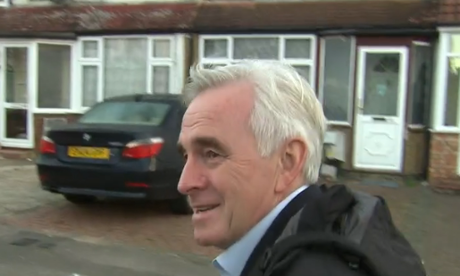
John McDonnell, the shadow chancellor, was doorstepped by the BBC as he left home this morning. He jokingly admitted that his policy U-turn had been confusing to MPs, but he said he would “clarify everything” today.
He also predicted that Labour MPs would ignore George Osborne’s suggestion that they should vote with the Tories on the fiscal charter.
Here is a full transcript of McDonnell’s brief exchange with the reporter.
Q: Is Labour’s economic policy in chaos?
JM: No. I’ll set it out today. It will be fairly clear.
Q: Do you think you’ve confused MPs?
JM: Well (laughs) most probably yes, but we’ll make it clear today. We’ve had to change position on a couple of issues but today will clarify everything.
Q: The chancellor is calling for your MPs to rebel. What do you have to say about that?
JM: That’s on Osborne stunt, isn’t it? I don’t think anyone will rise to it. They will see it for what it’s worth. It’s just another stunt. We are trying to get on to serious economic debate today, not those sort of political stunts.
Fiscal charter dismissed as 'stunt' with 'no place in economic policy' by Labour adviser
David Blanchflower (aka “Danny”), the former Bank of England monetary policy committee member who is now a member of Labour’s economic advisory committee, told the Today programme this morning that the party was right to vote against the fiscal charter.
It was “a stunt that has no place in economic policy”, he said.
The right decision has been put in place to oppose the chancellor’s political game, a stunt that has no place in economic policy ...
Tying yourself to a silly rule that nobody is ever going to obey makes absolutely no sense, especially as the economy is now slowing ...
There are views now I think that actually what we should be doing is not austerity but large amounts of fiscal investment and stimulus of the economy essentially to prepare it for the shock we know is coming.
Blanchflower also said it was a “surprise” when John McDonnnell originally said Labour would back the charter. But the party was in the right place now, he said.
This is early days, policy making is messy and it takes some time to work out what you are going to do ... There are clearly political things going on. I think the right decision has now been reached.
Jeremy Corbyn and John McDonnell are the two most important figures in Labour and they both face significant encounters in the House of Commons today.
For Corbyn, it’s his second PMQs. His first was judged a success, although many commentators said that relying on “crowdsourced” questions would have its limitations as a long-term tactic.
And for McDonnell, the shadow chancellor, it’s the debate on the charter for budget responsibility. He is under pressure to clarify Labour’s approach to tackling the deficit after performing a U-turn earlier this week and declaring that the party would vote against it, not for it as he previously said. As Patrick Wintour reports, George Osborne, the chancellor, has pitched in helpfully.
George Osborne has moved to exploit Labour’s disarray on economic policy by urging its MPs to vote for government’s fiscal responsibility charter, and so reject the shadow chancellor’s last-minute U-turn.
John McDonnell gave a series of explanations for his volte-face on the Treasury charter, which commits the government to produce budget surpluses at times of economic growth, and which he had said as recently as two weeks ago he would support. His reasons ranged from a meeting with redundant steelworkers in Redcar to a downturn in the world economy.
He insists he has not changed his strategy, only his parliamentary tactics. Nonetheless it is an early blow to McDonnell, who has been forced within a fortnight to retract his first major political decision.
Osborne said: “A fortnight ago, Labour told voters they were ready to back our plans. But now, they have confirmed they want to go on borrowing forever – loading debts onto our children that they can never hope to repay. This is not socialist compassion – it’s economic cruelty. As Labour’s Great Recession showed, those who suffer most when government run unsustainable deficits are not the richest but the poorest.
“So today, with Labour’s economic policy in obvious chaos, I call on all moderate, progressive Labour MPs to defy their leadership and join with us to vote for economic sanity. Failing that, they should at least follow the advice of the former shadow chancellor and abstain.”
It will be the first Commons encounter between Osborne and McDonnell since McDonnell was appointed. It is coming quite late, but I will be covering it here.
Here is the agenda for the day.
9.30am: Unemployment figures are published.
9.30am: Sajid Javid, the business secretary, gives evidence to the Commons business committee.
12pm: David Cameron faces Jeremy Corbyn at PMQs.
2.45pm: James Brokenshire, the immigration minister, gives evidence to the Commons European scrutiny committee.
7pm: George Osborne faces John McDonnell as MPs debate the charter for budget responsibility. MPs are expected to approve the charter when they vote at around 8.30pm.
As usual, I will also be covering breaking political news as it happens, as well as bringing you the best reaction, comment and analysis from the web. I will post a summary at lunchtime and another in the afternoon before focusing on the fiscal charter debate.
If you want to follow me or contact me on Twitter, I’m on@AndrewSparrow.