Take a breath: We're jumping with both feet into the deep waters of seafood cooking.
For many, the preparation of fish and other treasures from the sea is akin to swimming in uncharted waters. But, it is Lent, which means that many will abstain from meat on Fridays until Easter. So it's an especially good time to take the plunge.
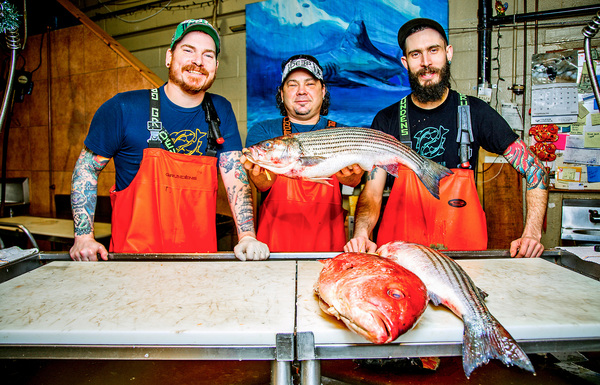
Henry Dewey and John McNally, two of the Pittsburgh's most experienced fishmongers, will hold our hands. They understand.
"I'd say that at least 50 percent of the people who come to our counter are nervous. They're actually afraid. And they're the ones (who had the courage) to come to the counter," said McNally, the seafood manager for the ever-bustling Wholey's fish market in Pittsburgh.
Dewey, the proprietor of Penn Avenue Fish Co., which has multiple locations in Pittsburgh, agreed. "A lot of our customers say right out that they're afraid they're going to screw it up," he said.
The men echo each other in their advice to those who feel like fish out of water when it comes to cooking seafood:
1. Relax.
2. Reach out to your fishmonger.
3. Keep it simple _ be it shellfish or fillets.
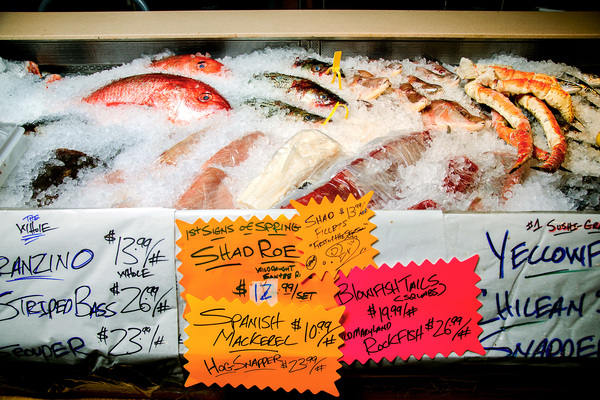
Perhaps the first obstacle to overcome is the sticker-shock. The price-per-pound of many types of seafood can be off-putting, especially if you're reaching for Dewey's $50-a-pound in-season salmon or Wholey's $24-a-pound fresh Chilean sea bass. "No one wants to sink that kind of money into dinner then be afraid they're going to screw it up," Dewey acknowledged.
So the purchase must be made with a sense of confidence that the meal will turn out well, no matter the cost, but especially if the cost is comparatively high.
There are simple strategies for success.
Often the main impediment to serving a delicious seafood dinner is overcooking, and so, seek the advice of the experts. "We'll actually write it on the paper we wrap the fish in. We know the thickness of the fillet we're selling and we'll indicate very precisely how long to cook it," Dewey said. McNally said he and his team behind the counter follow suit.
Another way to take the guesswork out of the equation is to use an inexpensive cooking thermometer. The FDA recommends an internal temperature for seafood of 145 degrees. The experienced cook eventually will recognize doneness by sight (the opague appearance of a scallop, for example) and feel (the ease of using a fork to flake the center of a cod fillet, for instance).
Then comes the matter of cost.
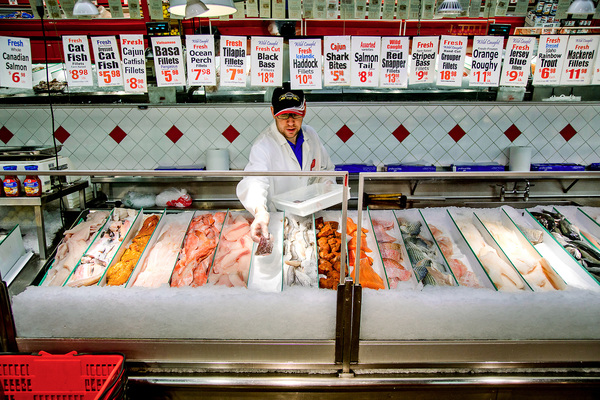
Some items simply might be cost-prohibitive, depending on an individual's budget. But, there is more than one fish in the sea. If one type is too expensive, pick another. McNally points to the scores of varieties behind his expansive counter and the price point runs the gamut. Dewey offers fish "ends" _ a mix of pieces from some of the most expensive fillets in the store _ at $6.99 a pound, perfect for fish tacos.
Staples at Wholey's are what McNally refers to as "value products" such as whiting at $2.50 a pound, a special on a recent week, and frozen tilapia filets at $3.98 a pound, a regular feature.
A consideration when it comes to cost is the lack of waste in products sold, said Dewey, who points out that the majority of seafood being sold at his counter is going at an "already-prepped" price per pound. "It's 100 percent utilization. No trimming or cleaning. There's absolutely no waste (for the buyer,)" Dewey said.
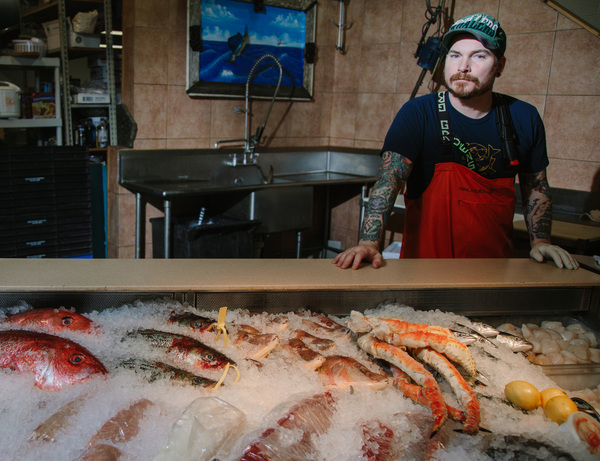
He emphasized that little is needed in the way of accoutrements to raise the seafood to its highest form: a splash of dry white wine, a pat of butter, a drizzle of olive oil, a squeeze of lemon, some salt and pepper _ perhaps a bit of minced garlic or shallot or some soft or toasted breadcrumbs.
"I know people think it's hard. But, really, cooking fish is one of the easiest things to do in the kitchen," Dewey said. "Once you buy the fish, you're in the home stretch."
A suggestion for some tasty, economical compromises
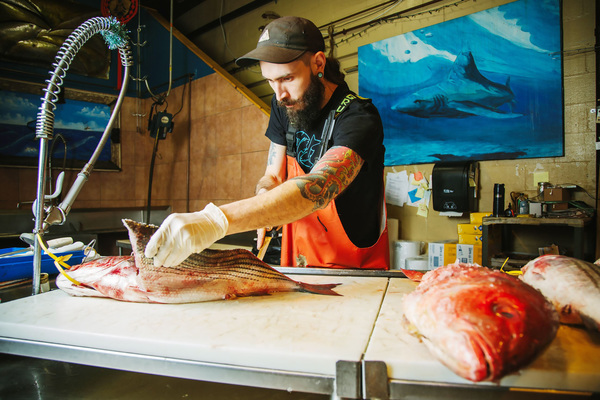
Wholey's seafood manager, John McNally, offers the following tips for economizing, beyond shopping for specials.
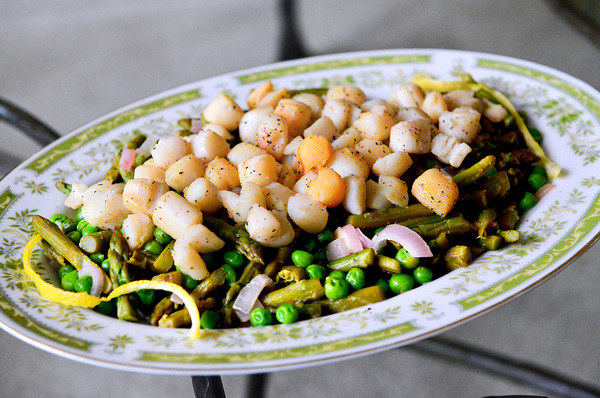
_Scallops are a mild and tender seafood that takes on the flavor of what it's given. Sauteed with a sauce of dry white wine, minced shallots and butter, it's a delicacy, McNally said. But, maybe the cost-conscious shopper doesn't want to spend $19.98 a pound for large, statement-sized sea scallops. A reasonable compromise is the smaller bay scallop at $8.98 a pound, he said. A trained chef, he warned that the bay scallops will cook much quicker (less than a minute per side in a hot pan _ essentially "flashing them," as opposed to about two minutes per side for sea scallops.) But both can be prepared by patting them dry, searing them in olive oil or clarified butter in a hot pan, and then pouring a shallot-white wine sauce on top of them." You can finish with a pat of butter and a little fresh parsley for color. Whether you're using sea scallops or bay scallops, "they'll be delicious," he said.
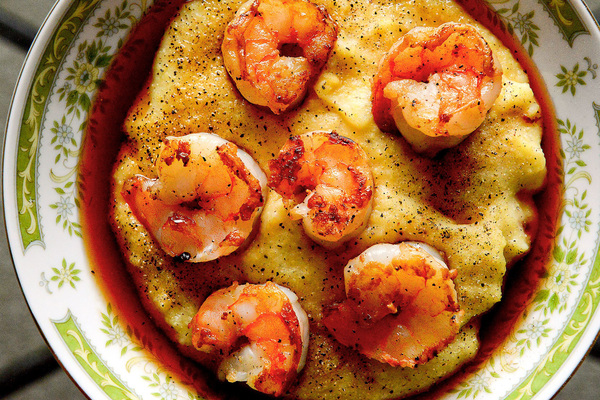
_Colossal Gulf shrimp at $14.98 a pound (to be shelled and deveined at home) are scrumptious sauteed in clarified butter for two to three minutes per side then served with a sauce of sauteed minced garlic, white wine and butter, McNally said. But, a nod to the pocketbook can be made by purchasing tiger or white shrimp at a cost of about $9.98 per pound. Known as easy-peels (the shell is on but can be easily pulled off and the shrimp already is deveined,) they take about 90 seconds per side to cook and can be served with the same sauce. The look is not as impressive as with the larger jumbo or colossal shrimp, but the taste is comparable, McNally said.
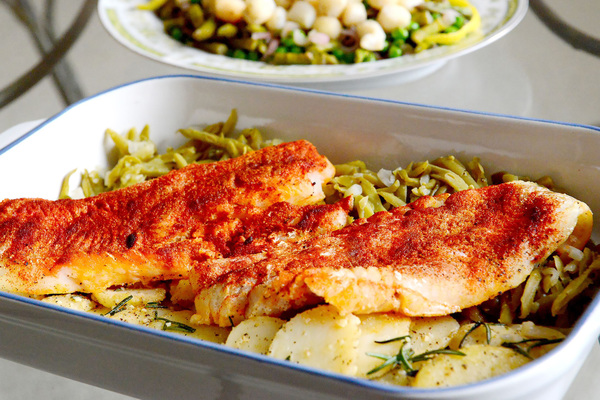
_Fresh ahi tuna at $21.98 per pound is luscious served medium-rare by searing in a pan with clarified butter after patting the fish dry. With a steak an inch-and-a-quarter in thickness, it'll take three to four minutes per side. But, if that price is too dear, you can opt for frozen ahi tuna at $10.98 a pound. Thaw overnight in the fridge and it's ready to go for dinner. McNally acknowledges the loss of some of that fresh-from-the-sea flavor but, again, deems it a reasonable compromise. The same kind of compromise can be had with cod: instead of buying fresh Atlantic cod at $10.98 a pound, you can get frozen Pacific cod at $4.98 a pound. McNally recommends baking uncovered in a pan with a few tablespoons of drawn butter and a couple of drops of water to create steam. After laying the cod in the pan and curling the tail to tuck underneath the thicker part of the fillet, sprinkle it with fresh bread crumbs, salt, pepper and parsley. Bake at 350 degrees for 12 to 15 minutes.