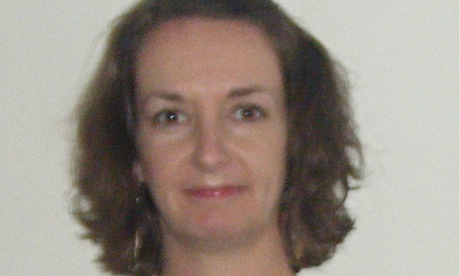
David Cameron has said the plight of Pauline Cafferkey, the British nurse who contracted Ebola and remains in a critical condition in hospital, has made the virus his primary concern.
The Royal Free hospital in north London, where Cafferkey is being treated in isolation, said on Saturday the 39-year-old’s condition had deteriorated, just days after she was sitting up reading and communicating with her family.
On Sunday, the prime minister lauded the bravery of Cafferkey, who was part of a team of 30 medical volunteers deployed to Sierra Leone by the UK government in November, and others helping to tackle the deadly virus.
“It [Ebola] is certainly the thing uppermost in my mind today with Pauline Cafferkey in hospital, and all of us are thinking of her and her family,” Cameron told BBC One’s Andrew Marr Show.
“And also how incredibly brave these people are; not only doctors and nurses from our NHS but also people from our armed forces who have been working in west Africa in very difficult conditions.”
Despite the public optimism engendered by Cafferkey sitting up in bed, Dr Michael Jacobs had warned at the time of the “variable course” of the disease and that the next few days would be crucial. The Scottish public health nurse, who works at Blantyre health centre in South Lanarkshire, was diagnosed early and is being cared for by experts, but knowledge of the disease and the effectiveness of different treatments is limited. Cafferkey is being treated with a survivor’s plasma and an experimental antiviral drug that is “not proven to work”.
The nurse, who had been working with Save the Children at the Ebola treatment centre in Kerry Town, returned to Heathrow on 28 December. After complaining of feeling unwell, she had her temperature checked seven times but was given the all-clear to fly to Glasgow where she lives, raising questions about whether the UK’s screening process was too lax.
Cameron said: “What I have said very clearly is we should have a precautionary principle in place.
“If you are still in doubt, if there’s uncertainty, there’s proper arrangements for you to go to the Northwick Park Hospital in Middlesex to be observed and to have further tests there before going further. That is happening already, I am absolutely clear about that.”
He said that if the chief medical officer deemed quarantine necessary it would be implemented “but it is important to listen to the medical experts and then make the decision”.
Cafferkey was diagnosed with Ebola on 29 December and placed in isolation at Gartnavel hospital campus in Glasgow before being flown south.
Out of 20 patients to be treated for Ebola outside west Africa, five have died, compared to a 40% fatality rate in west Africa, where 8,000 have died. Will Pooley, the first Briton to contract Ebola, recovered within a week after being treated at the Royal Free.
It is not unknown for people in a critical condition with the disease to recover. Ian Crozier, a WHO doctor who contracted the virus in the same hospital as Pooley just weeks after he diagnosed the British nurse, was close to death before the virus changed its course.
Crozier nevertheless remained seriously ill and was in hospital for 40 days before being discharged. Great Western Hospitals NHS foundation trust said on Sunday that a patient feared to have Ebola had tested negative for the virus.