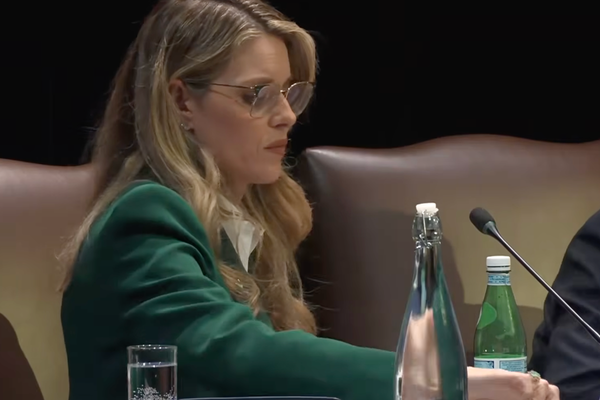
The shadow minister Liz Kendall cast herself as the brave and plain-speaking Labour leadership contender by stating that, if she’s voted in, the party would place a special focus on “white working-class communities”. According to the now familiar script, working-class people have been sidelined by mainstream politics and need encouragement with regards to “aspirations” and the importance of being “hard-working”.
It seems there’s one set of circumstances in which the media-political complex now feels safe to use the term “working class”, and that’s when it uses the prefix “white”. Labour MPs who believe they have lost votes first to the BNP, and now to Ukip, believe it’s possible to conflate those two terms. But why?
If there’s any member of society you should ask first about what it’s like to work hard and to want a better life, it’s a working-class person. Kendall’s colleague Sadiq Khan put that fact eloquently when describing his own family background, noting pointedly that he “got aspiration” without having to be told what it meant. Given that he’s not white, does he have a significantly different take on working-class experience to Kendall?
The problem is that she, and others who have sought to conflate class and race over the past decade, consistently mistake a lack of confidence for a lack of aspiration. Everyone has dreams – whether or not they seem attainable in a place where decent work has disappeared is another matter.
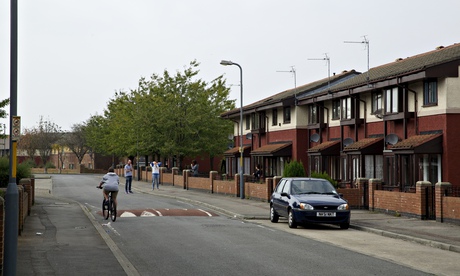
In 2008 the social exclusion taskforce asked young people in an unidentified northern town about their aspirations and attainment. The distressing answers some gave revealed a flat, hopeless landscape scattered with chasms into which they simply assumed they would fall. “I want to be an electrician,” said one, “but I am going to go to prison … That’s just what’s going to happen.”
Another said: “There’s no point in trying, because I am no good at anything.” Others pointed out the seeming inevitability of failure when you’d been told not to put your postcode on your CV as it would go straight in the bin. How do young people become so infected with fatalism?
Self-belief, whether at the level of the individual or the community, comes from having a sense of purpose. A good way to give someone purpose is to give them access to a job in which they are treated well and paid fairly. Another is to see yourself represented clearly and fairly, without agendas or wilful misinterpretation, in the spheres of politics and media. When your best shot at representation comes from the likes of Benefits Street and Britain’s Hardest Grafter, the BBC’s forthcoming show in which low-paid contestants compete at work tasks for cash prizes, it’s time to worry.
Kendall may believe she is taking a stand by loudly “including” people who she believes have been excluded from Labour’s thinking. But to encourage the suspicion that you’ve been forgotten about because you’re white, and not because you live in a place where capitalism does not work in your favour, is at best misguided and at worst cynical beyond belief.
When Tony Blair said “I want to make you all middle class”, it made a dangerous claim by implication. If you’re not middle class or aspiring to be, it suggested, you don’t exist. People in cities, people from ethnic minorities and, yes, a whole ton of white people in working-class areas, didn’t vote Labour in order to be told that they’re not needed.
It’s nothing new, to view yourself as better than the next person and to be encouraged in that belief. What has changed is the amount of resilience and endurance that is expected of individuals who are told they must shape up to get on, to win. Kendall may believe she is reversing Labour’s slouch towards middle-class individualism by invoking single-class, single-race “communities” that somehow exist outside that prism. But her approach is profoundly unhelpful.