I may be “the Guardian’s god of grammar”, according to Private Eye magazine, but that doesn’t make me infallible. A couple of things I admit to getting wrong in our style guide: Mexican wave and Russian roulette. Or, as the guide had it until recently, “mexican wave” and “russian roulette”.
Yes, I realise “mexican” and “russian” look silly. But although you might think this was just the result of a bad day at the office, there was a reason for spelling them like that. My enjoyment of Chris Cleave’s excellent Olympics novel, Gold, was briefly interrupted when I came across a reference to a child’s Wellingtons. Most of us know them as wellies in any case, but it was the W that surprised me. If Cleave’s publishers argue that the boots in question were named after the Duke of Wellington, and should therefore take an initial capital letter, their books are likely to resemble alphabet soup in which Chauvinistic, Machiavellian characters wearing Bloomers, Leotards and Cardigans, perhaps with Raglan sleeves, enjoy Sandwiches.
Eponyms – things named after people, real or fictional – generally lose their capital letters as they become more familiar and enter the lexicon: boycott, caesarean, draconian, fallopian, fuchsia, martinet, quixotic and many other words all began life as people’s names. If Charles Boycott, Joseph-Ignace Guillotin, Charles Macintosh, Samuel Maverick and Henry Shrapnel thought their names would live on through the items most closely connected to them, well they have – but their capital letters disappeared long ago.
Others have been more fortunate. If you are famous enough, you may keep your initial capital. I’m thinking not of Shakespears Sister but Chekhov’s gun, for example. And of course we are about to celebrate Christmas, not christmas. In the world of science and medicine, proper names seem pretty robust so Asperger syndrome and Higgs boson are likely to keep their capitals.
On the whole the Guardian is more than happy with the trend towards greater use of lowercase, widespread in the English language for many years now (at one Time all Nouns were capitalised, as in German). Capital letters clutter up text and there is evidence that they are harder to read. Eyebrows were raised when we became the first newspaper to spell email with a small e (and no hyphen). Now nearly everyone does it, and “E-mail” looks as old-fashioned as “Wire-less” (which was how my great-grandparents would have spelt the then wonderful new invention).
But getting back to “mexican” and “russian”: can you really spell placenames that way? Well, I don’t know about you but I am fond of frankfurters and hamburgers, not to mention french fries and french toast. For some reason France seems particularly vulnerable to this process: you might clean the french windows with french polish while listening to the music of a french horn; and what begins with a french kiss may end with the need for a french letter. In the process of losing their exclusive connection with France, these words have lost their capital letters – just like Amelia Bloomer and the Earl of Sandwich. A French teacher, of course, keeps her capital – so there is no way to tell whether she is French or teaches it.
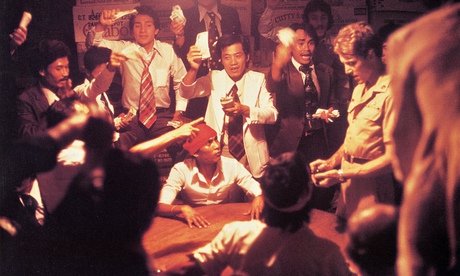
I thought, wrongly as it turns out, that we might extend this process to the Mexican wave and Russian roulette, which are no longer connected solely to those countries. The origin of the former phrase is disputed – there are at least two claims to have invented it several years before the Mexico World Cup in 1986, but that is when it became internationally known; as for the latter, it was coined by a Swiss-born, US-based writer, Georges Surdez, but the practice dates back to at least the 19th century – in Russia. Perhaps the most famous fictional example, however, was set in Vietnam in the film The Deer Hunter.
We have used the two expressions 27 and 19 times, respectively, in the Guardian and Observer over the last 12 months. In not a single case did anyone spell Mexican or Russian with a lowercase initial. My colleagues, in other words, completely ignored the style guide and continued to spell them as God, if not the Guardian’s god of grammar, intended: with a capital letter.
• For Who the Bell Tolls: the Essential and Entertaining Guide to Grammar, by David Marsh (RRP £7.99), is available from the Guardian Bookshop at £5.99.