Polling day looms and, as the clamour for our votes reaches a climax in this extraordinarily close-run election, it might be supposed that gaming has little to add to the debate. But whether democracy really works and how is a question the gaming industry has taken on and with interesting results.
Factors that determine not just a fair election but a working, democratic government are, in reality, incredibly hard to track. But in games, complexities such as voting, governing and policy-making can be expressed through simple, interactive mechanics, in turn illustrating how our political system works.
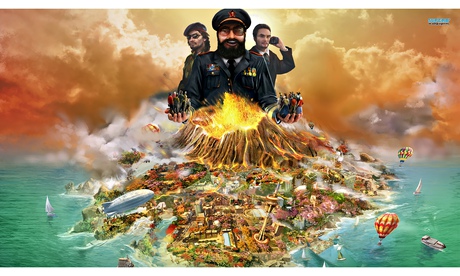
Take the Tropico series, where you play the new leader of a banana republic. The population comprises capitalists, communists, religious zealots and both the rich and the poor, so giving all things to all people becomes impossible.
Industrialists might complain the country doesn’t have enough productivity and demand more factories be built. At the same time, the Christians want a new cathedral and ecologists campaign for more green spaces. Political power in Tropico becomes less about following an ideology, or even doing what is basically right, and more about trying to appease as many people as possible to win the next election.
It seems this is reflected in reality. In his book Servants of the People, the Observer’s Andrew Rawnsley detailed the absurd lengths New Labour took to take the pulse of the electorate, forming its policy based on surveys, vetting processes and focus groups; in Tropico political life is very similar – leading becomes merely the management of public whim. It’s a frustrating battle with the people and you can’t help but feel weak, but the alternative is much worse. Ruling as a despot allows you to build and run the country as you see fit, but results in the need to deny elections, crush dissidence and imprison and kill opponents. One cannot help but think of Churchill: “Democracy is the worst form of government, except for all the others.”
“Even if you have the means to answer the needs and fashions of a larger part of your society, you can still be ousted by some hot-headed rebels challenging your government,” says Bisser Dyankov, producer on the Tropico series. “The consequences are different if you tweak poll results or declare martial law, and from the developer’s perspective it’s imperative that these options are available to the player.”
So democracy in Tropico works, but only when ideology submits to the caprice of the electorate. In contrast, Democracy 3, by UK developer Cliff Harris, imagines a political world where concrete policy-making trumps the need for voter appeasement. The focus is not on spinning the press or contriving methods to secure another term. It offers a big-picture vision of politics, where a leader’s decisions matter more than his media appearance. A response to existing political video games, Democracy 3 also reflects the coverage of this year’s general election, which has been peppered with images of Nigel Farage in the pub or Ed Miliband eating a sandwich.
“It’s a reaction to my own irritation that people seem to vote based on whether they’d like to have a pint with the party leader,” says Harris. “I’m trying to raise the level of political debate. We don’t hear enough debate on the actual meat and potatoes of issues any more. ‘Should taxes go up or down?’ ‘Should the police carry guns?’ Those are the things that are interesting to me.”
So in gaming, playing politics is instructive of how democracy functions perhaps best in the middle ground. Tropico promotes deference to the people and Democracy 3 champions hard policy-making. Somewhere between the two, illustrated neatly through video games, is a working, beneficial government – in games at least.
Leading roles
Sim City
Operating at mayoral level, you must construct housing estates, industrial parks and transport links to create and maintain a working metropolis. You must also oversee crime levels, tax rates and utilities.
The Race for the White House
A simulation of the presidential election whereby you choose a Democrat or Republican candidate and must allocate your campaign budget towards either smearing your opponent or talking up yourself. Notable for its slightly altered names – play as Jack Ohama or Mick Ronney.
Civilization
You control an entire people, from primitive beginnings through the Renaissance up to today and beyond. Focusing more on big leaps forward than political nitty-gritty, Civilization invites you to choose between humanitarian leadership and despotism.