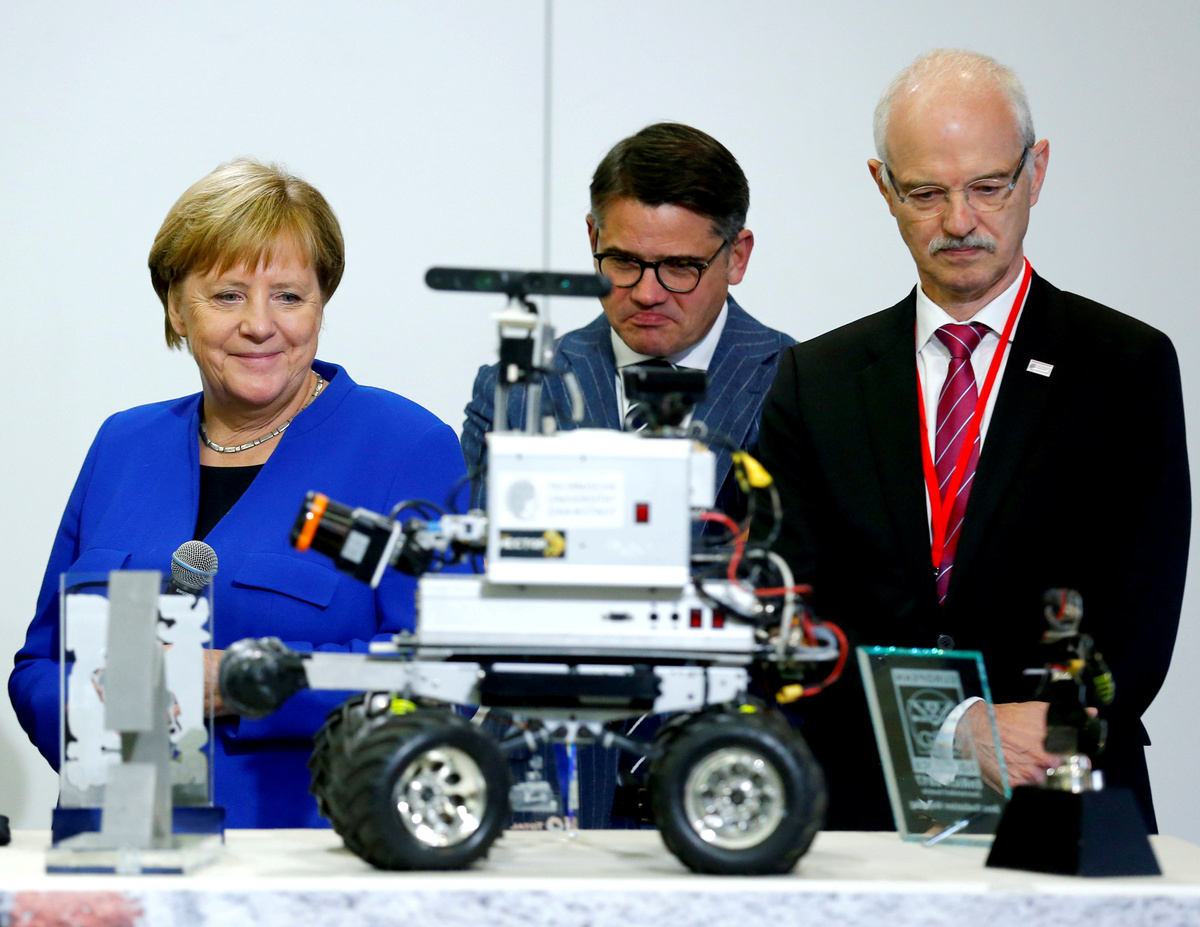
BERLIN (Reuters) - Germany plans to invest more than 3 billion euros ($3.39 million) by 2025 to beef up its artificial intelligence capabilities and appoint 100 professors to lecture about it, as it seeks to close a digital technology gap with other leading economies.
Chancellor Angela Merkel has made fixing the country's digital deficiencies a priority for her fourth and almost certainly final term, and called that a prerequisite for its future prosperity.
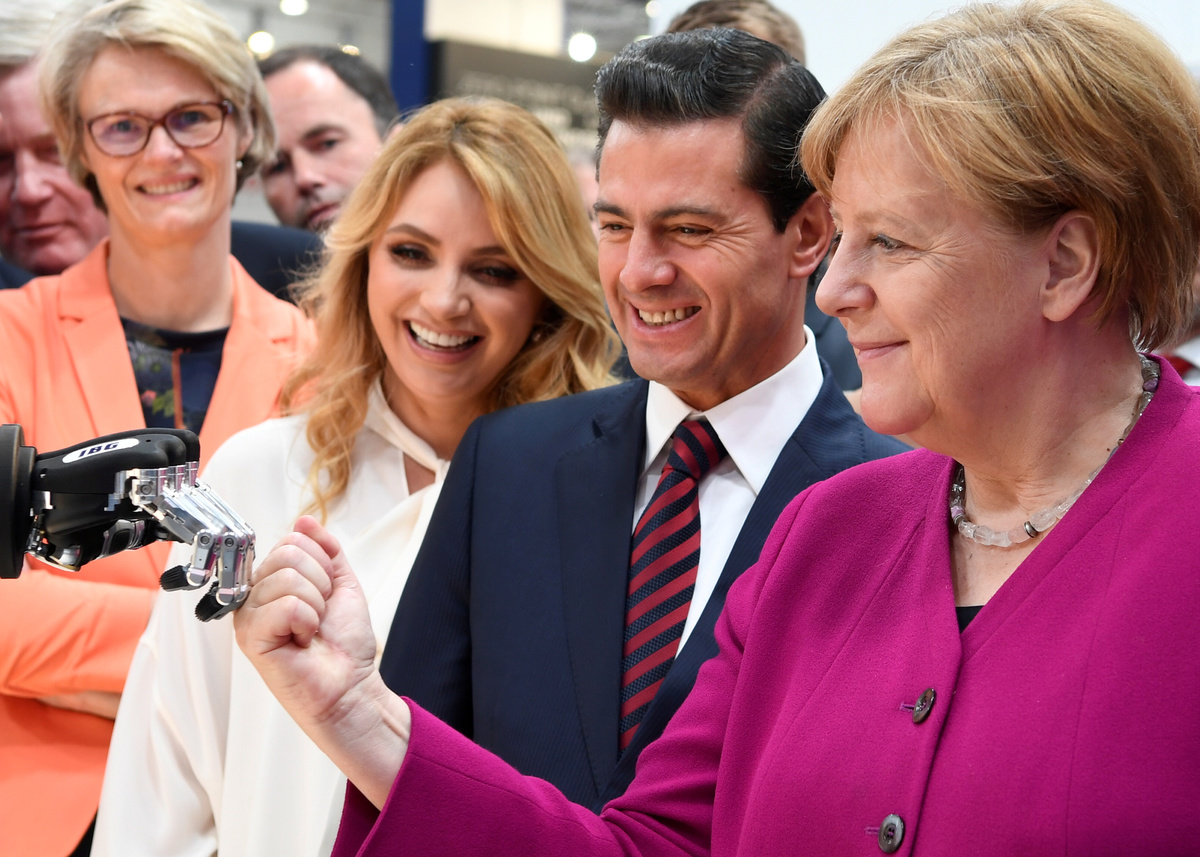
"Germany can't say that it is a world leader in artificial intelligence," she told a news conference after a two-day cabinet brainstorming on AI.
"So our aim is for 'Made in Germany' to be a brand in artificial intelligence as well."
Germany has been at the forefront of industrial innovation for decades, but policymakers have been late to realize its export model, based on traditional manufacturing, is vulnerable, and it is struggling to catch up.
Solid growth - the economy is in its ninth year of expansion - has left many businesses too busy meeting orders today to have time to plan for a digital future.
Merkel said the federal government would provide 3 billion euros of AI funding and regional governments would add extra. The "leverage effect" of additional investments from the private sector would be at least double the total public money deployed, she said.
Germany would also create positions for 100 new professors in AI.
The government's plans ran into immediate criticism from the opposition Greens.
"More than a year after the federal election, a lot remains more than fuzzy," said Tabea Roessner, party spokeswoman for network policy and consumer protection.
"The experience of the black-red (ruling) coalition in recent years, especially as concerns broadband expansion, has taught us the bitter lesson that implementation strategies and rhetoric often don't lead to tangible results."
Hampered by an outdated research infrastructure and restrictive data protection laws, Germany has yet to produce a world-beating start-up that pioneers the use of AI, although 120 companies have formed a lobby group to further the process.
A 2017 Organisation for Economic Cooperation and Development study ranked Germany 29th out of 34 industrialized economies for fast internet connections.
To coordinate the government's digital strategy, Merkel has appointed Dorothee Baer as minister of state for digital affairs. Baer said this week that a false sense of economic security was hindering government efforts to close the digital technology gap.
($1 = 0.8841 euros)
(Writing by Paul Carrel; editing by John Stonestreet)