Carsten Höller loves games, tests and challenges. He wants you to take a slide instead of the stairs, to eat a mysterious pill, to drink psychedelic reindeer urine. In Höller-world, life is more fun – and more interesting – when it is disrupted.
If you want to shake things up a bit, try these games which were created by the artist with his friend, the curator Hans Ulrich Obrist, and have been shared exclusively with the Guardian.
See everything
Whenever we bat our eyelids to moisten our eyes, we can’t see anything for about 50 microseconds. Since we blink on average once every second, it follows that we can’t see anything for 5% of the time we spend in a waking state. To see everything, we should only bat one eyelid at a time.
That’s so scary
Drop the phrase “That’s so scary” or a similar cliche into a conversation as many times as possible. Conduct the conversation in such a way as to allow you to say your phrase without coming across as strange, childish or overly fearful.
Dragon eye
Stare so hard at a person’s back that you make them turn around. According to an English scientist (Rupert Sheldrake) this works more frequently than the law of averages would suggest. Concentrating on certain body parts, such as the foot of a person sitting in the distance, likewise yields specific reactions from the observed person. In order to rule out other factors, the scientist tried the same experiments via surveillance cameras, with similarly astonishing results. He observed, for example, that museum visitors look up at a security camera more frequently when someone is watching them on a screen at the other end, as opposed to when they were just being recorded without being watched.
V
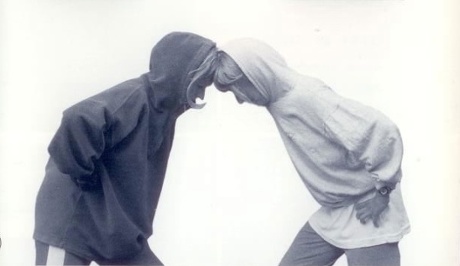
Standing upright, prop yourself against one another in such a way as to lean against the other person’s forehead. Pushing/fighting is allowed, but you must not move your feet.
Ordering a dream
When tired, lie down in a position that is associated with a certain activity. Fall asleep in that position to evoke corresponding dreams. Many activities and their body positions can be considered, such as swimming, drinking or boxing.
You are weird
If you bump into a friend, after exchanging a few words say: “You’re being weird today”
Friend: “Why am I being weird?”
You: “I don’t know, somehow you are weird today”
Some people really do go weird then. Or the player himself is considered weird.
The most childish game of all time
Loudly shout “bang” while you’re seated in a car and the driver is reversing or reverse parking. It always works, even if you try it on the same driver several times in a row.
Torturer and pokerface
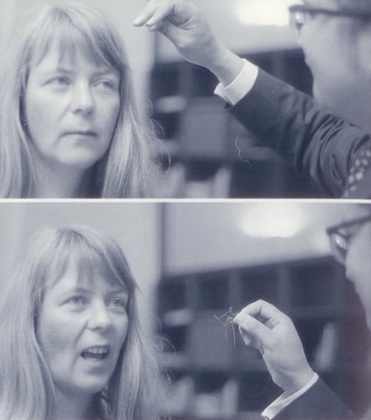
Pull out individual hairs from the head or other body parts of your partner, while he or she is not allowed to express any pain.
The real friendship test
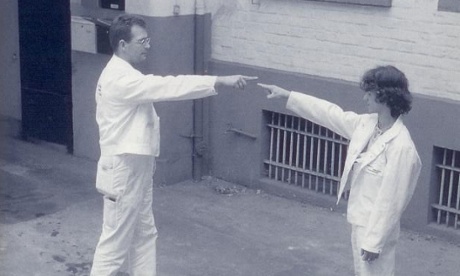
Two people walk towards each other from a certain distance with eyes closed, trying to touch each other’s outstretched finger. Speaking or other noises are not allowed.
The opposite game
Everyone says the exact opposite of what they mean. See if it’s still possible to communicate at all. Or do we come closer to the truth that way?
Waiting for the bus
Everyone sits on another person’s knee, as to create a closed circle. This way, everyone can have a seat without needing a single chair.
Flood
Those present have to make their way across the room without being allowed to touch the floor
Act your neighbour
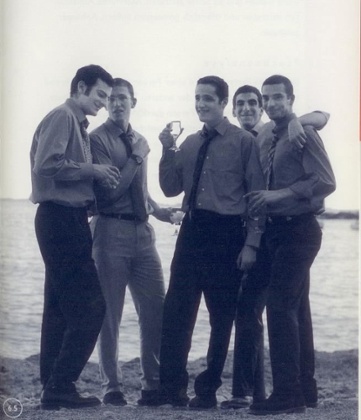
While one person leaves the room, the remaining members of the group quickly agree to act exactly like one of the people present; everyone is both an imitator and being imitated. The metamorphosis can be accentuated through reciprocal swapping of clothes. The returning member of the group encounters a completely transformed environment; the game lasts until he or she finds out who is impersonating whom.
The non-crooked smile
Try, for no particular reason, to smile symmetrically: both corners of your mouth should be raised by the same degree. Most people have better command of the right corner of their mouth, as it’s controlled by left-hand, “rational” part of the brain. A crooked smile, created by raising the right-hand corner of the mouth, is thus more easily achievable but looks “wrong”, while the less easily controlled left-hand corner of the mouth – and thus a symmetrical smile – stands for “true” feelings.
The non-joke
Inspired by a party game. While one member of the room is away, the others agree that upon his or her return someone will tell a “joke” which is not funny at all, but to which every reacts with thundering laughter.
• Translated by Philip Oltermann