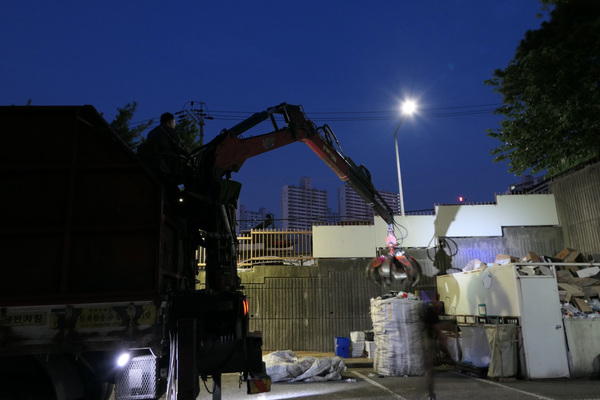
GOYANG, South Korea — By the time day breaks, Lee Yong-gi is at his fourth apartment complex, well into his daily rounds collecting the plastic detritus of urban life.
Each day, he and his drivers haul away the recyclables of 6,000 households in Seoul, amounting to about 50 tons, about 20 of it plastic. He rides into the city in a rattling 5-ton truck with a window that won't roll up and a robotic claw that snatches tarp bags full of trash. Awaiting him this morning are a toilet seat, half an office chair, a sea of takeout containers and rolling hills of plastic bottles.
His used to be a simple life. He'd pay the apartment managers for trash and then sell it to recycling centers. He made a modest living for 40 years this way. But little is like it was before, and in recent months Lee has been struggling with a dispiriting calculus: He's not only paying to collect the plastic, but also for someone else to take much of it off his hands.
With a surge in plastic waste amid the COVID-19 pandemic, recyclers such as Lee have been busier than ever. But larger forces are conspiring against him. Increased plastic use combined with falling oil prices that make new plastic much cheaper — along with closed borders and disruptions in the global trade in recyclables — has made his business untenable. There's too much plastic to get rid of.
Clattering through the dawn — here and gone before most awaken — Lee is essential to this densely packed metropolis. If he doesn't make his rounds, the plastic tide will rise, surging through streets and alleys, spilling across sidewalks.