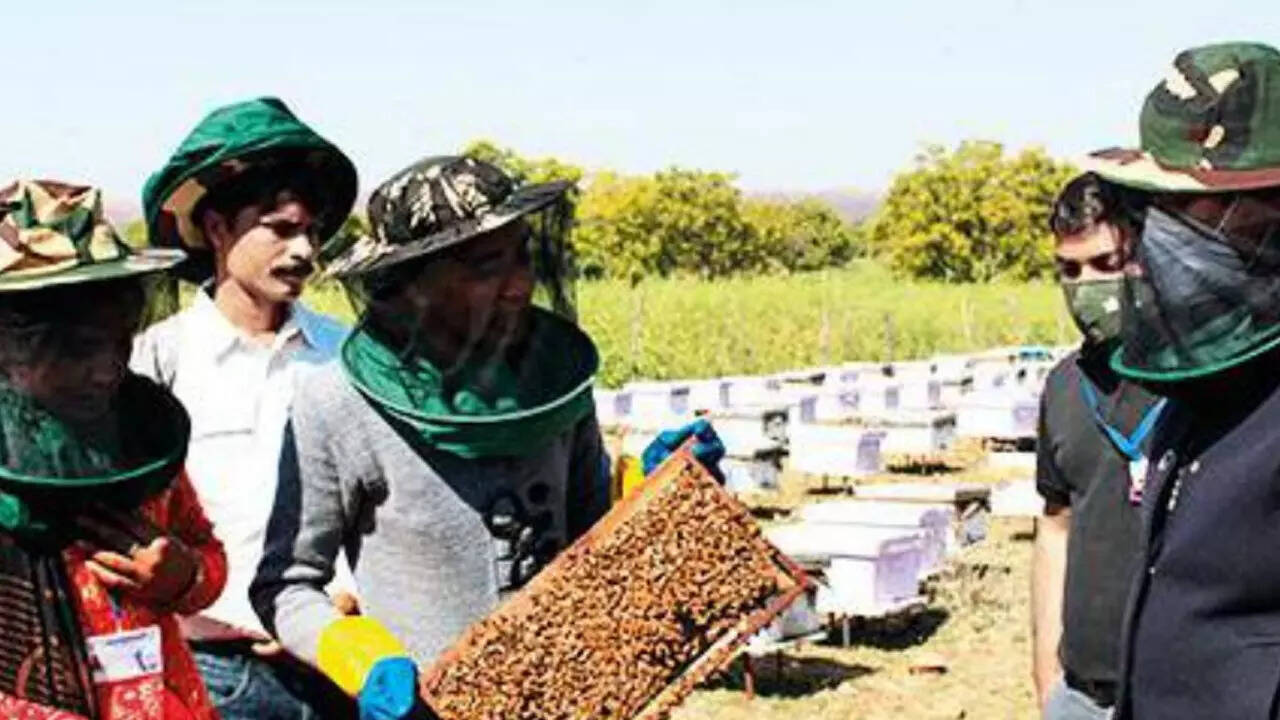
JAIPUR: An illiterate, Madhu Nagar (31) living in a nondescript Hemra Village in Jhalawar is earning Rs 8,000 per month from beekeeping—producing and selling honey through a self-help group.
Belonging to a landless farmer family, Devi for years worked in a wheat field earning less than Rs 100 a day for 12 hours. She is not alone whose life has changed under the Rajasthan Grameen Aajeevika Vikas Parishad program introduced in November last year. Later, the project was included in the Madhusakhi Jhalawari Sahed (MJS) program.
Nagar has installed 20 honeybee boxes which will fetch her annual income of Rs 4 lakh with an investment of Rs 1 lakh. The initiative was taken by Bharti Dixit, DM of Jhalawar.
“I have extended my kirana shop by including several grocery items. Also, I plan to grow the organic crop in one portion of my field which will help in more earnings,” she said.
Nagar is among the 425 women associated with the MJS program. The program launched in September -November was considered a males bastion. It took almost a month to convince the women to take up the opportunity as it doesn’t require land and beehives can be kept in the backyard or on the housetops.
“The beekeeping equipment such as hives, frames, smokers, extractors, containers and processors of the honey been wax can be done locally. Even the financial help has been granted by the CM Navachar, Indra mahila shakti udhyam protsahan yojna,” said Rajesh Kumar Lodhi, district manager, livelihood, National Rural Livelihood Mission.
The report says that 60%-70% of SHG women are engaged in agriculture as their livelihood while the rest of them are dependent on daily wage employment. They have been producing six types of honey: Mustard, Ajwain, Litchi, Jamun, Acacia and Karanj. Jhalawar offers an ideal location for beekeeping as it has abundant flora spread across the region. The crops like mustard, coriander, acacia, soybean, litchi, ajwain, karanda etc provide a fertile ground for beekeeping.