
Pizzaiola is Italian for a pizza-style tomato sauce. Sounds straightforward, right? Well, the recipe certainly is. It usually starts with chopped tomatoes cooked with olive oil, a little garlic, a pinch of salt and some dried oregano. That's it.
So why hadn't I heard of this dish until recently? After all, I've been obsessed with pizza for years and can name innumerable styles, regional variations and cooking techniques. Why hadn't I crossed paths with pizzaiola before?
Right away, it's important to note that, as Michele Scicolone explains in "1,000 Italian Recipes," the sauce can't actually be used on pizza, "since the extreme heat of wood-fired Neapolitan pizza ovens would overcook an already cooked sauce." Instead, it's just supposed to be reminiscent of the sauce you put on pizza.
Which leads to another important question: How does pizzaiola differ from any other traditional tomato sauce, like a marinara? In the strictest definition, marinara is a tomato sauce flavored with garlic and basil. Pizzaiola, on the other hand, gets garlic and dried oregano. Sounds slight, and, well, it is.
From what I can tell, pizzaiola's distinguishing feature is that it's usually used as a sauce for meat. According to Anna Del Conte's "Gastronomy of Italy," pizzaiola is a "specialty of Naples, but is quite common everywhere." Expecting to find a trove of recipe options, I visited the Harold Washington Library in the Loop, which is easily the largest library in the city. There I flipped through 100-odd Italian cookbooks, setting aside each and every book that mentioned the term. In the end, my haul came to a paltry three books. Not exactly what I'd hoped for.
I think this has to do with the straightforward and humble nature of pizzaiola. It's one of those dishes that's so basic that it feels unnecessary to write a recipe for it. Yet, it's a shame that more people don't know about pizzaiola, because it has the ability to transform almost any cut of meat.
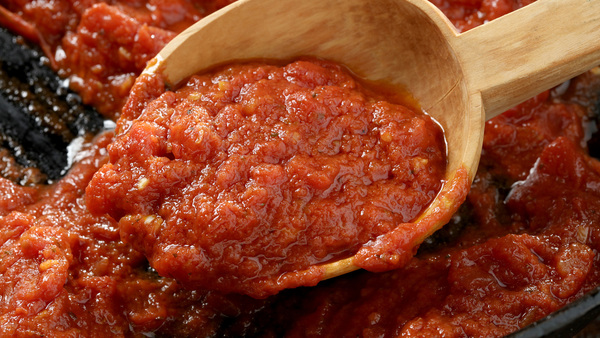
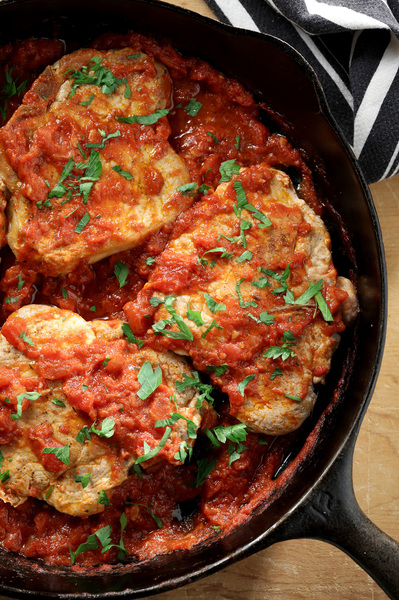
Here's a basic blueprint: Pick up some thick-cut pork chops. Saute them in some olive oil in heavy skillet over high heat until browned, but still pink inside. Remove and set aside while you prepare the sauce. Cook some garlic, and then add tomatoes, salt and oregano, and simmer until the sauce reduces to a thick, spoonable consistency. Add the chops back in to finish the cooking. Serve the chops with the sauce spooned on top.
The sauce has a vibrancy from the tomatoes, which plays nicely off the pork. But it also picks up the juices from the pork, adding a savory depth to each bite. Serve this with some pasta, with more of the sauce drizzled on top of the noodles, and you have a filling weeknight dinner.
Of course, as with all incredibly simple recipes, quality is key. Pizzaiola is only as good as the tomatoes used. During the summer, this is slightly easier, but if it's cooler, then you'll need to track down some top-quality canned tomatoes, preferably San Marzanos from Italy.
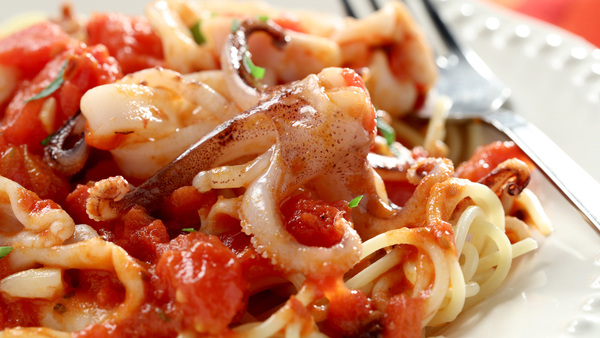
Besides pork, beef and veal are the most popular meats served with the sauce. But if you're willing to cast any worries of authenticity aside, you can repeat this process with almost any kind of protein. Chicken is an obvious choice, and I also saw one recipe for swordfish. Hoping to push the boundaries of the dish, I even tried the sauce with squid. With the addition of a sprinkle of crushed red pepper, the sauce makes a lively and satisfying companion. And if you make sure to only cook the cephalopod until just done, usually around 2 minutes, you'll be rewarded with exceptionally tender squid. Once again, adding pasta turns this into a full meal, though polenta or even potatoes work too.
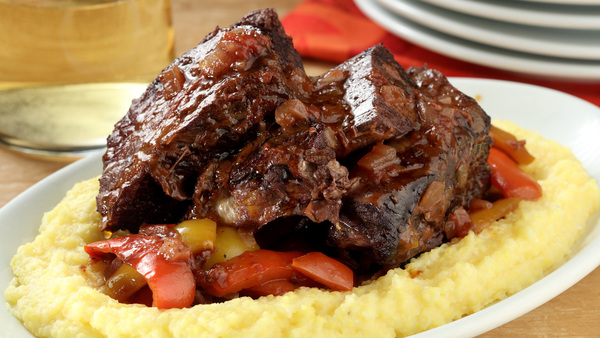
While quick-cooking meats work with the sauce, I believe the sauce works best when it's paired with an equally humble cut of meat that needs time to cook. In "Lidia's Mastering the Art of Italian Cuisine," Lidia Bastianich offers a recipe for short ribs pizzaiola that requires more than two hours to slowly simmer. Instead of fresh and vibrant, the sauce reduces to a robust and richly hearty base, with a luscious body from the fatty beef. This is the kind of stew that everyone, from a picky child to confident cook, will melt for. It's equivalent to a hug from your grandmother.
Call pizzaiola humble or unduly spartan, but when done right, the result can be refreshingly uncomplicated and soul-satisfying.