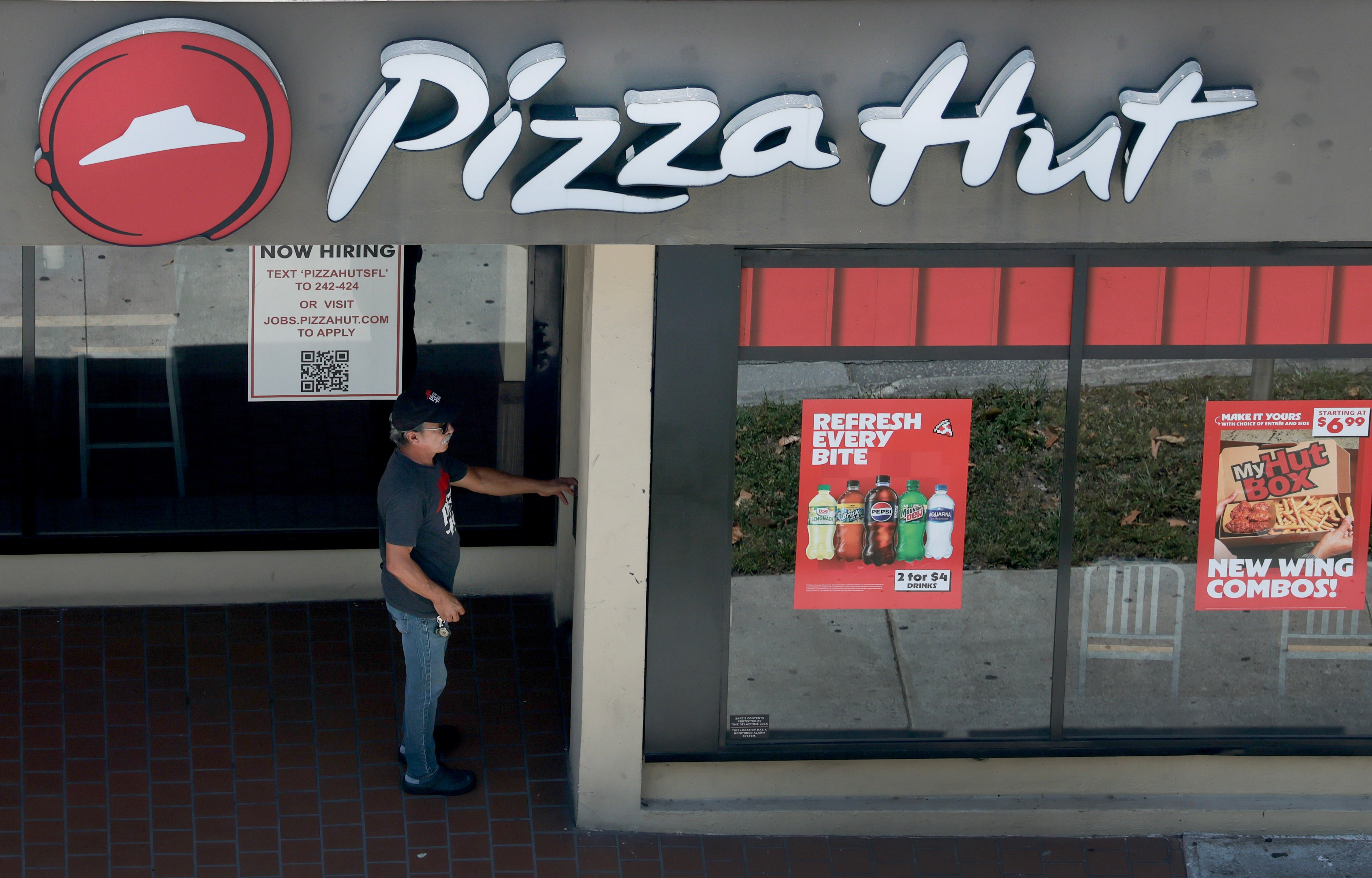
Pizza Hut is betting that a trip down memory lane, complete with its iconic red plastic cups, red-and-white checkered tablecloths and personal pan pizzas, could help revive the struggling pizza chain.
For decades, Yum! Brands ran the chain, but Pizza Hut was recently sold to private equity firm LongRange Capital after declining sales and the planned closure of about 250 U.S. restaurants.
As the company begins a new chapter, some franchisees are bringing back the classic dine-in experience that made Pizza Hut a household name in the 1980s and 1990s. Today, there are about 154 designated "classic" Pizza Hut restaurants nationwide.
Longtime franchisee Tim Sparks has spent nearly a decade restoring his restaurants to their original look. Of the 94 Pizza Huts his company operates, 38 have been converted into classic locations.
“It has a much warmer feel, and I think it’s more of the experience that people were looking for, before we got so heavily ingrained in trying to be the number one delivery chain in the world,” Sparks told The Washington Post. “I think that we kind of lost our way.”
Sparks says the retro remodels also cost significantly less than standard renovations, at about $90,000 to $95,000 compared with as much as $300,000.
The strategy comes as Pizza Hut faces stiff competition from Domino's and Little Caesars after years of shifting its focus to takeout and delivery. Today, dine-in customers account for just 18 percent of the chain's business, according to restaurant consulting firm Technomic.
The classic restaurants have also found a following online, where fans share photos of surviving locations and celebrate the chain's vintage design. Retail historian Rolando Pujol, known online as "The Retrologist," says the old-school restaurants offer something many customers, especially younger ones, are craving.
“They are very, very tired of the digital world they live in, in which they are completely enveloped by the little screens and live at the behest of the glow of that screen,” Pujol told The Washington Post. “There is a craving for real experiences.”
Fans have praised the retro restaurants' resurgence online, reminiscing on memories, such as Pizza Hut’s classic personal pan pizzas served in an “iron skillet as hot as the sun.”
“Back in the early 80’s, it was a treat for us to hit the Wednesday buffet and get a pocket of quarters to play Defender and Pac-Man!” one person commented on a Fox News Facebook post about the classic restaurant’s buffet and arcade games offerings.
“This is great. Now if only they’d bring back making the pizza right in front of you. Spinning the dough. Do you remember? I do,” another commenter asked.
A third added, “This is how you get Millennials to spend money. Win win.”
Pizza Hut has also leaned into its heritage by bringing back its classic red-roof logo in 2019.
Still, Technomic's David Henkes says nostalgia alone won't be enough to reverse Pizza Hut’s fortunes. With more than 6,300 U.S. locations, Henkes, senior principal and head of strategic partnerships, says the classic restaurants can be an advantage in some markets, but not a complete turnaround strategy.
“It’s a leverage-able strength in certain situations, but I’m not sure that you can build an entire turnaround on it,” Henkes told The Washington Post.