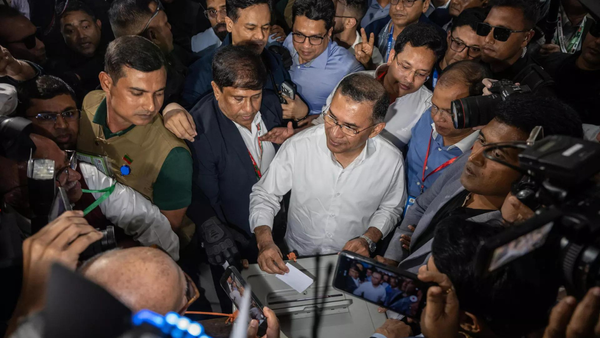
As MPs and senators vote on the so-called "People's Constitution" today, parliament has a chance to make a crucial decision that could alleviate a political crisis that is already threatening to become a catastrophe.
The first reading and ensuing vote will be make-or-break for a bill proposed by several groups, including the Internet Law Reform Dialogue (iLaw), the Re-Solution group, the Progressive Movement and the Move Forward Party (MFP) that many critics believe provides the only realistic alternative to the version proposed by the government and backed by coalition parties which now rests with the palace and represents what many see as a compromised vision of Thai democracy.
Today's bill, which has the support of more than 135,000 eligible voters, proposes six key changes to the 2017 military-sponsored constitution. It is a potentially historic document that encapsulates the current gulf in ideology between an establishment largely comprised of a generationally older school of governance and younger members of new political movements that have begun to make inroads into the consciousness of a nation in the grip of Covid-inspired hardship but with eyes opened wide by free access to the information afforded by modern technology.
The bill seeks to abolish the 250-strong Senate, which has yet to step out of the shadow of military influence that saw it set up under a constitution ushered in by many responsible for the earlier coup.
It also aims to increase the power that MPs and the opposition have to scrutinise government actions by restructuring independent organisations.
However, with such radical demands, few are optimistic that the bill will survive beyond today's vote. Several outspoken senators have already promised to dump it and, needless to say, without support from the upper house, it has little chance of success. The 80 votes needed from the 250-strong Senate may be a tall order to achieve.
Yesterday's debate seemed only to highlight such pessimism, as the senators defended their role and the necessity of a two-House system. The age-old arguments were trotted out that voters are neither political educated nor mature enough to give a government unchecked power. Their argument that without them, the nation risks "parliamentary dictatorship" is outdated.
During yesterday's debate Piyabutr Saengkanokkul, former secretary-general of the now-dissolved Future Forward Party, and legal expert, explained the rationale of the people's bill. However, his presence as an engineer of the bill may have hindered its chances of success, even though many among the group claimed its intent has been misrepresented.
For example, Move Forward MP Padipat Santithada said accusations that the bill mandates a unicameral House system are untrue and should it eventually pass into law, the issue of whether to adopt a unicameral or bicameral system will be decided by a new charter drafting panel.
The government must be aware that much of the content of this bill reflects the ideology of Thailand's younger voters, and if it is is shot down, anti-establishment sentiment may spill onto the streets again. This would mark yet another nail in the coffin of the reconciliation promised by the Prayut government.
Members of the two houses should consider this a vote of conscience and place the needs of the nation ahead of party allegiance. They must vote to enable the country to move forward during this globally uncertain period, not leave it stuck in a political stupor of old.