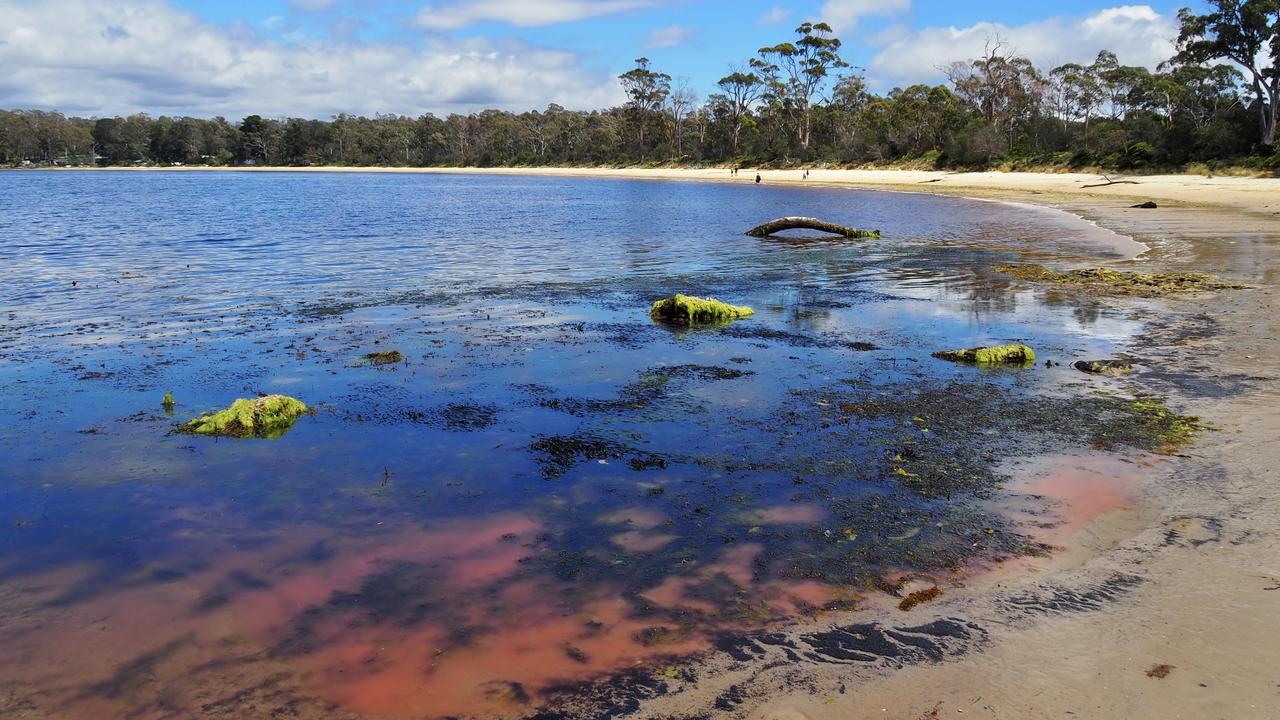
Concern is mounting after a salmon-pink sludge believed to be an algal bloom was discovered on a secluded beach.
Testing is under way after the sludge was found along a stretch of Randalls Bay, about 60km south of Hobart.
A similar sludge has also been recorded on sections of Little Roaring Beach in Tasmania's D'Entrecasteaux Channel and Little Taylors Bay.
The Bob Brown Foundation has received up to 20 reports of dead sea cucumbers washing ashore, along with dead octopuses and crabs at Little Taylors Bay on Bruny Island.
Algal blooms can occur naturally, especially following periods of heavy rainfall, although experts believe the apparent bloom could be linked to pollution.
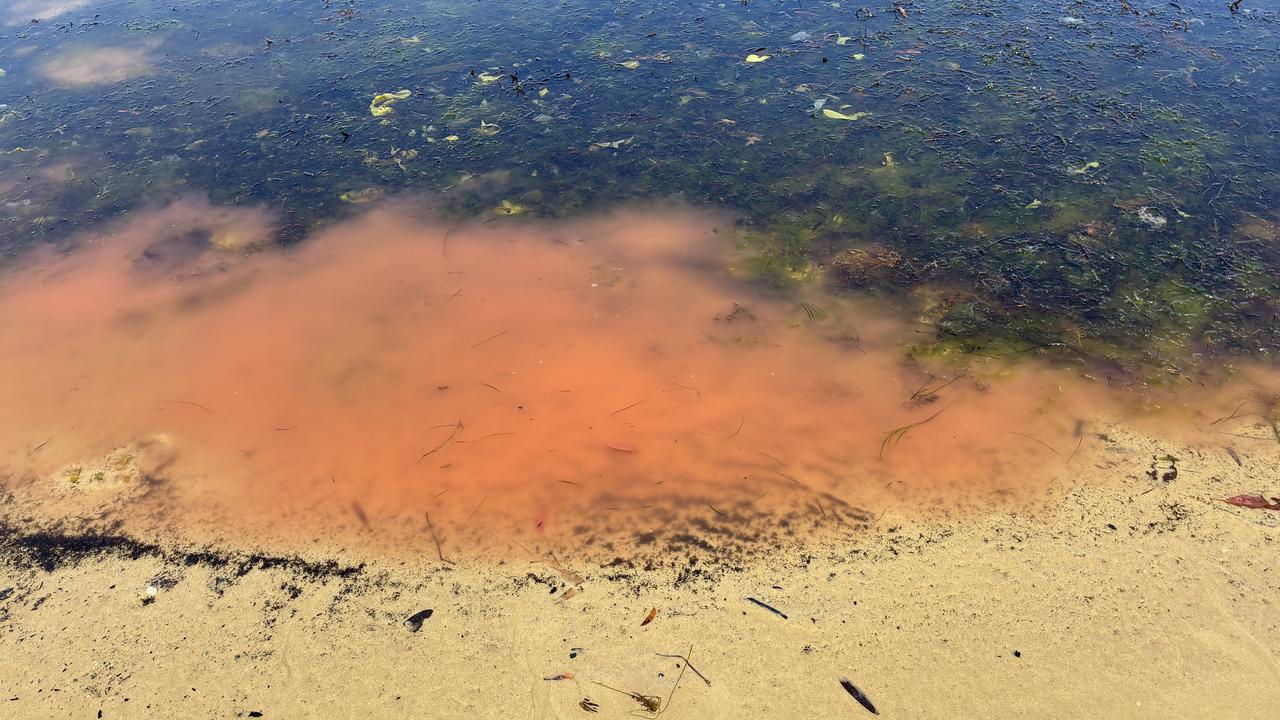
Local residents remain cautious of swimming at the affected beaches, which have cloudy pink water.
Samples have been collected by residents and sent to the Environment Protection Authority for analysis.
The state government must act immediately to prevent the kind of devastation caused by algal blooms in South Australia, according to the foundation.
South Australia's toxic algal bloom affected more than 30 per cent of the state's coastline since it was identified in March 2025, with more than 13,000 recorded animal deaths.
About 400 fisheries, aquaculture, tourism and recreational businesses that rely on the ocean were impacted by the algal bloom.
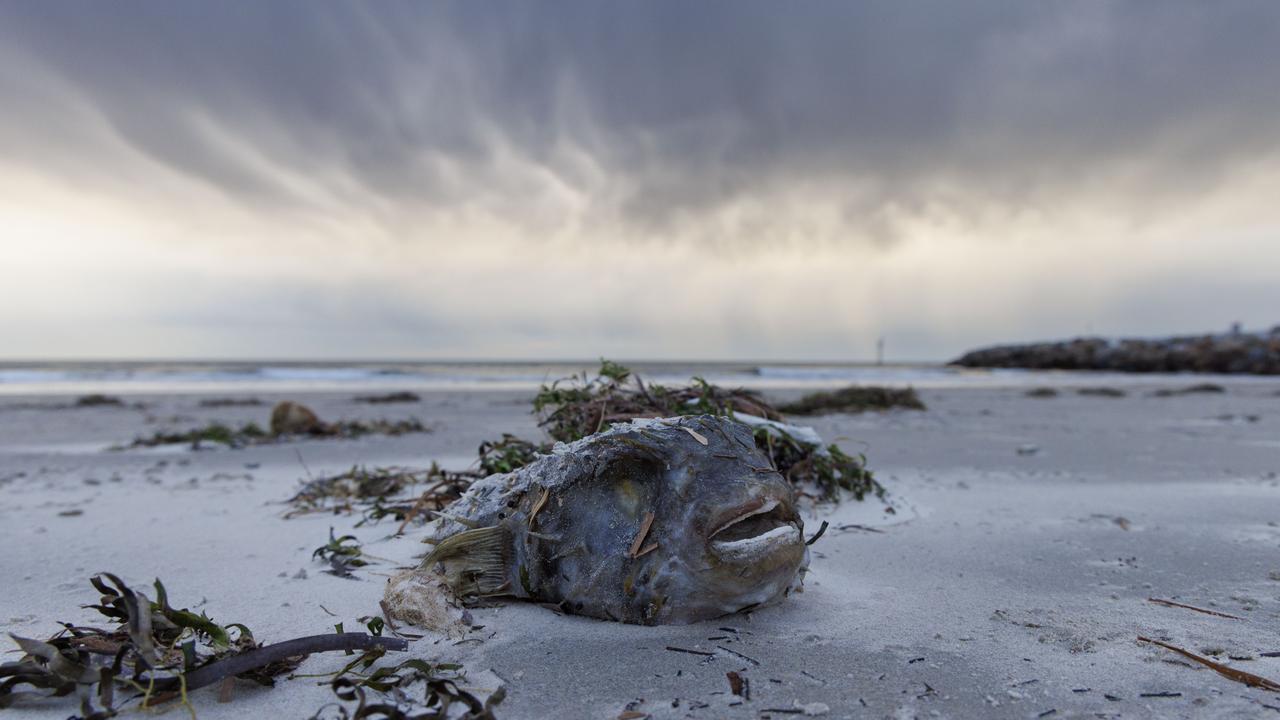
"These algal blooms and dead sea creatures are a harbinger of things to come as the water gets warmer in Tasmania," foundation campaigner Alistair Allan said.
"Urgent action is required from Premier Rockliff to reduce the nutrient loading of Tasmania's waterways, including de-stocking the polluting factory salmon farms."
Premier Jeremy Rockliff told reporters on Saturday that he was not aware of any links between the sludge and the salmon industry, adding that scientific testing would determine the cause.
Mr Rockliff believes his government is doing enough to protect its waterways from any algal blooms.
"We need to ensure our waterways are environmentally safe and sustainable," he said.
"The 1200 beaches across Tasmania are our assets and we need to ensure the community and our industry can co-exist to utilise our waterways effectively and sustainably."