In no way will I ever realistically be mistaken for a leader. I am the living embodiment of Disappointing In Person. My words, disordered and vague, tumble out of my mouth in hurried little apologetic bursts that start badly before imploding. I have the posture of the kid picked last for the football team. I don’t command attention so much as actively deflect it. The only way you’d ever put me in charge of people is if you deliberately wanted to see an instant mutiny.
You’d think this would stop me from ever becoming a politician, but you’d be wrong. Scores of politicians were born just as hapless as me, but they’ve been able to buy their charisma off the shelf, thanks to behaviour-changing leadership training.
In fact, Ed Miliband’s recent upswing in popularity coincides with Labour hiring a leadership consultancy firm for their leader. Frankly, if he can go from being a walking bacon catastrophe to the subject of genuine online lust in a few months, there’s nothing stopping me from doing the exact same thing.
And this is why I’m meeting Guy Bloom, director of leadership at Blue Sky, a company that specialises in “performance improvement”. Its website – an intimidating blend of goal-pyramids and phrases such as “driving organisational trust and engagement” – lists companies as diverse as the Rugby Football Union and Formica as clients. But enough about them. What could Bloom do for me?
The first thing I need to do, he tells me over tea at a private members’ club in central London, is to try and work out how I want others to see me. “Working with people, we tend to ask: ‘What do you want your story to be? What adjectives do you want people to use when they talk about you? And how self-aware are you? Does the story you tell about yourself line up with the story that other people tell about you?’”
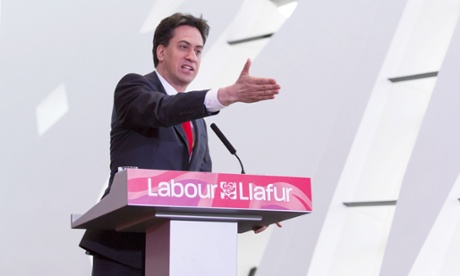
This seems fairly self-explanatory; in these terms it seems fairly clear that Miliband desperately wants his story to revolve around the word “leader”, while David Cameron may as well have “passion” tattooed across his forehead and Nick Clegg bleeds a sense of “Hey guys, I still exist”.
That’s all well and good, but the problem is making this story stick. Change too drastically, Bloom says, and you’ll end up looking horribly fake. “Take Tony Blair, for example,” he says. “Initially, he had a normal physical manner. But there was a moment where he went to the States, and you could see him walk out onstage differently. All of a sudden, you were like ‘Who’s that?’ His shoulders were back, his chest was out, his arms were wider. He looked like a gunslinger. It was a classic caricature. At some point between taking off this country and landing in the States, somebody had advised him on what leaders are supposed to look like.”
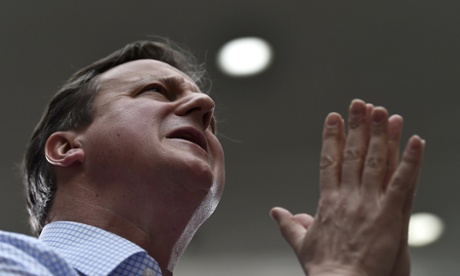
At this stage I mention Cameron’s desperate desire to look passionate this week, and how much of a weird affectation it seemed, especially when compared to the exhausted-looking campaigner of a few days earlier. “It’s like when you see a politician eating at a fish-and-chip shop out of the blue to prove that they’re one of us,” Bloom agrees. “Kiss a baby, show that demographic that you’re just like them. It’s key that a leader can take feedback, and demonstrate passion. But that can appear false if the public perception is that it’s all just a reaction to that feedback.”
The implication is that, if he really wants us to believe that he’s passionate, David Cameron needs to maintain his current berserk enthusiasm for everything until the day he dies. Which, judging by how dangerously sweaty and pink all this pretend passion makes him, could be any day now.
But what about me? At the end of our encounter, I ask Bloom if there is any way that I could adopt an air of more natural authority. Immediately, he seizes upon something. “You validate externally and calibrate internally,” he says, essentially pointing out that I’m insanely needy and keep apologising for everything, even if it’s not my fault. Which is a fair point, and one I’d be very happy to apologise for if it meant that somebody would love me. See? Leadership’s a piece of cake.