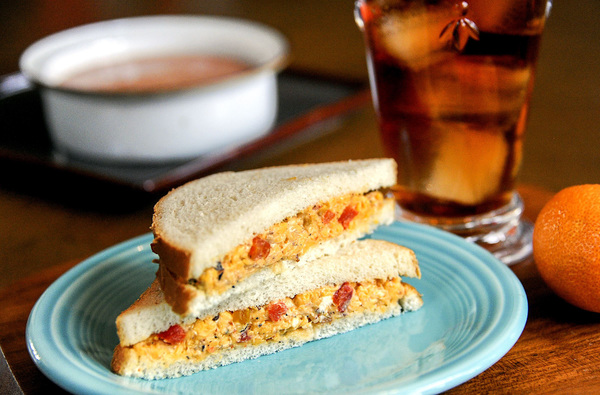
Pimento cheese is as Southern as grits, fried chicken, catfish and belles. The orange and red cheese mixture has been a staple of Southern tables and lunch boxes for generations.
In the 16 states south of the Mason-Dixon Line, you'll find a jar of the homemade stuff sharing refrigerator shelf with other perennial denizens such as ketchup, mustard, barbecue sauce and jam. Most Yankees are only vaguely aware of this icon of the South. If they are, it could be because the pimento cheese sandwich takes a turn in the spotlight once a year as the most traditional offering on the menu at the Augusta Masters Golf Tournament, held this year from April 6-9.
Shame.
Pimento cheese is primarily a sandwich spread, simple and delicious, a mix of cheddar cheese, pimento peppers, mayonnaise, salt and pepper. (Pimentos are a variety of mild chili pepper called "cherry peppers." They are even sweeter than bell peppers and very mild.)
After that, few agree on additions and variations to the basic recipe and the customizing begins. Should you use Hellmann's mayo or the Southern favorite, Duke's mayonnaise. Should the finished product be smooth or chunky?
What about adding bacon, onions, garlic, cayenne, pickles and jalapenos, cream cheese, another kind of cheese or both? Add a pinch of sugar? Are you kidding me? Most cooks agree that it's best to make the base recipe the first time, then proceed with caution. Even so, mine will always be better than yours, yours will always be better than mine and nobody makes it better than (insert any old name here).
Bottom line: there is no true recipe, and there's no accounting for taste.
One thing every cook can agree on, however, is that pimento cheese must be homemade. Avoid pre-made types in grocery store cold cases. They can have up to 30 components including something called "American cheese imitation," corn syrup and stabilizers. Worse, they can be Day-glo, slimy and taste awful.
The ways to eat pimento cheese are many. Spread between two slices of soft white commercially made bread, crusts cut off, or not. Or spread on toasted slices of hearty country bread or English muffins, then run under the broiler to get melty and gooey. Make any grilled cheese sandwich, but spread the outside slices with mayo instead of butter for a delicious change.
Set out a crock with a small spatula and spread on crackers or fill the channels of celery sticks. Bake the stuff in a casserole for a spicy cheese dip. Add a blob to baked potatoes. Raise the bar on burgers and omelets. Eat it for lunch, for a snack or spoon it right out of the jar. And damn if it isn't good.
Some say that the origins of pimento cheese began on Southern farms sometime in the early 1900s. Of course, back then the mixture would have been made by hand. Today most people just toss the ingredients into a food processor, and while that's efficient, both flavors and ingredients lose distinction in a smear of homogeneity. I'm old school, because I think when cheese is grated by hand and other ingredients are gently mixed in, the chunkier spread retains its distinctive colors and flavor integrity.
Then there's the argument over the spelling of the spread. Northerners favor pimento, Southerns prefer pimiento with an "i" and usually pronounce it "pimmena cheese."
For deeper research in this complicated subject, read the tirades, pronouncements and preferences of Southern food writers John T. Edge, Virginia Willis and Nathalie Dupree. Then you decide. Which is it, food fight or comfort food?