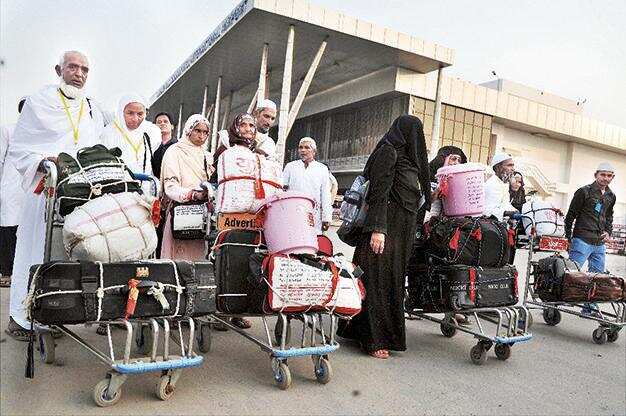
MUMBAI: Shaikh Anjum Pervez and his wife Samina had performed the annual Haj since 2008 without a break till the pandemic struck, making Haj 2020 and 2021 out of bounds for foreigners. Seeing it as a ‘divine decision’, Pervez used the money he would have spent on the holy trips (he requested that the amount not be mentioned) to help out the pandemic-hit poor irrespective of religion.
“In the first wave of Covid-19 we utilised our Haj funds to buy ration and food for the needy. In the second wave, we directed the money to pay hospital bills, buy medicines and oxygen cylinders for the poor,” said Pervez, an Ahmednagar-based businessman and corporator.
As the pilgrimage to Mecca—Haj is annual, while Umrah or a small pilgrimage can be performed through the year —for Muslims living outside the Saudi Arabian kingdom have been put on hold, multiple Haj and Umrah pilgrims have channelized their money for charitable work. Buying ration, paying school fees or hospital bills, buying oxygen concentrators or remdesivir injections are some of the activities that got attention even as pilgrims’ progress to Islam’s holiest shrines in Mecca and Medina came to a halt.
Mumbai-based Iqbal Memon Officer and his wife had performed Umrah in Ramzan without a break for two decades till Covid-19 forced them to cancel it in 2020. “Even if the situation had improved and the Saudis had allowed foreigners to perform Umrah in Ramzan, we would not have gone there. We decided to spend the money (around Rs 5 lakh) in bringing relief to people closer home and gather blessings rather than seek blessings by visiting the holy sites,” said Officer, a businessman and president of the All India Memon Jamaat Federation. Though Officer has performed Haj thrice—only one Haj in one’s lifetime is obligatory on those who can afford it, while Umrah is a non-obligatory pilgrimage—he said he knows many members of the Memon community who have performed Haj more than 20 times.
The pandemic-caused impoverishment has reignited the debate on whether affluent Muslims should spend so much on non-obligatory pilgrimages. Chennai-based Islamic scholar A Faizur Rahman argued the community could start poverty alleviation and education programmes even if it spent a fraction of the money spent on Haj and Umrah. A total of 4,48,268 Indian Muslims had applied for the 2017 Haj. Rahman said at Rs 2,50,000 per person, this works out to over Rs 10,000 crore every year. If the cost of Umrah is added, the amount would be around Rs 15,000 crore, he said.
But there are some who argue that instead of criticising those who spend money on holy trips, efforts should be made to involve all affluent Muslims to fund schemes for educational and economic empowerment. “Will you criticize those who go to Bali, Bangkok, Europe and America for holidays? These Muslims spend money to seek sawab (divine reward) and are saved from committing some possible sins too,” argued Aligarh Muslim University executive council member M Asif Farooqui.
Even as the debate rages on, the need for directing Haj and Umrah funds to charity had never been felt so acutely.