SHIZUOKA -- Fisheries cooperative employees in Yaizu, Shizuoka Prefecture, were found to have sold bonito landed at a port in the city through illegal channels for decades, a local fishing co-op announced.
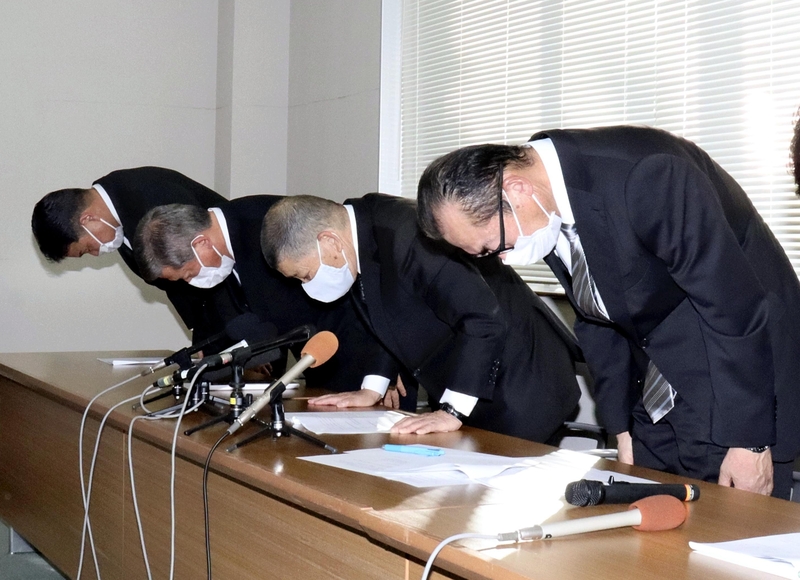
Yaizu Fisheries Cooperative Association Chairman Kakujiro Nishikawa submitted an inquest report to the prefecture and apologized for the trouble at a press conference Monday.
"It shouldn't have occurred at a fish market that deals with important catches," Nishikawa said. "I apologize for causing trouble to fishermen throughout the country."
According to the Yaizu city government, the value of marine products landed at Yaizu Port is the highest in Japan, and the port also boasts the largest bonito catch in the country.
On Nov. 16, the Shizuoka District Public Prosecutors Office indicted five people on charges of pilfering 4.4 tons of frozen bonito worth 1.04 million yen owned by local fish wholesaler Kyokuyo-suisan Co. The five are: two former executives of a local fish processing company, two employees of a local shipping firm and a co-op employee.
The co-op employee allegedly instructed the shipping firm's workers to carry away a portion of the bonito without weighing it, and the fish processing company falsely claimed that it owned the bonito.
The association set up an investigation committee comprising six lawyers and questioned all 116 co-op employees and eight retirees, while conducting an independent survey through an anonymous questionnaire.
According to its inquest report, in addition to the case in which the five have been indicted, thefts involving co-op employees have been rampant for decades.
Up until about 10 years ago, co-op employees received cash in return for selling fish on the black market, and the money was spent on year-end and New Year parties as well as trips paid for by the co-op.
However, the exact time period during which the illegal activities were carried out, the number of people involved and the amount of damage are unknown.
"We didn't have compulsory investigative authority and the investigation was conducted based on interviewees' memories, so we had limitations," an association member said at the press conference.
Kyokuyo-suisan's attorney Masashi Kawamura told The Yomiuri Shimbun, "We won't be able to know [from the report] who was involved and how much damage was caused, so we urge the co-op to clarify matters."
Read more from The Japan News at https://japannews.yomiuri.co.jp/