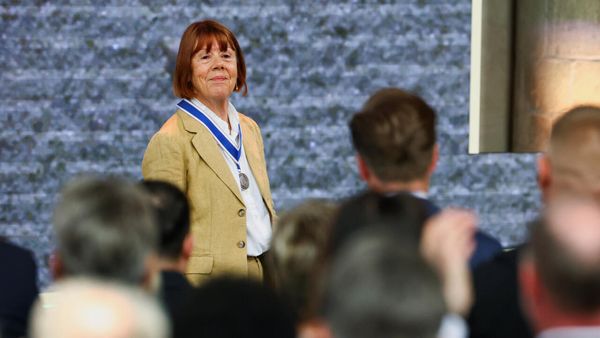
'A stranger looking through my childhood photos might deduce a) that we were perpetually on holiday in north Wales, and b) that my father never accompanied us. But he wasn’t absent, merely hiding behind the lens. Most of his snaps were taken without us noticing. Despite their playfulness, my chief feeling when I look at those photos is sadness: most of the people in them are now dead and the times they commemorate can’t be retrieved. While those images are a source of sorrow, the images in my head are not. Larkin has a poem about how memories “link us to our losses” by showing us “what we have as it once was,/ Blindingly undiminished, just as though/ By acting differently we could have kept it so.” That’s the effect old photos have on me.' Photograph: Blake Morrison
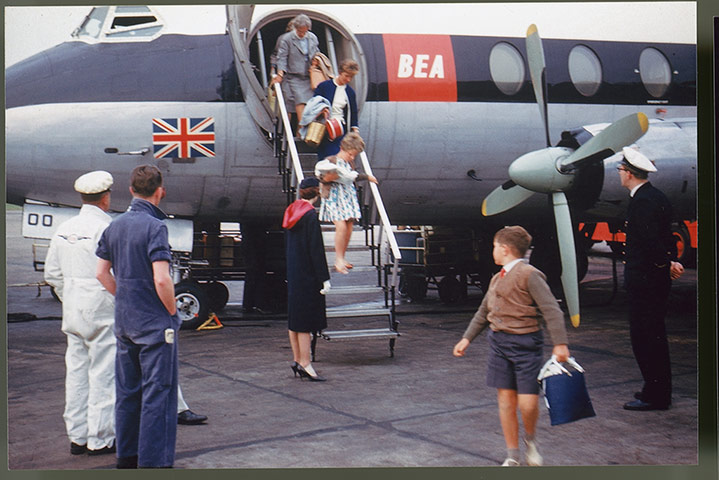
Blake and family on their first holiday abroad, in the early 1960s, with Blake at the front, aged nine, while his sister, mother and grandmother step off the plane. 'My father was scrupulous about documenting his children’s childhood, first in tiny black-and-white prints, then with colour transparencies, which were looked at through a viewfinder or (at the annual Christmas slideshow) on a white screen. He also had a cine camera, and I sometimes feel guilty that my own children, unlike me, have no moving images of themselves to look back on. Why my wife and I never bought a video camera, I don’t know (laziness? expense?). But she at least has been diligent down the years, with box cameras, Polaroids, disposables and (most recently) a digital Canon. Every so often I get them out to see what we got up to. These, too, make me tearful.' Photograph: Blake Morrison
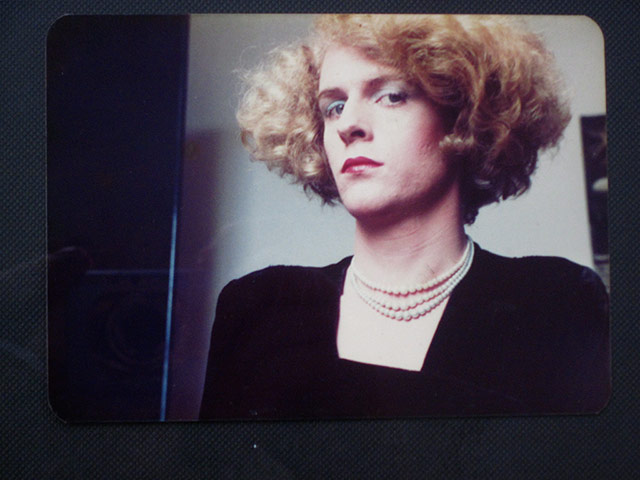
'When I was about five, my mother made a bonfire in the back garden and burned a suitcase full of family photos taken by my father. He had been a keen photographer with his own darkroom. I don’t know why she burned them, but it coincided with them getting divorced and my stepfather moving in. For the rest of my childhood, no one in the family possessed a camera, so I have very few photographs of myself before art college. As soon as I could afford it, I bought a clunky Russian Zenith SLR. It was bulky and manual and I had little spare cash for film, so I took few snaps at first. Some of my most precious and most naff are the earliest images of myself in women’s clothes, nervously waiting for the self-timer to go off. Transvestites have a very symbiotic relationship with the camera. We used to joke at tranny events that we should seek Kodak sponsorship.'
© Grayson Perry
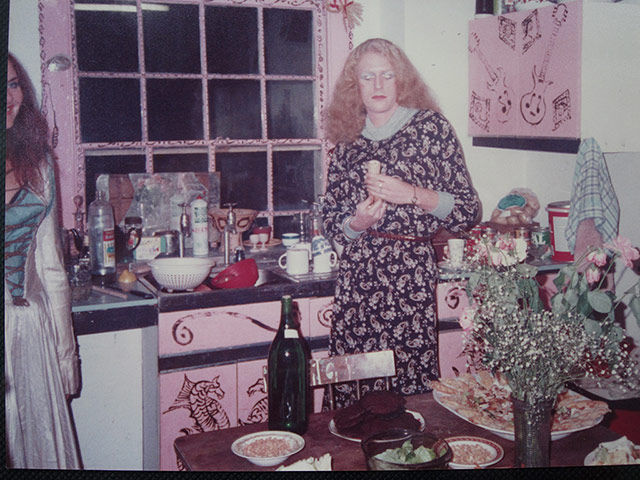
'Since the advent of digital photography, I have taken fewer and fewer photos for fun, but hugely more for research, or to record my work, or outfits. I take a few to record our ageing. I will go on holiday and return with just a dozen snaps. I don’t know whether this is because of age, laziness or the feeling that photography has become a torrent of cliches. The cameraphone has made the forest of glowing screens ubiquitous at events. Maybe I’m a snob, but it’s put me off photography.'
© Grayson Perry
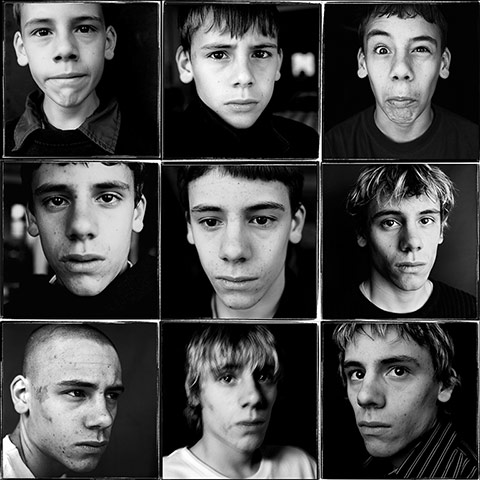
'I’ve been photographing my children since they were born. I don’t photograph them every day now, but every few months: Jack’s now 26 and Duncan’s 21. It came about in the 1980s: I was making Super-8 films and working on a film with Peter Greenaway that photographed things over time. David Attenborough did it first, with a dead mouse that eventually had maggots in it. I thought: what an amazing thing to do with a human being, film someone on Super-8 from birth to death. When Jack was 20 minutes old, I made my first image of him, with the idea that the death at the end of the cycle would be mine, not his. I also photograph my daughter Lola Rae, who is six. She plays to the camera. Now I’ve started to scan in the photos to make stop-motion animations.'
Photograph: Steve Pyke

'I grew up in Leicester in the 60s. The first time I became enthralled by photography was when my mum got a subscription to Life magazine: the Apollo 8 cover from December 1968 was particularly dear to me. I never wanted to be a train driver, always an astronaut. I went on to work for Life, and my astronauts series ended up in its pages in 1999/2000, so I came full circle.'
Photograph: Steve Pyke
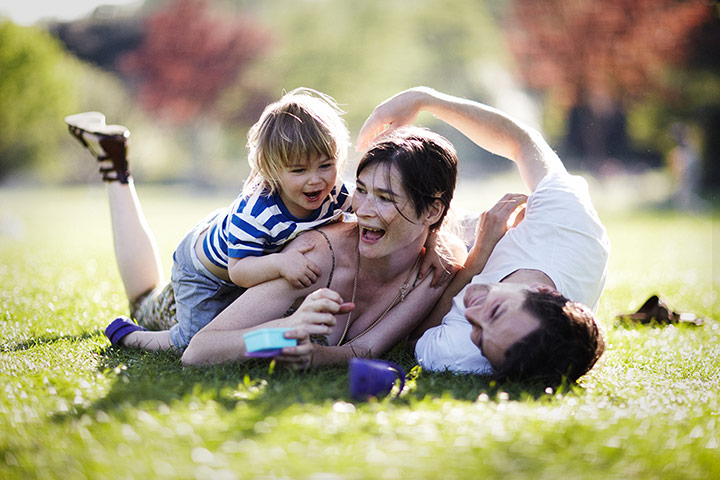
'Will is a photographer and the sheer volume of pictures he has taken over the years has made it impossible even to begin to manage or access this collection. It’s a source of frustration for my mother-in-law, who regularly bemoans the fact that her professional photographer son is unable to provide her with printed images of her grandchildren. He estimates he has half a million photos. It’s insurmountable. We recently pulled out some for our wedding invitation, discovering swaths of images we hadn’t seen for years, or ever. I wondered if there is a point beyond which we are unable to process volumes of information. The inaccessibility of our visual memory bank has become a real bone of contention. Last spring I spent three evenings editing and sorting a few thousand photos. We moved house, and the hard drive disappeared. In the digital world, easy come, easy go.' Photograph: Will Whipple/Jemima Kiss
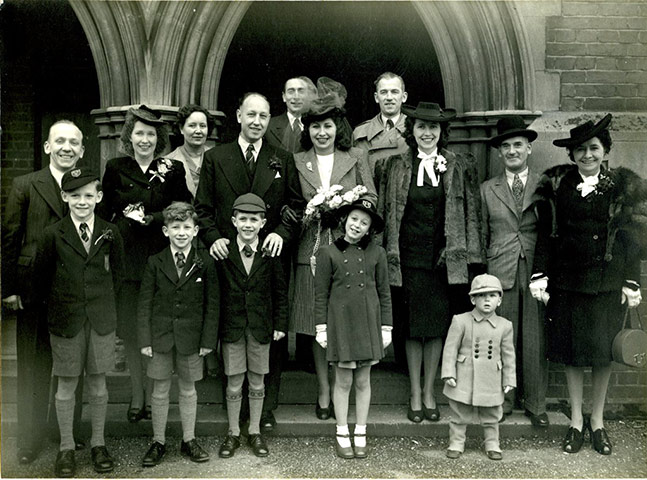
'We had family slideshows every winter. There was a white plastic screen that had to be pulled up out of its cylindrical container, and we had to be careful not to get sticky fingers on the negatives. My dad also taught my brother and me how to make pinhole cameras when I was about 10. My brother later went into photography professionally. My first experience of a darkroom was with him in my early 20s. The magic of the image emerging on to the white paper in the thick red gloom was bewitching.'
© Katie Mitchell
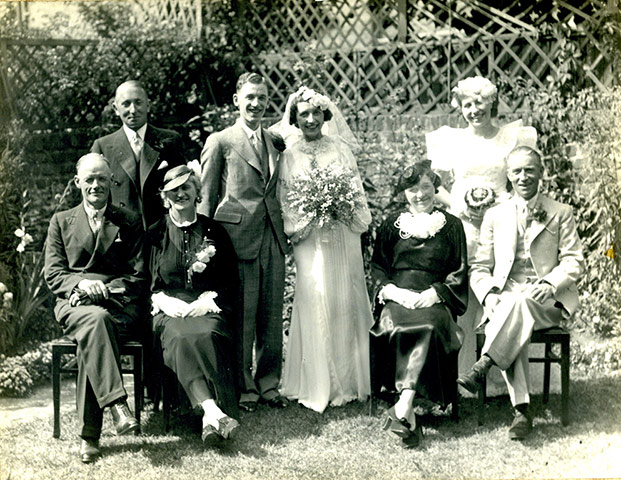
'Today I use either the new digital camera my mum bought me when I had my daughter, or my iPhone. I store my photographs on my computer and rarely print them. In the first two years of my daughter’s life, I printed all the photographs of her and put them into albums, and had some framed. But they looked different from my childhood photographs. I miss the grain. When I am with either of my parents, I am always rummaging around in their old collections. Before my granny died, I got her to tell me who all the people were in the photographs in her house, and I carefully wrote on the back of each one. I am particularly fond of a picture of my mother standing with her mother and holding out her hand to feed a pigeon. It must be the 1930s. These tiny images, sometimes only 3in x 1in, with their curled edges, are the only way of touching people in my past.'
© Katie Mitchell
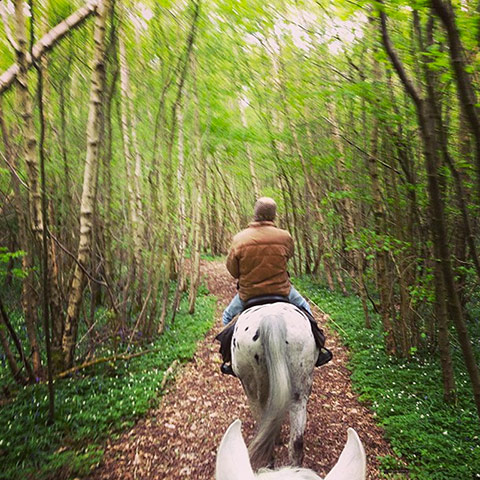
'I have a vivid early memory of going to a darkroom with my mum. I would see her taking photos a lot, though she didn’t do much printing. But she took me there one day and I remember seeing a blank page put into a chemical bath and becoming a photograph. We didn’t really have any of her pictures around the house, but there was a Jacques Henri Lartigue, and an Edward S Curtis portrait of some native Americans. Mum grew up in New York and she got into photography after seeing the famous Family of Man exhibition at the Museum of Modern Art, curated by Edward Steichen. She mentioned it often; my mum and dad discussed photography a lot.'
Photograph: PEN
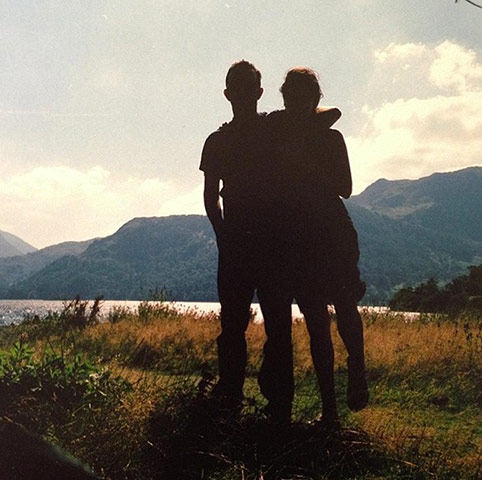
'I’m embarrassed to say that my main camera is my iPhone. I’m on Instagram so I can follow friends; I like how immediate it is. I upload with filters sometimes; I’m not that purist about it. In the past, you’d pick a certain type of film for a certain look, and today’s filters are a similar concept: the modern version of choosing the right mood. Family pictures are the most precious. I have a set of prints I carry around in my wallet of my kids, my husband and my parents. I look at those rather than writing a diary: they’re very evocative and textural and emotional. I change them every so often, after they get worn out.'
Photograph: Mary McCartney
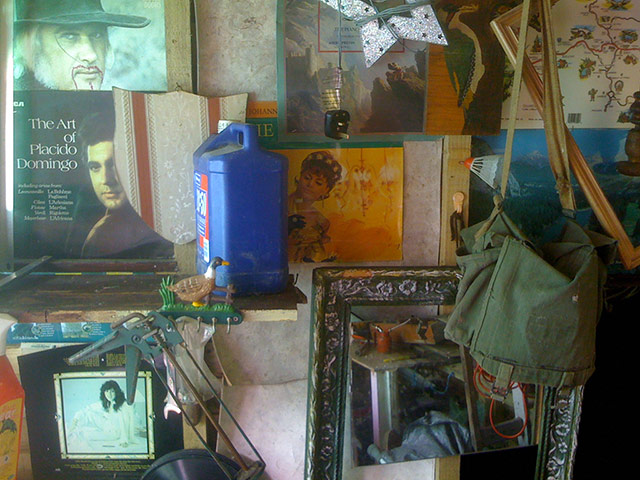
'Although I write about photography for a living, I did not own a camera until recently. My first was a Pentax Omnio digital compact. It’s a great little camera, and already an ancient relic of another time. I now own a Fuji X10, which I use as a visual diary. I try not to shoot as much as I used to because so many great photographers have told me that the real editing takes place as you are shooting. I have never printed a digital photograph. They are stored on my hard disk in their hundreds, maybe thousands. This fills me with a vague anxiety. When my father was very ill a few years ago, and again just after he died, I photographed the interior of his garden shed. The images, together and separately, feel like a portrait of him somehow – of the inside of his head and all the stuff he had collected.'
Photograph: Sean O'Hagan
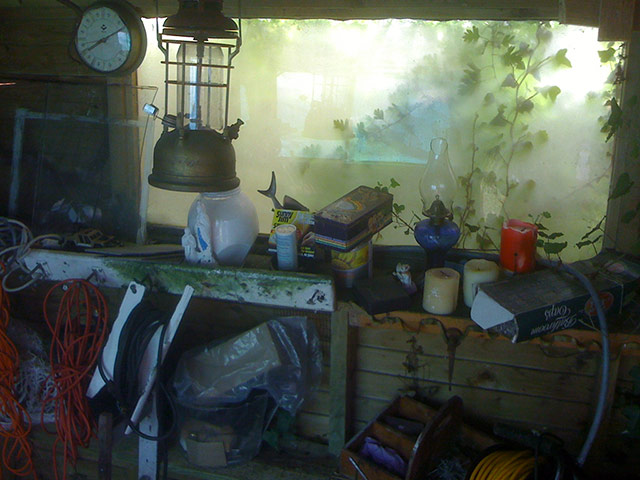
'I can see now that I shoot certain things over and over: landscapes whizzing by from moving trains; people dozing on the tube; things scrawled on walls (though not graffiti or graffiti tags); the tops of trees against the sky. I basically shoot the kind of photography I like. I think photographs should be intimate. And everyday. And luminous. That’s a tall order, but the best photographers pull it off all the time. ' Photograph: Sean O'Hagan
![Family photography: Adrian Searle [dentistry]](http://static.guim.co.uk/sys-images/Guardian/Pix/pictures/2013/5/17/1368806067946/Adrian-Searle-dentistry-002.jpg)
'I was given a camera in my early teens, and promptly broke it. At art college I managed to work out the mysteries of the SLR and light-meter, but apart from documenting art, I have usually been without a camera. There are years and years of my life, places I have been, friends and lovers, my daughter growing up, fish I have caught, rooms I have lived in, for which I have few visual records. A shot of my daughter, aged four, by the artist and picture editor Bruce Bernard, who taught me a great deal about how to look at photographs, sits by my bed. One of Juergen Teller’s portraits of me, looking mad, was pasted to the wall in his recent ICA exhibition. It was right down at floor level; you could give it a quick kick as you passed. With the years, the camera has encouraged me to become an exhibitionist.' Photograph: Adrian Searle
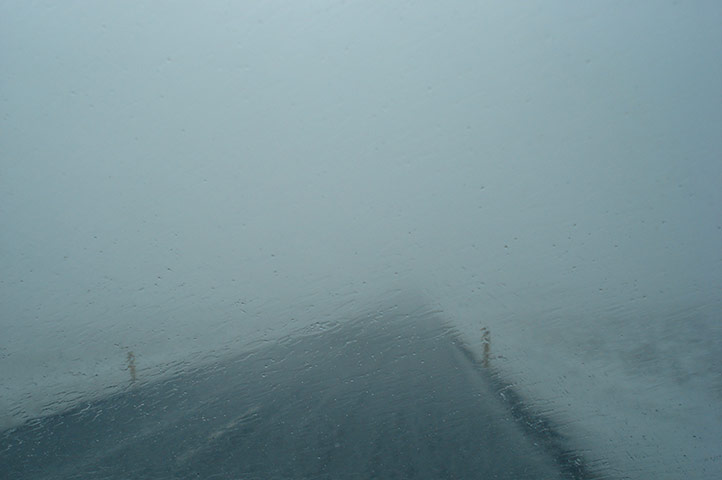
'I used to draw and scribble my way round exhibitions. Now I take photographs, mostly of shows and artworks, which I use for quick reference – though the drawings in my notebooks mean more to me. I also take the same sort of snaps anyone else might take: there’s you on the bed, here’s me in the sunshine. What city was it? The photographs pile up in iPhoto, which always wants me to catalogue them, but I resist. One favourite is my screensaver. Shot with my phone while trapped in a car during a blizzard in Iceland, with the artist Roni Horn, it’s the view through the windshield: a view of emptiness filled with grey green weather. I keep thinking it’s Roni’s picture, even though I shot it. On my wall, there’s a photo by Jemima Stehli of me wearing a suit, watching her undress. Holding the shutter release, I am photographing myself watching her.'
Photograph: Adrian Searle
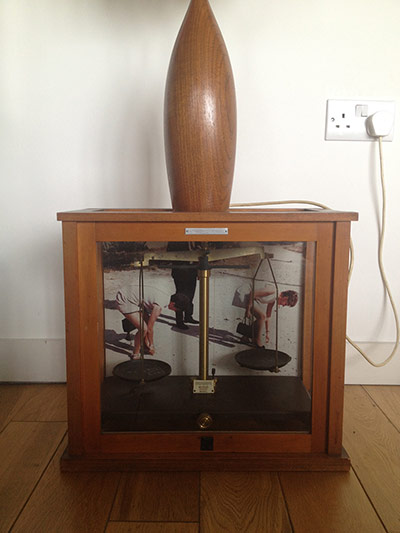
Louise: 'My father had a darkroom before Jane and I were born. A few years ago, we found a really interesting image he’d taken and turned it into a sculpture. It’s a picture of my mother and a friend of hers bending down to pick up shells on the beach, looking very 60s. Their posture mirrors each other, and there’s a man in the middle holding a camera, and these beautiful long shadows from a low, late afternoon sun. Jane and I put his photo behind a set of old-fashioned weighing scales. The scales reflect the balance, the way the women seem on the same plain. Today, it’s in my house with a lampshade on top of it. I’ve never talked to my dad about his photography, but this curious construction always reminds me of him, and where my love of the darkroom came from.'
Photograph: Jane and Louise Wilson