Pictures of the week: Mother, Daughter And Doll, by Boushra Almutawakel
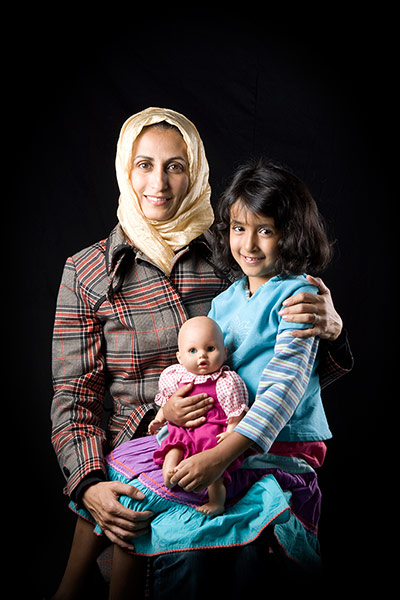
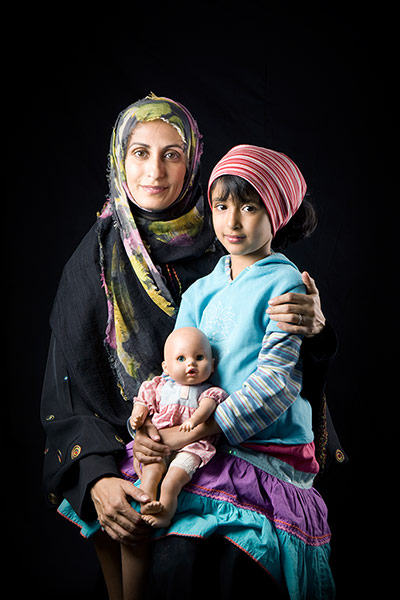
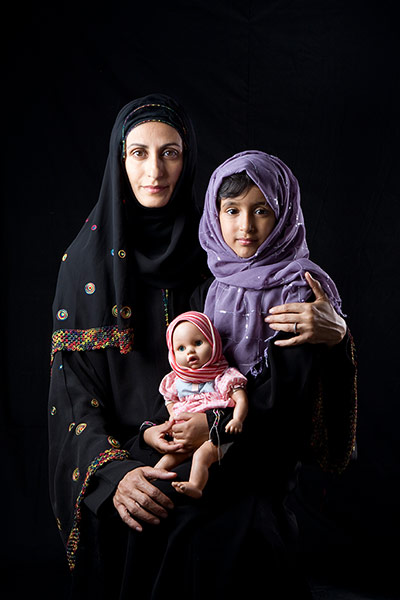
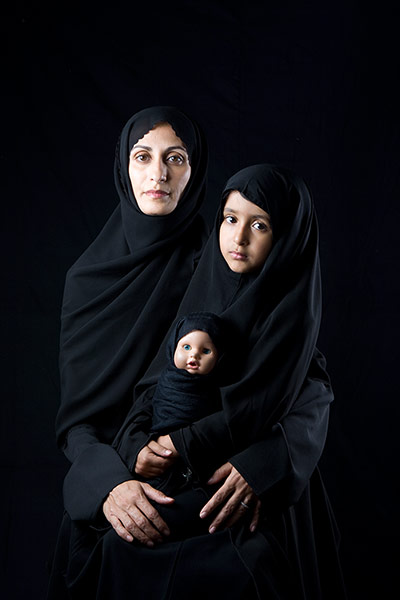
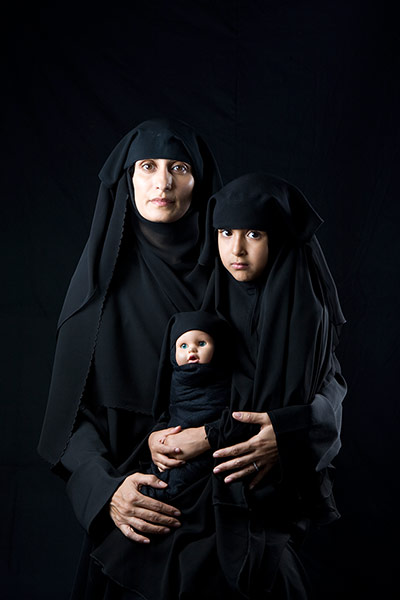
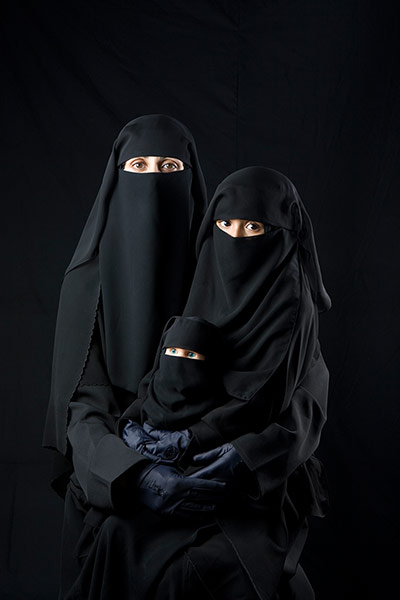
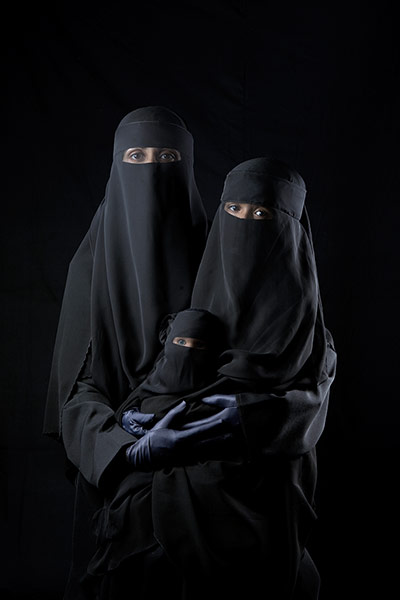
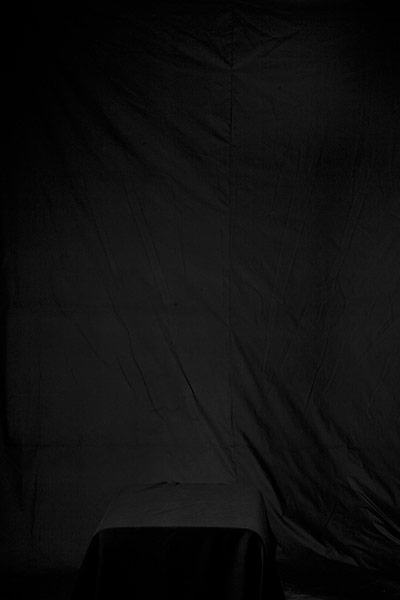
As an Arab Muslim woman living in Yemen, Boushra Almutawakel wears a hijab, or headscarf, when she leaves the house. Other women prefer the niqab, which covers the face. Some veil their eyes with a gauze and cover their hands.→ Photograph: Boushra AlmutawakelAlmutawakel is exploring the veil’s many faces in an ongoing photographic series – the latest, Mother, Daughter And Doll, shows Almutawakel and her eldest daughter, Shaden Yaqoub, in increasingly covered-up dress.→Photograph: Boushra AlmutawakelThe final, empty shot is a humorous touch that, along with the doll, asks just how far veiling can go. There are, of course, some men at the extreme end of the religious spectrum who would prefer this level of invisibility – that women in this part of the world didn’t leave the house at all.→ Photograph: Boushra Almutawakel
'I’m not against veiling – I feel comfortable wearing the hijab in Yemen – but I object to excessive veiling and its idea of the ownership of women,' Almutawakel says. 'It doesn’t really have anything to do with Islam. The solution, instead of covering up women, is to work on the men.'→Photograph: Boushra AlmutawakelThere are many aspects of veiling that Almutawakel likes. It is liberating, in a way, because it places less emphasis on looks.→ Photograph: Boushra AlmutawakelYour body becomes more intimate: you get to choose to whom you show it. And it’s practical: some mornings, rushing to get her daughters ready for school, she just keeps her pyjamas on underneath.→ Photograph: Boushra AlmutawakelThat said, the hijab is hot, cumbersome and obstructs her hearing, and it’s hard to recognise other women, particularly in the niqab. Yet this anonymity has its advantages, too: young women can meet men without their families knowing.→ Photograph: Boushra AlmutawakelAlthough Almutawakel would prefer not to cover up at all, she doesn’t want to add to negative portrayals of the hijab. 'A lot of strong, liberated, working women wear the veil,' she says. 'We are not all weak, oppressed and ignorant.'Photograph: Boushra Almutawakel
Sign up to read this article
Read news from 100's of titles, curated specifically for you.




.png?w=600)