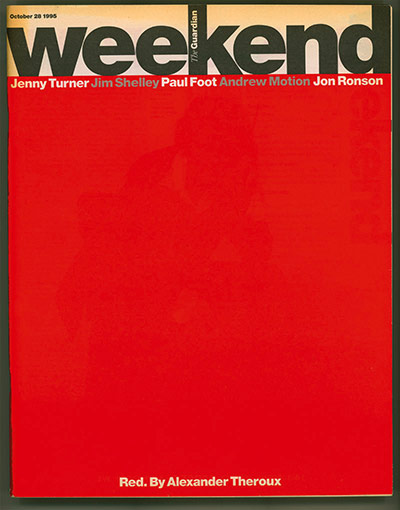
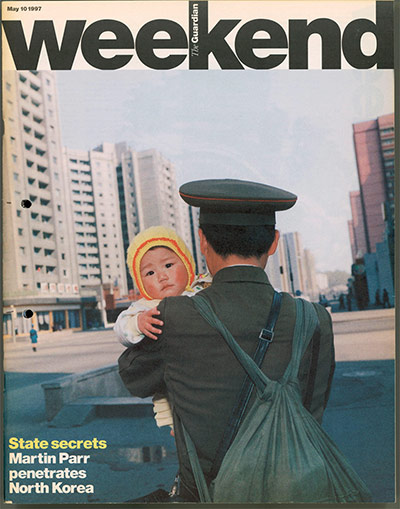
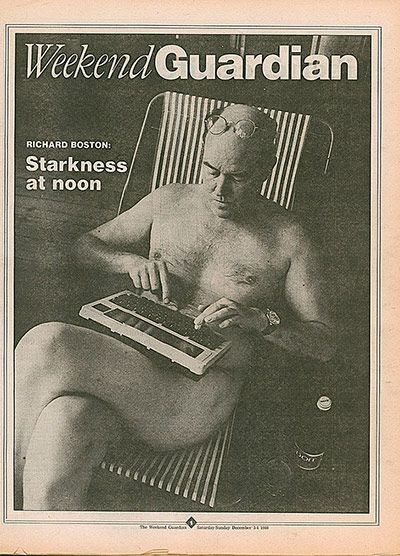
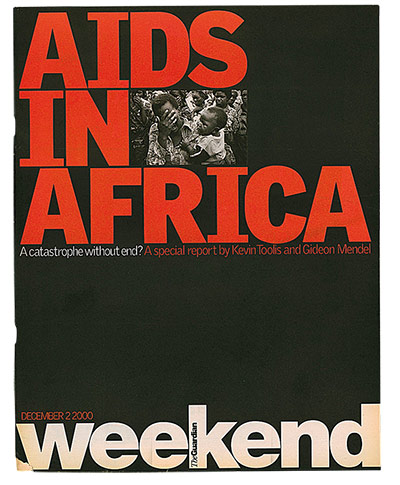
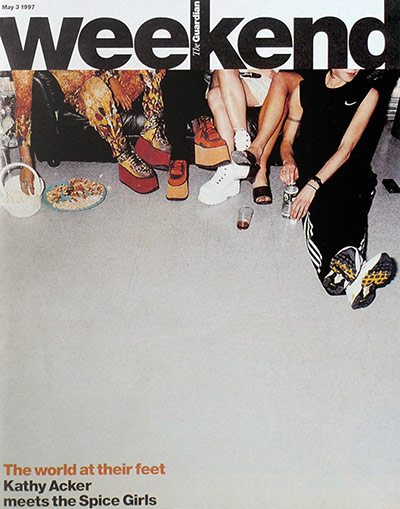
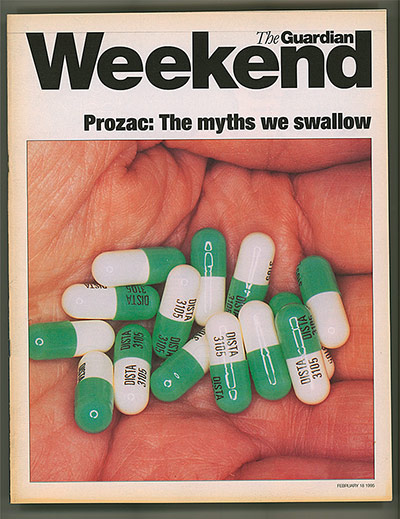
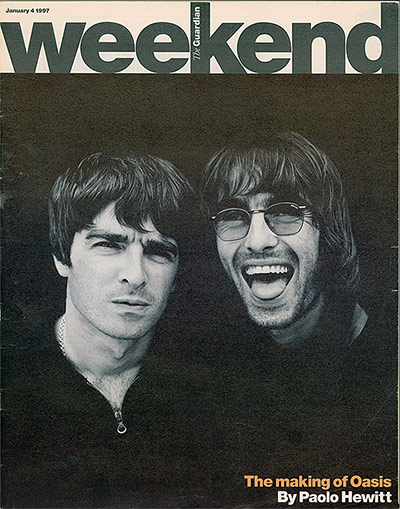
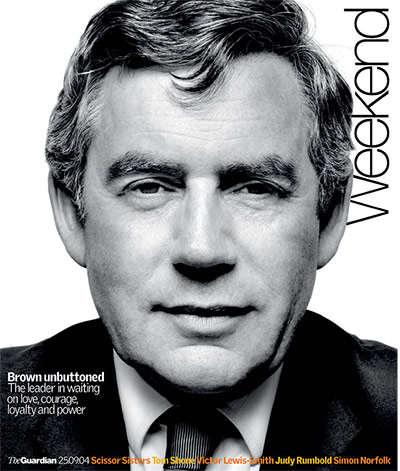
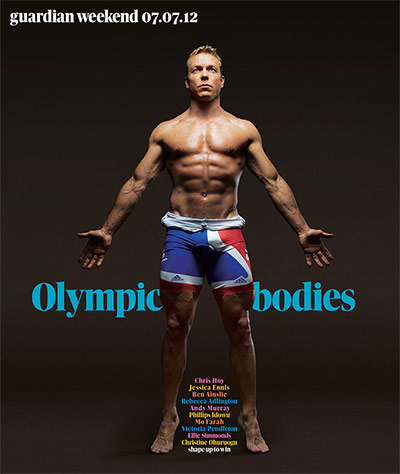
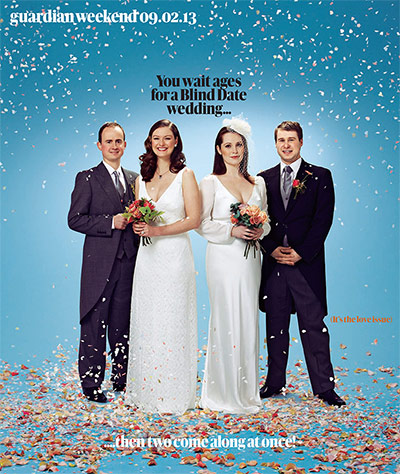
Weekend Guardian started in a deliberately shocking way, calculated to counter prevailing expectations of the Guardian in both content and form. It was a broad mix. The principle was not new.→Photograph: GuardianThe earliest historian of the Guardian, William Haslam Mills, put it nicely at the time of the paper’s centenary in 1921: 'Serious affairs in their place, but not all over the place.'→Photograph: GuardianShocking? Well, the late Richard Boston was the first journalist to appear naked in the paper. He was the 'cover boy' on the launch issue on 3 December 1988, gamely stripping for the photographer Nobby Clark, introduced to the Guardian by the new picture editor Eamonn McCabe.→Photograph: Guardian
More shocking than the sight of a brazen Boston was the tabloid format. Printed on newsprint and predominantly in black and white, it was what its first editor, Alan Rusbridger, called 'that British oxymoron, a tabloid with brains'.→Photograph: GuardianThe impetus had come from then editor Peter Preston, who had wanted for years to try a tabloid format for at least part of the paper. Rusbridger, up to then, had never edited anything, unless you count his school magazine, the Cranleighan.→Photograph: GuardianBut he had been the Guardian diarist. So had Preston, and he regarded the diary, with its daily process of selection, writing and running order, as a good training ground for an editor.→Photograph: GuardianWhat came out was something fresh and new, a hybrid that was neither exactly a newspaper nor a magazine. It had a strong participatory element, which looked forward to later developments online: a gallery where artists could offer their works for sale, a forum where readers could launch debates, a feature where fed-up consumers could complain.→Photograph: Guardian It also let artists, writers and others speak for themselves through various regular features. Much commissioning was done at publishers’ parties, where Rusbridger and I (his seasoned deputy) worked the floor from opposite directions.→Photograph: GuardianThere was intensely serious stuff: most controversially in the early weeks, an essay over five pages by the US historian Paul Fussell, Thank God For The Atom Bomb. (Nuclear weapons polled second to unemployment in Guardian readers’ concerns.)→ Photograph: GuardianThat stimulated hundreds of letters. The promotional ads for Weekend promised 48 pages of “wit, discourse, and revelry”. It did a bit more than that, and had an immediate, huge and heartening effect on Saturday circulation.Photograph: Guardian
Sign up to read this article
Read news from 100’s of titles, curated specifically for you.