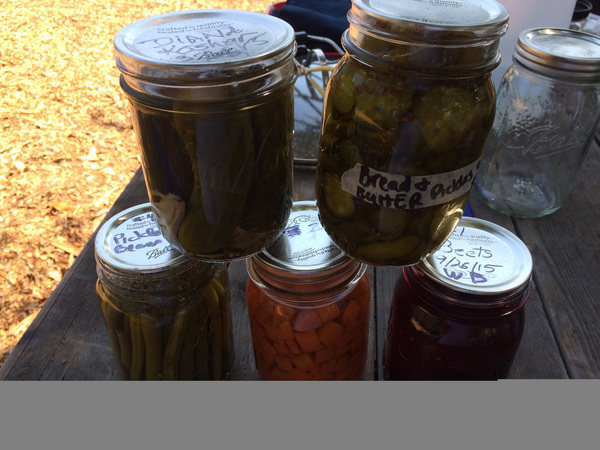
Pickling your garden produce not only extends the life of your garden, it's fairly easy to do and rewards you with increased health benefits.
Sue Mosbacher, master food preserver program coordinator for the UC Cooperative Extension in Placerville, Calif., says fermented foods help with the digestive system. Some caution is needed, Mosbacher says, but if you follow the recipes and the rules, you'll be fine.
Here are some of Mosbacher's tips:
THINGS TO KNOW
_ When working to preserve foods, wear an apron to protect the food from anything you might have on your clothes, tie your hair back or wear a hat, and wear gloves.
_ Before using, inspect your jars for cracks, chips or imperfections that might lead to breakage.
_ Use canning salt, also known as pickling salt, in your fermenting recipes. Canning salt is the purest type of salt available.
_ If you want to use other salts, check the ingredient list. Most salts, including kosher salt, contains an anti-caking agent that can affect taste and measurements.
_ The key to successful and safe canning is processing the food long enough to kill pathogens. That's why it's important to follow the instructions to the letter.
_ Don't use your grandmother's recipes. Generations ago the acidity of vinegar was much higher than it is now (up to 15 percent).
_ As the spices are usually what makes the recipe special, Mosbacher recommends using a current, standard recipe that uses our standard 5 percent vinegar, and then use the old recipe for the flavors.
_ Preserved foods can be kept for a long time but Mosbacher recommends eating them within a year for the best flavors and nutritional benefits.