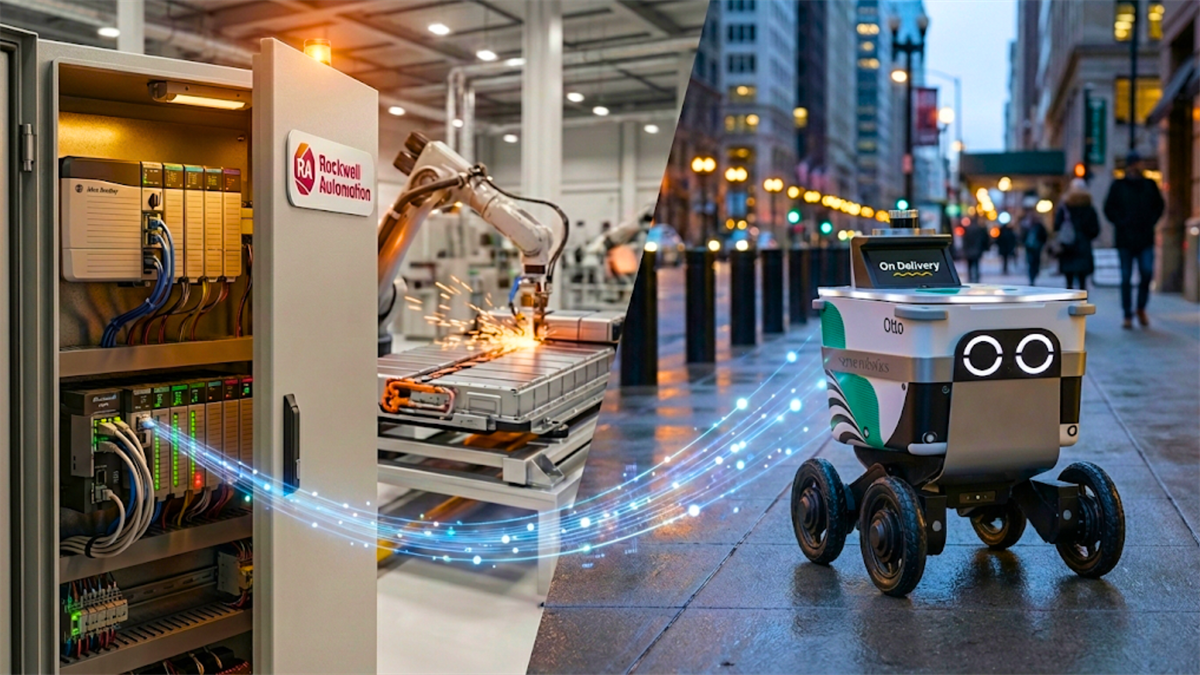
For the past 24 months, the technology sector has been consumed by a single narrative: Generative AI. Software platforms that can write code, compose poetry, and generate images have captured the imagination of the world and the wallets of investors. However, as we move through early 2026, the market narrative is shifting. The digital brain is maturing; now, investors are looking for the mechanical body to do the heavy lifting.
This sector is known as Physical AI. It represents the intersection where advanced algorithms meet industrial hardware. The economic driver behind this trend is more than a novelty; it is a critical necessity. The United States and other developed nations are facing persistent, structural labor shortages. Manufacturing plants and hospitals cannot find enough machinists and support staff.
This reality has forced a change in corporate spending. Companies are no longer automating just to save money; they are automating to survive. They need machines that can navigate dynamic environments, make real-time decisions, and work alongside humans. For the stock market, this creates a compelling barbell opportunity. Investors can look to the massive, established infrastructure players building factories, or to the agile, emerging disruptors replacing service labor.
The Industrial Anchor: Rockwell Automation
Rockwell Automation (NYSE: ROK) is often viewed as a legacy industrial stock, but this view misses the company's aggressive technological evolution. Rockwell creates the sensors, controllers, and software that act as the central nervous system for manufacturing. As factories race to become smart, they are relying on Rockwell’s Connected Enterprise strategy.
The Edge AI Advantage
A key differentiator for Rockwell is its focus on Edge AI. In a high-speed factory, a robot cannot afford the split-second delay required to send data to the cloud and back. It needs to think locally. Rockwell has integrated advanced AI chips directly into its controllers. This allows production lines to detect defects and adjust machinery in milliseconds, without internet connectivity.
The Lucid Motors Catalyst
In January 2026, Rockwell validated the strength of its order book by securing a major contract with Lucid Motors. Rockwell will provide the automation backbone for Lucid’s new electric vehicle (EV) manufacturing facility in Saudi Arabia. This deal offers a critical insight for investors:
- Sector Resilience: Even as consumer demand for electric vehicles fluctuates, EV manufacturing continues to attract massive capital investment.
- Vendor Validation: Lucid’s choice of Rockwell confirms that for greenfield (new) mega-projects, Rockwell remains the gold standard.
The Money Matters
Rockwell’s financial metrics reflect a company returning to growth after a period of inventory correction.
- FY 2025 Performance: The company closed the fiscal year with adjusted earnings per share (EPS) of $10.53, up 7% from the previous year.
- FY 2026 Guidance: Management is forecasting a return to double-digit growth, projecting EPS in the range of $11.00 to $12.11.
- The Dividend: For income-focused investors, Rockwell pays a quarterly dividend of $1.38 per share. This reliable payout provides a hedge against market volatility, rewarding patience while the industrial cycle turns upward.
The Emerging Disruptor: Serve Robotics
While Rockwell dominates the controlled environment of the factory, Serve Robotics (NASDAQ: SERV) is tackling the chaotic, unpredictable world of public spaces. Serve is best known for its four-wheeled, autonomous delivery robots seen on city sidewalks. The company is currently in the execution phase of a massive scale-up, deploying a fleet of up to 2,000 robots with its commercial partner, Uber Eats.
Crucially, Serve has mitigated the hardest part of being a hardware startup: manufacturing. By partnering with Magna International (NYSE: MGA), a global automotive supplier, Serve ensures its robots are built at scale and with automotive-grade durability, without having to build its own assembly lines.
The Pivot: Entering Healthcare
On Jan. 20, 2026, the investment thesis for Serve Robotics expanded dramatically. The company announced the acquisition of Diligent Robotics, the makers of the Moxi hospital robot. This move transforms Serve from a delivery company into a broader automation platform.
- High-Value Labor: Delivering a burrito is a low-margin task. Delivering lab samples or medication in a hospital is a high-value task.
- Solving Burnout: Moxi robots are designed to fetch supplies for nurses. With nursing burnout at an all-time high, hospitals are willing to pay a premium for technology that keeps their staff at the bedside rather than in the supply closet.
- Recurring Revenue: Healthcare contracts are typically long-term and sticky, providing Serve with a more predictable revenue stream than consumer food delivery.
Growth and Risk
Investors must recognize that Serve Robotics is a different animal from Rockwell. It is a high-growth, high-risk play.
- Revenue Growth: The company is seeing rapid top-line growth, as evidenced by year-over-year revenue growth in the third-quarter earnings report.
- Profitability: Serve is not yet profitable. It operates at a net loss as it invests heavily in R&D and fleet expansion.
- Cash Runway: To offset this risk, Serve maintains a healthy balance sheet. With approximately $183 million in cash, the company has the liquidity to fund its operations and the integration of Diligent Robotics through 2026.
Building a Balanced Automation Portfolio
The rise of physical AI is not a single vertical; it is a broad industrial revolution. As the technology matures, the smart machine will become a standard asset on corporate balance sheets, as common as a company truck or a laptop.
For investors, Rockwell Automation and Serve Robotics offer complementary exposure to this theme. Rockwell provides the stability of an industrial incumbent, backed by dividends and a dominant position in factory automation. Serve Robotics offers the explosive upside of a disruptor, aggressively expanding into new verticals like healthcare, where automation is desperately needed.
By holding both, investors can effectively cover the entire spectrum of the physical AI revolution, from the robots that build our cars to the robots that assist our nurses. The era of the chatbot is evolving; the era of the robot has arrived.
Where Should You Invest $1,000 Right Now?
Before you make your next trade, you'll want to hear this.
MarketBeat keeps track of Wall Street's top-rated and best performing research analysts and the stocks they recommend to their clients on a daily basis.
Our team has identified the five stocks that top analysts are quietly whispering to their clients to buy now before the broader market catches on... and none of the big name stocks were on the list.
They believe these five stocks are the five best companies for investors to buy now...
The article "Physical AI: The Next Industrial Revolution Is Finally Here" first appeared on MarketBeat.