

For years, Phreesia, Inc. (NYSE: PHR) has seen its stock price struggle. Those challenges have come at no fault of its own other, but rather as a consequence of its growth, which has been funded by share counts and debt. As the company has continued to gobble up new technology while expanding its reach and offerings, share counts have risen significantly since 2024. And despite the stock losing nearly 50% in Q1 2026, the story for Q2 is that the market capitulated after Phreesia's 2026 guidance update, providing a deep value opportunity in a quality tech speculation.
Phreesia provides automated patient intake services for healthcare providers, grows at a robust pace, and makes money. A shift to profitability underpins the stock price outlook, providing a visible value for investors.
Phreesia Growth Outlook Underestimates Potential
Healthcare trends suggest that Phreesia's revenue growth outlook is far too low. The industry is undergoing a systemwide overhaul, including digitization, artificial intelligence adoption, and workflow automation.
In turn, the total addressable market is expected to double in size over the next eight years, far outpacing Phreesia’s projected growth. Running in the low single-digits, the company will likely outpace its expected compound annual growth rate by a wide margin over time.
Catalysts for Phreesia in 2026 include the integration of AccessOne, a health-oriented fintech, providing flexible payment solutions for patients. It helps Phreesia by expanding its client base while enhancing payment options and client outcomes. The addition of AccessOne is expected to account for more than 25% of the company's payment processing volume by 2028 and is likely not the last acquisition Phreesia will make. Highlights from the company's most recent earnings call include expectations of increased spending to bolster the acquisition and get it to market.
The impact on the company's balance sheet is clear. Phreesia’s debt increased while cash declined, but this was offset by increases in assets, revenue, and cash flow. Equity also increased, leaving investors with potential leverage if debt comes down. Looking forward, the company is well-capitalized, but the risk is future acquisitions and the need to pay for them.
Phreesia Had a Strong Quarter, but Visibility Limits Upside in Early 2026
Phreesia had a solid quarter to end its fiscal 2026. The company reported $127.07 million in net revenue, up nearly 16% from the prior year and better than forecasted. Gains were driven by a 7% increase in clients and an 8% increase in revenue per client, suggesting continued strength in upcoming quarters.
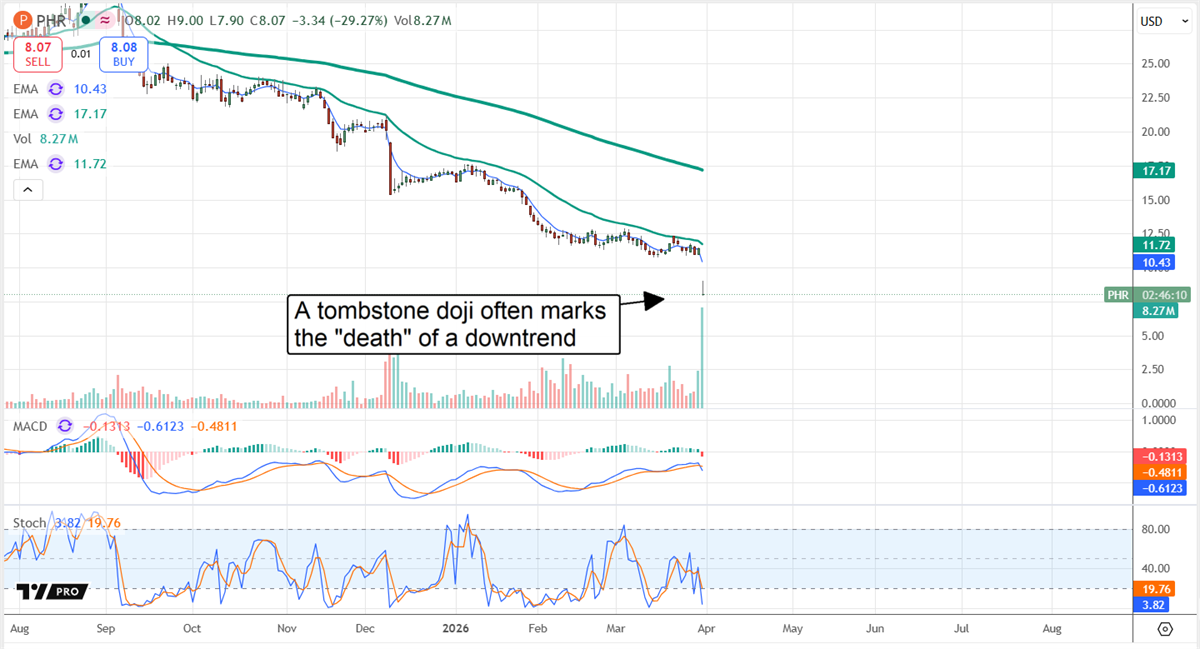
Margin was the bad news, but not as bad as the nearly 30% post-release stock price plunge suggests. The company sustained profitability for the third consecutive quarter but missed earnings targets. The earnings per share of 2 cents missed by 4 cents, but metrics—including free cash flow (FCF)—were much better. FCF came in at $28.5 million, up more than 200%, and is expected to remain strong in the upcoming year.
Guidance and the analysts’ response are why the bottom fell out of the market. Phreesia lowered its revenue target due to decreased visibility, leading analysts to lower their price targets for shares of PHR. The likely outcome is that visibility will improve as the fiscal first half progresses, leading to a firmer outlook and improvement in sentiment.
Until then, MarketBeat logged numerous price target reductions pointing to a low-end range. However, the low-end range is pegged at $10, or 25% potential upside from the post-release lows.
Phreesia Hits Bottom: Institutional Buyers Drive Volume
The post-release price action was ugly, but it aligns with the thesis that the stock has hit its bottom. Not only did the move trigger a buying event, but the volume spiked to record levels, suggesting institutions are buying. The institutional data reveal that they own more than 92% of the stock, have been buying on balance for six consecutive quarters, and activity ramped in Q1 2026.
That institutional buying provides a solid support base in this case, but the current short interest of 7% is also in play. That isn’t astronomical, but it is sufficiently high and can add downward price pressure. Still, the approximately 30% stock price decline following quarters of a downtrend provides an attractive entry opportunity.
Where Should You Invest $1,000 Right Now?
Before you make your next trade, you'll want to hear this.
MarketBeat keeps track of Wall Street's top-rated and best performing research analysts and the stocks they recommend to their clients on a daily basis.
Our team has identified the five stocks that top analysts are quietly whispering to their clients to buy now before the broader market catches on... and none of the big name stocks were on the list.
They believe these five stocks are the five best companies for investors to buy now...
The article "Phreesia Hits Bottom in Q1: Rebound Ahead, Timing Uncertain" first appeared on MarketBeat.