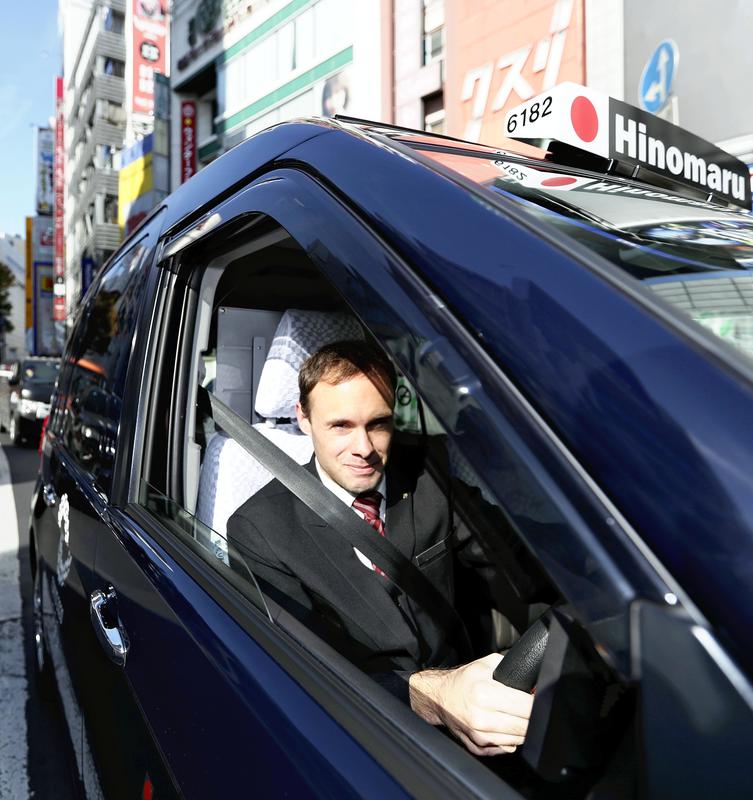
Gurtlinger Francis Karl opened a rear passenger door of his taxi in Tokyo and greeted the customer in fluent Japanese. "I'm sorry to have kept you waiting. Please watch your step as you get in the vehicle," Karl said with a smile.
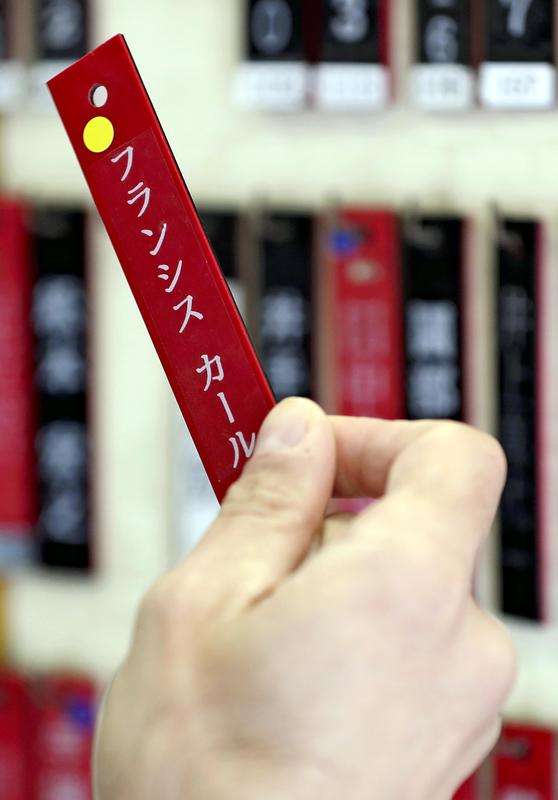
It's been 13 years since the 38-year-old driver from the United States came to Japan. After teaching English at an elementary and junior high schools in Aichi Prefecture, from this September, he started working as a taxi driver for Hinomaru Kotsu Co., a major taxi operator based in Bunkyo Ward, Tokyo.
"I want to convey Japan's wonderful culture and nature to foreign customers," the rookie driver said.
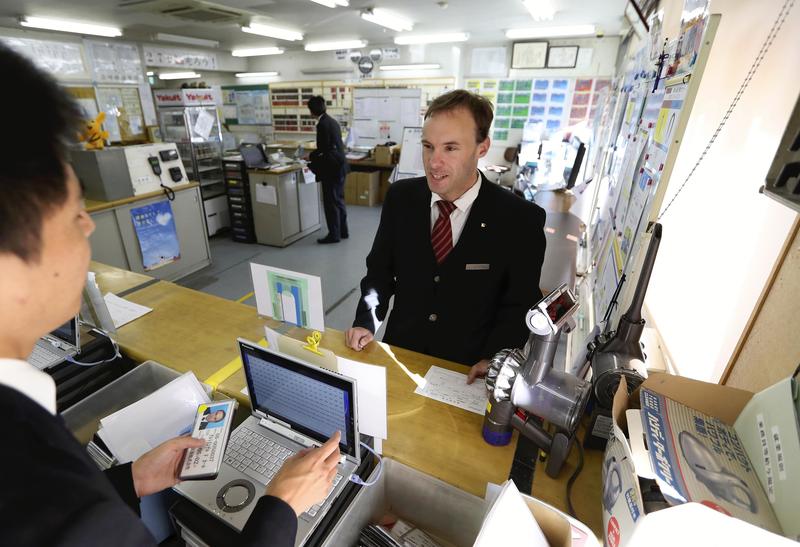
Hinomaru Kotsu started hiring foreign drivers from April 2017, eyeing the 2020 Tokyo Olympics and Paralympics. Since then, the company has hired 32 drivers from 15 countries including the United States, China, Egypt and Sri Lanka. It plans to increase the total number to 100 through 2020.
Kazumi Otsu, Hinomaru's section chief in charge of recruiting foreign personnel, said, "We can expand the variety of services [provided to customers]."
Aging Japanese taxi drivers and a shortage of staff were also factors behind the decision.
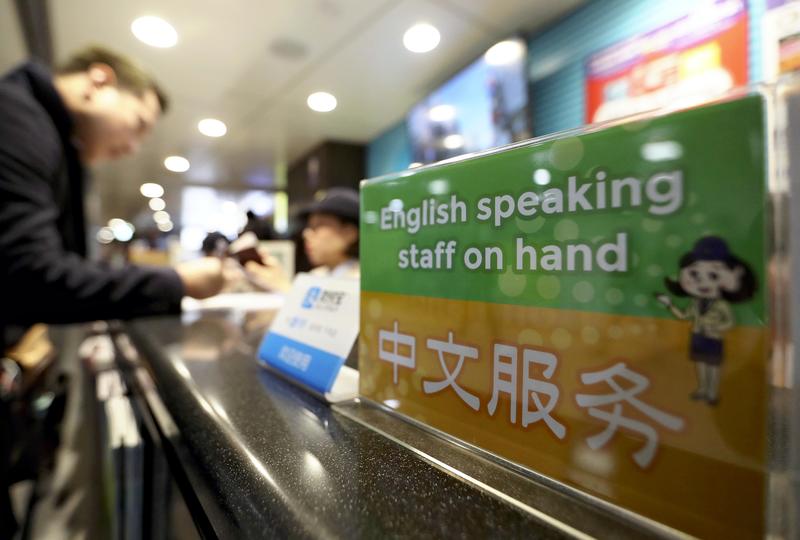
The Tokyo metropolitan government has set a target of accepting 25 million foreign visitors in 2020, nearly twice the number of Tokyo's population. Public transportation in Tokyo has been preparing to welcome them with the spirit of traditional Japanese hospitality, or omotenashi. Tokyo Metro Co. has began stationing employees who can speak Chinese at some of their tourist information counters.
"When I'm in trouble, it's quite helpful." said Wu Kuan-Ting, a 19-year-old Taiwan tourist. He seemed relieved after he was told the location of coin-operated lockers by staff at Ueno Station. A Chinese staffer who talked with the young tourist came to Japan in April 2016 and started working at Ueno Station this February.
"Wherever the foreign customers came from, speaking with a smile is the most important thing," the staffer said. "I want to participate in the 2020 Tokyo Olympics as a volunteer using my language skills."

Read more from The Japan News at https://japannews.yomiuri.co.jp/