Wagashi confectionery shops are offering new ways to appreciate the nation's four seasons through traditional Japanese sweets.
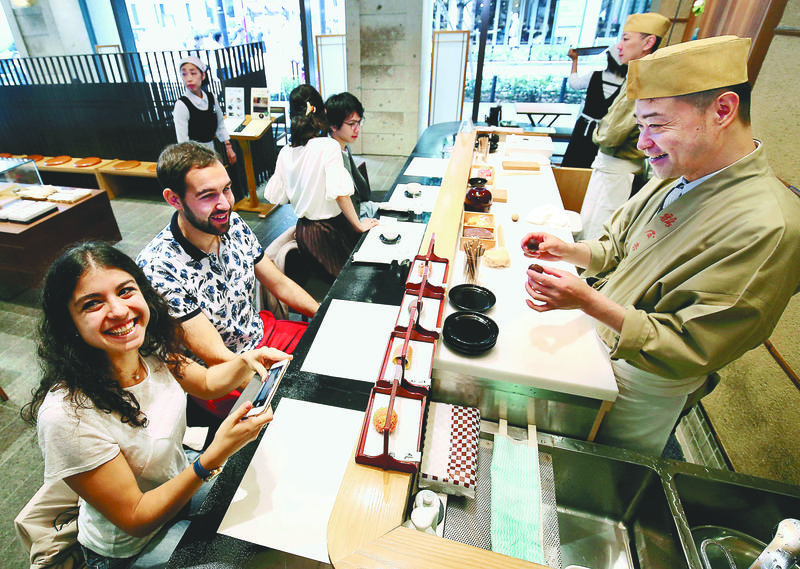
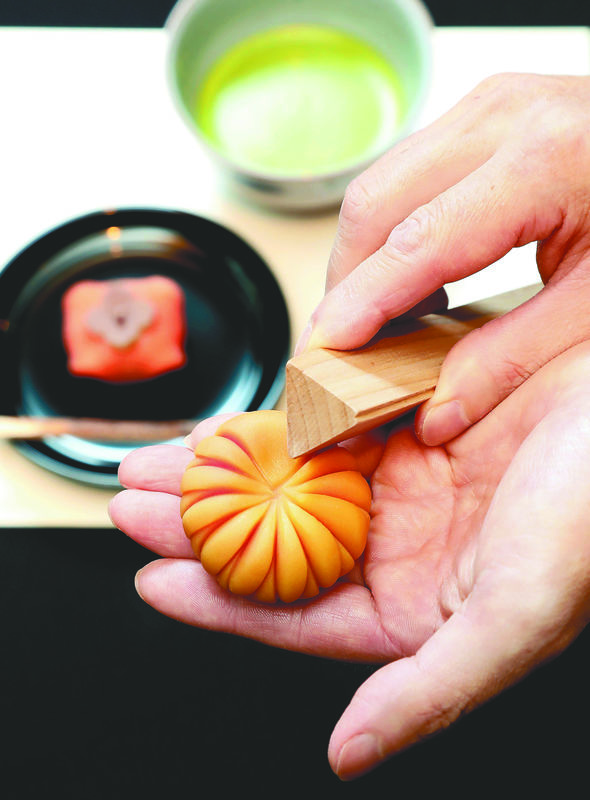
Customers can watch wagashi confectioners make the sweets at a Tokyo branch of Tsuruya Yoshinobu Co., a Kyoto-based wagashi shop. Working at a counter that looks like one in a sushi restaurant, confectioners at the shop in Chuo Ward, Tokyo, knead azuki bean paste called "an" and work it into wagashi.
The shop began serving wagashi in this way in 2014, following in the footsteps of its main shop in Kyoto. The aim was to demonstrate the process of making the traditional sweets and give people in the Kanto region opportunities to appreciate the smooth texture of freshly made wagashi.
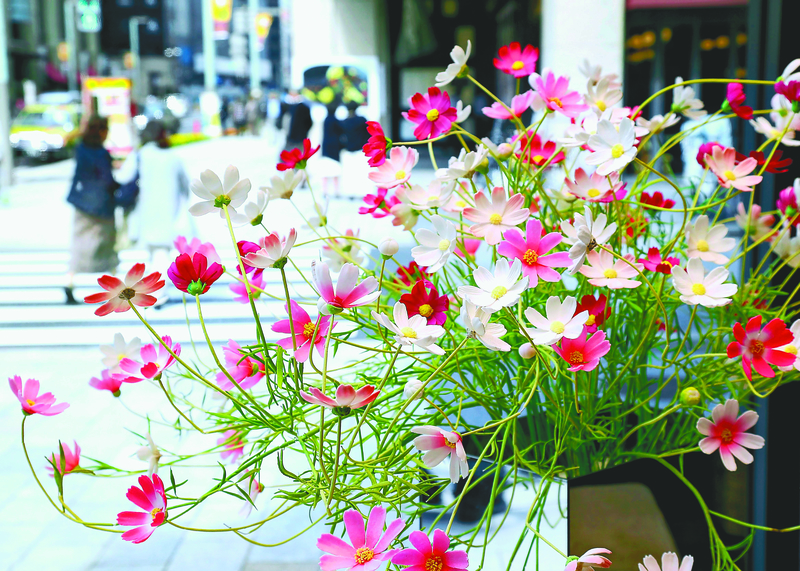
The shop serves different wagashi according to the season. As I visited the shop on Oct. 16, four kinds of autumn-themed wagashi were available, including sweets modeled after persimmons, chestnuts and autumn leaves. Customers can choose one to be served with a cup of matcha green tea.
Wataru Kono, a 24-year-old customer from Chiba Prefecture, said: "I was surprised at the elaborate decorations on the wagashi -- even the stem of a persimmon. I never knew freshly made wagashi had such a pleasant texture."
Wagashi is also popular among foreign visitors. "It's great how Japanese food lets people sense the autumn season through their eyes and taste buds," said Galliano Mael, a 28-year-old customer visiting from France on his honeymoon.
Wagashi Kunpu, a wagashi shop in Bunkyo Ward, Tokyo, offers an unconventional way of enjoying the traditional sweets -- it pairs wagashi with sake.
Sachiko Tsukuda, 45, a shop representative who has trained at restaurants of French, Italian and Japanese cuisine, offers her customers recommended pairings of wagashi and sake.
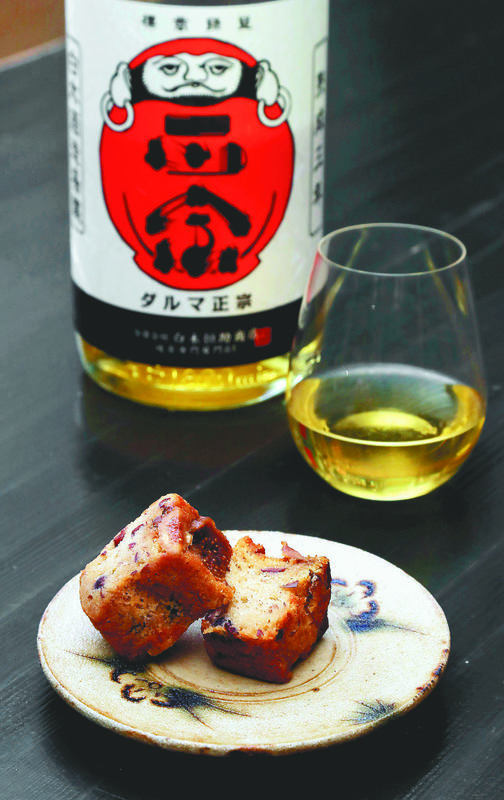
A traditional wagashi called ukishima served at the shop has a unique aroma created with rum syrup. A shop originally known as yaki ukishima, a baked wagashi that contains figs and walnuts, was served with a glass of the sake Daruma Masamune Jukusei Sannen (three-year-old) when I went to the shop. The sake was produced in Gifu city, and chosen because it goes well with the aroma of that wagashi.
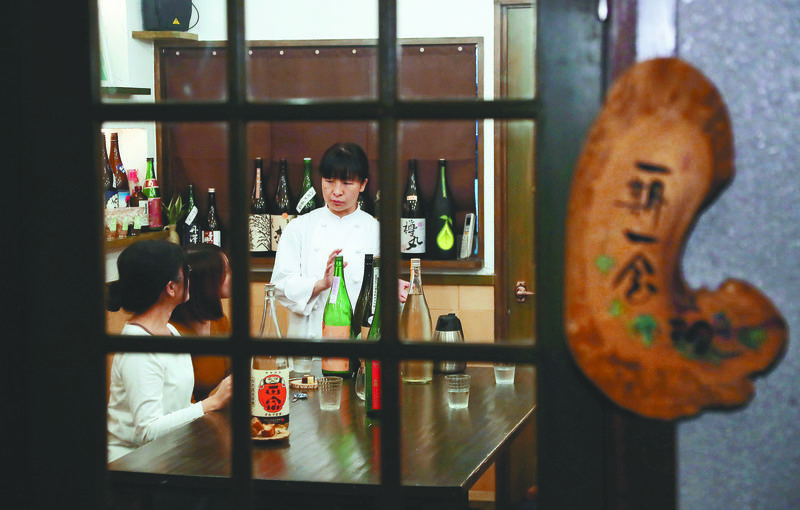
"Both wagashi and sake are seasonally oriented. I thought this pair would be absolutely the best way to enjoy seasonal tastes," said Tsukuda.
More than 80 percent of the customers order sake at the shop, according to Tsukuda.
"The aroma of sake goes very well with the sweets that are not too sweet," said Natsu Tomaru, 38, a customer who frequently visits the shop from Gunma Prefecture. She was a little tipsy and in a happy mood.
Read more from The Japan News at https://japannews.yomiuri.co.jp/