International photographer and participant in exhibitions and competitions across Europe and Asia, Asylbubu Kenzhebekova, explains why companies continue to choose authentic photography in the age of AI — and why human-made visuals still outperform when it comes to selling and engaging.
According to EveryPixel, an online platform specializing in image generation analytics, approximately 34 million pieces of visual content — from simple illustrations to complex advertising creatives — are generated daily with the help of AI. Yet, research published on the ScienceDirect academic platform shows that human-created visual content is perceived as more authentic and emotionally resonant. To understand what makes human-made visuals so appealing — and why AI can’t quite replace them yet — we spoke with photographer and videographer Asylbubu Kenzhebekova. Her work has been featured in international competitions, published in Forbes, and has helped businesses attract clients and increase revenue. She has collaborated with global fashion brands, influencers, artists, and charitable organizations. In this interview, she shares why brands continue to work with photographers in the AI era, how to create images that build trust and stir emotion, why empathy matters more than gear, and what skills photographers should focus on to stay in demand.
— Asylbubu, why do you think companies still choose to work with photographers despite advances in AI technology?
— AI is a great tool. It can speed up workflows and help with repetitive tasks — but what it can’t replicate is the feeling of the moment. During a shoot, we capture subtle glances, expressions, movements — and in them, that fleeting emotion that only lasts for a split second. That’s what potential clients respond to. Not the “perfectly smooth skin” or “ideal lighting,” but the look, the gesture, the smile — the story behind the shot. That’s what resonates, makes someone follow a brand or make a purchase.
— You’re known for capturing authenticity in your work, which helps brands build strong reputations. Can you share how you achieve that?
— I often show the process from the inside — something most people haven’t seen before. For example, when working with a printing company, I photographed the staff in action, the noise of the printing machines, the behind-the-scenes details usually left out of the frame. It drew huge interest — they saw a spike in inquiries and new clients. The company stopped being “just a place that prints” and became a place associated with real people and a meaningful story. I also focus on capturing genuine emotion and atmosphere: moments of concentration, joy after completing a task, team interactions. This makes the brand feel human, not just commercial. As a result, audiences don’t just understand what the company does — they start to trust it.
— What do you enjoy more — working on large brand projects that tell a broader story, or individual shoots where you highlight a person’s uniqueness?
— Photography is always a dialogue between people — even in large-scale projects. I love the challenge of weaving multiple voices into a cohesive story, where every detail serves a bigger idea. With personal shoots, I focus more on capturing a moment’s emotion and energy. That raw authenticity is something no algorithm can replicate. Sometimes I combine both approaches: in brand projects I seek out personal stories, and in individual sessions I give people space to express their own narratives. Because in the end, clients don’t want just a photo — they want a memory in which they recognize themselves.
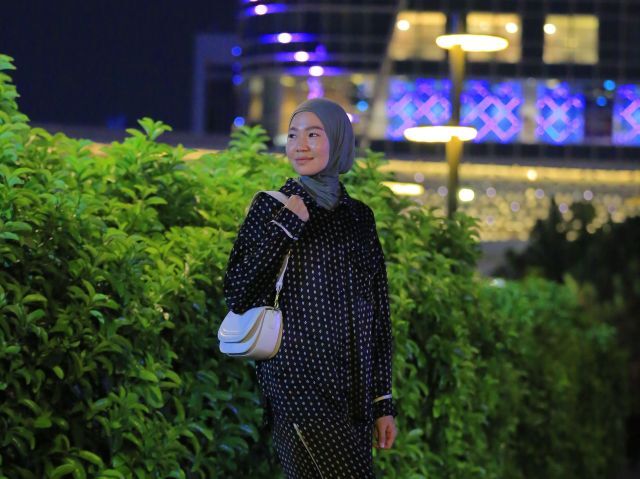
— A promo video you shot on a phone for a beauty pageant made it to the finals of Face of Asia and was shown in Korea. How did you achieve that kind of result, especially competing with entries made using professional equipment?
— The key was to meet the contest’s criteria: highlight the model’s appearance, show her walk, and make the video visually appealing while following all the guidelines. I shot it on a phone, yes — but the ability to capture the right moments is what made it stand out internationally. Again, it proves that gear — like AI — is just a tool. The real results come from paying attention to details and understanding what the audience wants to see.
— You’ve worked on charity projects with children facing serious illnesses and disabilities. How do you approach such sensitive topics through photography?
— The most important thing is to see and feel each child. Capture their real emotions — whether it’s joy, sadness, or pain. These types of shoots require empathy and deep attentiveness, which only come from being fully present and engaged in the moment. You can’t just show up, take photos, or worse — ask AI to generate a “moving” image. Real involvement is key. It’s also a team effort — working closely with volunteers, parents, and medical staff. Everyone has to feel that the photographer respects and supports the children. Only then do the photos become more than visuals — they become real stories that move people and inspire support.
— You teach empathy and attentiveness in your courses, and many of your students find work quickly after graduating. What advice would you give to photographers and videographers who want to stay relevant in the age of AI?
— AI can generate beautiful images, sure. But that’s exactly the problem — they’re just beautiful. Algorithms pull from massive datasets and patterns, but they don’t feel anything. They don’t engage with a subject, spark a smile, or create a comfortable atmosphere on set. They can’t read the energy of a space or capture the connection between photographer and subject. AI-generated visuals tend to feel generic — and audiences pick up on that. I always tell my students: don’t just learn how to use a camera — learn how to tell a story, evoke emotion, and capture atmosphere through a single frame. That’s the part of photography AI can’t replace.